Mastodon The Writing Desk: Guest Blog
Showing posts with label Guest Blog. Show all posts

11 March 2022

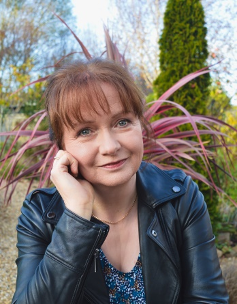
Special Guest Post by Pam Lecky, Author of Her Secret War


Available from Amazon UK and Amazon US

May 1941: German bombs drop on Dublin taking Sarah Gillespie’s family and home. Days later, the man she loves leaves Ireland to enlist.


Historical Fiction: Researching and Writing in a New Era

When my agent suggested I explore the possibility of writing a WW2 novel with a strong Irish flavour, I was at first unsure, but my antennae began to twitch. Up to that point, my books were set in the late Victorian era which I know well at this stage. But I do like a challenge, so the idea began to appeal. My only reservation was the amount of WW2 fiction already published. If only I could find a unique angle…

Luckily, I had plenty of material to delve into, and I soon had an outline for Her Secret War, the first book in the series. Both my family and local history inspired the novels. My mother and her sisters left rural Ireland to work in Britain during WW2. 


My Mother, 1942

One aunt followed her boyfriend, who had joined the RAF, and she worked in a munitions factory. Another aunt wanted to study nursing, and my mother was a ‘clippie’ (bus conductress) on the Birmingham buses. Neither book is their story, but there are glimpses of their experiences hidden throughout the fiction. The German attack on North Strand, which opens the book, happened only a few miles from where I grew up. As a young child, I passed the bombed-out sites regularly, knowing nothing about them. I was in my late teens before I heard about the bombing and the relevant history.

I have always been interested in the world wars and tend to watch anything related on TV, such as documentaries or movies. For me, the greatest challenge was getting up to speed on day-to-day life. I knew a lot about the overall timeline and events of the war, but it was the nitty-gritty details of life on the Homefront which would ground the stories in reality. Essentially, I had to read a lot and, thankfully, there is an enormous amount of material out there, from eyewitness accounts and books to newsreels. 

Then I was lucky enough to come across a wonderful website dedicated to the people who had worked at Supermarine in Hampshire, the company who made the iconic Spitfire plane. The owner of the site was amazing, providing a huge amount of background material which enabled me not only to build a picture of Supermarine, the facility and the workers, but also helped with some tricky aspects of my storyline.

Essentially, the stories are about spies and fifth columnists, a subject covered in some depth by Tim Tate in his book, Hitler’s British Traitors. This was the source for much of my background information and threw up a few plot ideas too (always a bonus!).

My heroine, Sarah Gillespie, is Irish, and the first novel in the series begins with the infamous bombing of neutral Dublin by the Luftwaffe in May 1941. The opening chapters take place during the bombing and its aftermath before the story moves to England. Like many Irish, Sarah has family living in the UK. They welcome her to their home when her own family is killed. Without giving away the plot, Sarah’s nationality leads to complications, and she is forced to decide where her loyalties lie. The complex relationship between the Irish and their ex-colonial masters interests me, and I explore it to some extent in both novels.

Luckily, Avon Books UK/Harper Collins snapped up the rights to Her Secret War, and the sequel entitled Her Last Betrayal. Delighted, I set about writing the second novel, only to come up against a brick wall. Her Last Betrayal continues Sarah’s story. She is now working for MI5 and along with a colleague, a US Naval Intelligence officer, they are trying to track down IRA members who are facilitating British fifth columnists and Abwehr agents entering and leaving the UK. 

Again, I referenced Mr Tate’s excellent book only to find that the port was only alluded to as being in South Wales. I knew the UK National Archives document reference number, but the text in question was only available to view in person, not online. Because of Covid, I could not travel to Kew to look at it. So, in the meantime, I had to make an educated guess (Fishguard seemed likely as it connected Cork and neutral Lisbon at the time—a possible route). 

As the deadline for finalising the book approached, however, I panicked and took a chance and messaged Mr Tate directly through social media. A few weeks later, he responded and emailed all the information I needed. But, as it transpired, the identity of the port used remains a mystery. The document Mr Tate had seen only mentioned South Wales. And then the bombshell: the British Secret Service had destroyed the other file which identified the exact location. Although disappointed, at least I had an answer. And let’s be honest, a bit of mystery is music to the ears of a writer of espionage!

Her Secret War was published in October 2021 and is available in all good bookstores and online. Her Last Betrayal will be published on 14th April 2022 and is currently available to pre-order:


Available for pre-order from Amazon UK and Amazon US

London, 1941: After losing her family to a Nazi bomb attack back home in Ireland, Sarah Gillespie joins the British Secret Services 
to bring them justice.

I am currently working on the third novel in the series, as yet unnamed.

Pam Lecky

# # #
About the Author

Pam Lecky
 is an Irish historical fiction author with Avon Books UK/Harper Collins. She is a member of the Historical Novel Society, The Crime Writers' Association, and the Society of Authors. She is represented by Thérèse Coen, at the Hardman & Swainson Literary Agency, London. Pam has a particular love of the late Victorian era/early 20th Century. In November 2020, Pam signed with Avon Books UK/Harper Collins in a two-book deal. The first book in the historical thriller series, Her Secret War, was published in October 2021; the sequel, Her Last Betrayal, will be published in April 2022. Her debut novel, The Bowes Inheritance, was awarded the B.R.A.G Medallion; shortlisted for the Carousel Aware Prize 2016; and longlisted for the Historical Novel Society 2016 Indie Award. Her short stories are available in an anthology, entitled Past Imperfect, which was published in April 2018.  June 2019 saw the release of the first book in the Lucy Lawrence Mystery series, No Stone Unturned, a fast-paced Victorian mystery/crime, set in London and Yorkshire which was awarded the B.R.A.G. Medallion. The sequel, Footprints in the Sand, set in Egypt, was released in March 2020. The third book in the series, The Art of Deception, was published in December 2021.  Find out more at Pam's website https://pamlecky.com/ and find her on Twitter @pamlecky

Hear Pam Lecky read an extract from Her Secret War:

20 October 2020

Special Guest Post By Tonya Mitchell, Author of A Feigned Madness


Available on Amazon UK and Amazon US


The insane asylum on Blackwell’s Island is a human rat trap. It is easy to get in, but once there it is impossible to get out. —Nellie Bly


The story of Nellie Bly kind of fell into my lap. I happened to stumble across a post online about a woman reporter who feigned insanity in order to go undercover in a mental institution in 1887. I was not only fascinated that it happened, but equally fascinated I’d never heard of her. Who was this woman? What kind of person would put herself at risk like that? 

Nellie Bly

So, I started digging. What I found was Bly’s own account she’d written for the newspaper that gave her the assignment: Ten Days in a Mad-house. It was a re-print of the installments she wrote for the New York World upon her release from the Blackwell’s Island insane asylum.


It was captivating, but it was also only part of the story. Who was Nellie Bly really? Ten Days only focused on her asylum ordeal and what happened directly following her release. There was no hint in her write-up of why she took the job. I sensed a lot of desperation going into her decision to disappear inside a madhouse, but nothing in her newspaper account revealed any answers. 

So, I did what any avid reader would do: I looked for the novel. I found some biographies and plenty books about her around-the-world trip she did a few years later. To my surprise, however, no one had written a fictionalized version of her 10-day stay behind asylum bars.

This was the end of 2014. I’d decided to put aside a manuscript I was struggling with and was looking for the subject matter to start writing another. I had always gravitated to historical fiction, and this seemed like an excellent project to jump into. 

I found a lot of interesting things about Nellie Bly’s life before she showed up in New York City looking for a job. There was also some personal stuff from her childhood that had played a role, in part, in molding her into the brave, sometimes rash woman she would later come to be known for. All this really helped me piece together the answers to my early questions. They also helped me frame the story not just of a woman in an asylum, but the woman she was before she went in, and the woman she was after she was released.

The story also worked for me in that I wanted to write something with gothic overtones. I’ve been a fan of gothic fiction for a long time, and the tale of a woman in an asylum in the Victorian era (when mental illness was so little understood) seemed like it held promise. There were definitely themes of horror, death, and yes, even romance in Bly’s experience.

That was one of the biggest surprises in researching Bly. I pieced together—based on her personal letters and some ambiguous statements in her asylum ordeal—that there was someone behind the scenes Bly never mentioned publicly, someone I felt strongly she was romantically involved with. The more I dug, the more I was convinced this was the case. So A Feigned Madness has this element too.

All of this boiled down to a story I really wanted to tell. As an author, it’s a delight to have the seeds of a story come to life as you research the characters, the era, the setting. And I operated from the standpoint that if I found this interesting, others would too.

Tonya Mitchell

# # #


About the Author

Ever since reading Jane Eyre in high school, Tonya Mitchell has been drawn to dark stories of the gothic variety. Her influences include Mary Shelley, Edgar Allan Poe, and Bram Stoker. More contemporarily, she loves the work of Agatha Christie, Margaret Atwood, and Laura Purcell. When she landed on a story about a woman who feigned insanity in order to go undercover in an insane asylum, she knew she’d landed on something she was meant to write. Her short fiction has appeared in, among other publications, Glimmer and Other Stories and Poems, for which she won the Cinnamon Press award in fiction. She is a self-professed Anglophile and is obsessed with all things relating to the Victorian period. She is a member of the Historical Novel Society North America and resides in Cincinnati, Ohio with her husband and three wildly energetic sons. A Feigned Madness is her first novel. Find out more at Tonya's website and follow her on Facebook and Twitter @tremmitchell

4 June 2020

Special Guest Post by Mary Ann Bernal, Author of Crusader's Path


Available from Amazon UK and Amazon US

From the sweeping hills of Argences to the port city of Cologne overlooking the River Rhine, Etienne and Avielle find themselves drawn by the need for redemption against the backdrop of the First Crusade

Understanding the Mindset of the Times

Religion played a pivotal role in daily life. There would be no salvation without the Church. To avoid eternal damnation in Hell, one must confess one’s sins, satisfy a given penance, and receive absolution by a priest. Many a penitent embarked on a pilgrimage to the Holy Land, seeking the Lord’s forgiveness.

Until the arrival of the Seljuk Turks in the region, the Islamic State had no problems with Christians and Jews living among their people, nor did they interfere with the pilgrims traveling to Jerusalem. The revenue boosted the Islamic economy, after all.

The Class System

Affluent people have a better standard of living than their inferior counterparts. The nobility craved power and wealth at the expense of the common people. Famine, contagion, and violence, affected everyone, but it was the peasant class who suffered the most. However, their unshakeable belief in salvation promised a better life in God’s kingdom.

One must not forget the Eleventh Century was a violent era, without an organized governing body. Members of the nobility argued among themselves, brother fighting against brother to sit on a throne. Conquerors subjected the conquered to tyrannical rule. Mercenaries wreaked havoc upon the countryside. Something needed to be done, and the Lord’s people looked towards the Church for assistance.

The Latin West

Pope Urban II succeeded Pope Gregory VII, whose clashes with the mighty Holy Roman Emperor, Henry IV, created the installation of the Antipope, Clement III. Pope Urban, unable to sit on the Chair of St. Peter in Rome, traveled the countryside, fulfilling papal duties while in exile, taking it upon himself to implement his predecessor’s changes. Pope Urban convened a synod at Clermont in the Duchy of Aquitaine to discuss Cluniac reforms.

The Greek East

Byzantine Emperor Alexios I had been fighting the Seljuk Turks for several years. He sent envoys to Pope Urban, requesting his aid to push back the Seljuk invaders and reclaim the city of Nicaea.


The Great Announcement

The charismatic Pope Urban, an astute politician and skilled orator, piqued curiosity when foretelling of a “great announcement,” given on the very last day of the synod before everyone returned home. Notices were nailed to church doors, and priests spoke of the upcoming speech from the pulpit. No one knew what the man of God would say. Expectations were high. The Pope spoke for God, and soon they would hear the Lord’s words.

While standing on an elevated platform, Pope Urban’s spellbinding sermon called for a Holy War to free the Holy Land from the infidel. Such wickedness must not prevail. His cunning words vilified the Seljuk Turks, repeating exaggerated tales of Muslim barbarism against the Christian Pilgrims in the Holy Land.

Pope Urban appealed to the crowd to take up the Cross as Soldiers of Christ. Christ’s warriors were to regain control of the Holy Sepulcher and return Christian rule over Jerusalem. The Vicar of Christ offered the atonement for their sins, whether they died on the journey or in battle. Salvation was guaranteed. They would spend eternity in Paradise.

The frenzied multitude, caught up in the emotional hype with adrenalin pumping, rose to the occasion. Someone shouted Deus Vult (God wills it), immortalizing a rallying cry that has transcended the ages.


Expectations


Pope Urban sought to reunite the Latin West and Greek East, whose division stemmed during the ebbing days of the Roman Empire. By channeling the aggressive thirst for fighting against a common enemy, Pope Urban curbed the pillaging of the European countryside. However, a successful campaign would strengthen the Papacy, heightening dominance over the rule of kings.

Alexios I, the Byzantine Emperor, never expected such a vast Army to invade his lands. Alexios wanted an elite force of knights, a few hundred men, to fight with his warriors against the Seljuk Turks. Alexios demanded fealty from the Princes, which was honored after the fall of Nicaea. But the Princes retained control of the remaining cities, including Antioch, refuting their sworn oaths of allegiance.

The nobility took up the Cross for the honor and prestige of fighting for Christ, elevating their influence, commanding awe and respect. The promise of great riches beckoned the second and third sons of wealthy nobles who would not receive an inheritance under the current laws. These knights had no reason to remain in Europe, intent on plunder and glory. Aside from material gains, they needed salvation and what better way to satisfy bloodlust without fearing eternal damnation. The Sixth Commandment was ignored, killing the infidel because they believed “God wills it.”

Thousands of men, women, families, and entire villages took vows to join the campaign to save their souls. If one did not have the financial means, Pope Urban declared Divine Mercy would provide. The earthly journey was their ticket to Heaven. Unfortunately, Peter the Hermit led the Peasants’ Army. He was a spiritual leader, not a military one. Constant bickering, lack of provisions, and little leadership had the pilgrims pillaging the land, committing atrocities along the way, blackening a cause the Soldiers of Christ believed to be just.

Mary Ann Bernal

# # #

About the Author

Mary Ann Bernal attended Mercy College, Dobbs Ferry, NY, where she received a degree in Business Administration. Her literary aspirations were ultimately realized when the first book of The Briton and the Dane novels was published in 2009. In addition to writing historical fiction, Mary Ann has also authored a collection of contemporary short stories in the Scribbler Tales series and a science fiction/fantasy novel entitled Planetary Wars Rise of an Empire. Mary Ann is a passionate supporter of the United States military, having been involved with letter-writing campaigns and other support programs since Operation Desert Storm. She has appeared on The Morning Blend television show hosted by KMTV, the CBS television affiliate in Omaha, and was interviewed by the Omaha World-Herald for her volunteer work. She has been a featured author on various reader blogs and promotional sites. Mary Ann currently resides in Elkhorn, Nebraska. Find out more at her website http://www.maryannbernal.com/ and find her on Twitter @BritonandDane

20 August 2019

Guest Post by Sarah Kennedy: City of ladies (The Cross and The Crown Book 2)


Available from Amazon UK and Amazon US

Henry VIII’s England has not been kind to many of the evicted members of religious houses, and Catherine has gathered about her a group of former nuns in hopes of providing them a chance to serve in the village of Havenston, her City of Ladies

When I began my novel series, The Cross and the Crown, I wanted to present Tudor England from the perspective of a woman who was not noble, not royal, not famous—but who is intelligent and resourceful. Staying away from the famous characters, whose stories we all already know, gave me some wiggle room to create Catherine Havens, my heroine. 

I wanted to explore what might happen to a “regular” woman who is confronted with the upheavals of Tudor England under Henry VIII. In the second book, City of Ladies, Catherine moves away from the convent but not away from her struggles with belief

Historical fiction is an important way of seeing the past in new ways, and since I’ve always had an interest in “real” history, I have mixed feelings about how rigorous historical novelists must be in recreating their periods. It does allow, I think, for imaginative re-creation of a distant place and time, and it can, in doing that, provide a fresh perspective on the present—how we got here from there. (I believe good science fiction does this as well—just in the opposite direction in time!)

I do blend fiction with the facts of my Tudor series, though I wouldn’t change the well-known details of the monarch or well-researched historical figures. I’m more interested, generally, in the development of character than in plot, so I have chosen to create Catherine as a character who has only passing (though significant) interaction with the famous people.

Of course, I love the famous people. My interest in Tudor England comes from an inherent fascination with turbulent times in the past and in charismatic leaders, and how they affected the people “under” them. My doctoral work focused on the late Renaissance, so I have a long personal background in reading and teaching Tudor literature, and that’s probably why I set my story in the 1500s.

But when I turned to fiction after seven books of poems, I wanted to “flesh out” the culture, and so I created Catherine Havens. She’s entirely a fiction, a novice who, by this second book, has been thrown out of her home, the convent, during the English Reformation. She is given permission to marry. 

Did this happen? Not that I’m factually aware of, in any particular instance. Could it have happened? It certainly could have. The laws of England were firm, including the stricture against marriage by former nuns (of course, mine is a novice—more wiggle room) but those laws were also subject to interpretation—and to twisting by clever lawyers and people with access to money and influence.

I wanted to dramatize about how the centralization of power in the English court after the seizure of the religious houses might have changed people who struggled to understand how and why the new religion and the court could control their everyday lives. People revolted. They challenged authority. They went on with their lives, sometimes in spite of the king (or queen).

Half of these ordinary people were women. We have many more records about men, but women worked and prayed alongside their brothers, husbands, and fathers, and I wanted to re-imagine these invisible foremothers into flesh-and-blood life. They raised families, healed wounds, treated the sick, and washed the dead. They oversaw households and undermined expectations.

I travel frequently, and I love to be in the spaces where people lived, because I can feel their lives when I can see where they lived. Even ruins seem to talk to me, and though I rarely take photographs (I prefer my own faulty memory) experiencing these places alters the way I perceive the lives women lived. I particularly like looking at kitchens (Hampton Court and Sutton House are favorites), because I can see the women (and men) who sweated and labored in them to feed the people above, who might not even know their names.

Catherine is not unknown to her “betters,” but she still wants the sisterhood that she lost when she lost the convent. The title of the book alludes to Christine de Pizan’s City of Ladies, a sort of catalogue of good women. Catherine is given a copy and she treasures it. Like me, my Catherine hungers for answers to the past. She is on a journey to understand herself, and what she believes and what she will do about it if her opinions conflict with the powers that be. She, like many of us, wants understand her history. And don’t we all wonder about the people who came before us and want, in finding out some answers, to better understand how we have come to be who we are today?

Sarah Kennedy

# # #

About the Author

Sarah Kennedy is the author of the novels The Altarpiece, City of Ladies, and The King’s Sisters, Books One, Two, and Three of The Cross and the Crown series, set in Tudor England, and Self-Portrait, with Ghost.  She has also published seven books of poems.  A professor of English at Mary Baldwin University in Staunton, Virginia, Sarah Kennedy holds a PhD in Renaissance Literature and an MFA in Creative Writing.  She has received grants from both the National Endowment for the Arts, the National Endowment for the Humanities, and the Virginia Commission for the Arts.  Find out more at Sarah's website:  http://sarahkennedybooks.com and find her on Facebook and Twitter @KennedyNovels

1 October 2016

Book Launch Guest Post ~ Writing Conquest: Daughter of the Last King, by Tracey Warr


New on Amazon UK and Amazon US

1093. The three sons of William the Conqueror Robert Duke of Normandy, William II King of England and Count Henry fight with each other for control of the Anglo-Norman kingdom created by their father s conquest. Meanwhile, Nest ferch Rhys, the daughter of the last independent Welsh king, is captured during the Norman assault of her lands. Raised with her captors, the powerful Montgommery family, Nest is educated to be the wife of Arnulf of Montgommery, in spite of her pre-existing betrothal to a Welsh prince. Who will Nest marry and can the Welsh rebels oust the Normans? 'Daughter of the Last King' is the first in the Conquest Trilogy.


This is the first book in a trilogy about Nest ferch Rhys. Nest’s father was king of the Welsh kingdom of Deheubarth (roughly covering modern-day Pembrokeshire and Carmarthenshire) and he was killed by the Normans in 1093. Nest was taken as a child by the Norman aggressors after the slaying of her father and two of her brothers. 

She had a series of marriages to the Norman steward of Pembroke Castle, then the Norman constable of Cardigan, and then probably also to the Flemish sheriff of Pembroke. She was the mistress of King Henry I (son of William the Conqueror) and was kidnapped from her first Norman husband by the Welsh prince Owain ap Cadwgan. It was a colourful life to say the least. Nest has been dubbed the Welsh Helen of Troy. Her sister-in-law Gwenllian ferch Gruffudd, daughter of the king of Gwynedd, died leading Welsh troops into battle against the Normans at Kidwelly Castle.

I was inspired to start writing it when I was living near Narberth, commuting weekly by train to my teaching job in Oxford. The trainline took me back and forth past the spectacular triple river estuary at Carmarthen Bay and Llansteffan castle. I spent time staying in Llansteffan, walking along the cliffs, writing notes. 

I imagined Nest writing the story of her life and stuffing it into a stony hiding place in Llansteffan castle where it might be discovered centuries later, long after the constant to and fro between Welsh and Normans as they each won and then lost  the castle. I was irritated by some male historians rather flippant references to Nest, as if her complex sexual career were simply caused by her extreme beauty or down to her own lascivious nature. I wanted to imagine what happened to her from her point of view. 

Who was she? Was she simply a symbolic pawn for both Normans and Welsh? Simply a victim? How much agency did she have in the events of her life? Then as the story developed I tried to also bring in the perspectives of some of the Norman characters as Nest moves between Cardiff Castle, Westminster, Woodstock, Abingdon and back to Pembroke Castle, Carew, Llansteffan, Cilgerran and Cardigan.

Tracey Warr


 # # #

About the Author

Tracey Warr was born in London, lived for several years in Pembrokeshire, Wales and currently divides her time between the UK and France. She studied English Literature at Oxford University and holds a PhD in Art History. She worked as an art curator and university lecturer in art history and theory before starting to write fiction six years ago. She undertook an MA in Creative Writing at University of Wales Trinity St Davids in Carmarthen. Her first historical novel Almodis (Impress, 2011) was set in early medieval France and Spain. It was shortlisted for the Impress Prize, presented in the Rome Film Festival Book Initiative and won a Santander Research Award. Her second novel The Viking Hostage (Impress, 2014) topped the Amazon Australia Kindle bestseller lists last year. She was awarded a Literature Wales Writer’s Bursary for work on her trilogy about Princess Nest and King Henry I, set in 12th century Wales and England. She also received an Author’s Foundation Award from the Society of Authors last year for a biography she is working on about three French noblewomen, three sisters, who held power in 11th century Toulouse, Carcassonne, Barcelona and the Pyrenees. Tracey reviews books for Historical Novels Review, Times Higher Education and New Welsh Review. Her most recent publication on contemporary art is Remote Performances in Nature and Architecture (Routledge, 2015). She is a tutor for residential writing courses in France with A Chapter Away (www.achapteraway.com). Find our more at http://traceywarrwriting.com and find Tracey on Twitter at @TraceyWarr1 

18 February 2014

Guest Post: The Accidental Courier, by Robert Darke


The Accidental Courier available now as a paperback, or eBook, from Amazon US and Amazon UK

Short Stories

I was tidying my office the other day and found an old diary entry from 15 Jan 1984 that read, "This afternoon I started writing..." I must be one of the world's worst procrastinators because it took nearly 30 years to turn the dream into a reality. After my early attempts, I treated writing as a craft that had to be learned and attended all sorts of workshops and residential courses in the ensuing years.

Before embarking on a novel, for some reason, I needed to prove to myself that I was capable of writing to a 'publishable' standard. So I tried my hand at short stories and had loads of rejections before, finally, getting a twist-end story accepted by the national UK magazine, Best, who printed 'Sunday Love Songs' in their Autumn Special of 1999. It was great being in the Autumn Special because, unlike the weekly edition, it was on the shelves of every newsagent and supermarket in the land for a whole season! I thought I'd arrived but was soon brought back down to earth when my next few follow-up submissions were all rejected.

Well, I may be a procrastinator but I'm also tenacious and persistent! I convinced myself that if it happened once it could happen again - and it did. A couple of years later Best accepted another and then another and, suddenly, I was invited to by-pass the 'slush pile' and submit my stories directly to the editor via email. I'm eternally grateful to the then editor, Pat Richardson, who is now retired, for her faith in my work. I went on to have several short stories published in other nationals and small press 'literary' magazines as well as winning some competition prizes. So I told myself it was the right time to start the novel.

My First Novel

It took me 3 years to write my first novel. It was meant to be a thriller about smuggling and murder in Pembrokeshire (a county I love) and there was a bit of love interest too - just the sort of thing I enjoyed reading. I showed it to a few trusted friends and their feedback was that it was somewhere between a thriller, a romance and a travel guide but sadly didn't quite meet the full requirements of any of those genres. They said some kind things but all I heard was the criticism - and it hurt! But after retreating into my cave to lick my wounds I could see why they were right. I couldn't face rewriting it all over again and so I put it in my bottom drawer and started another novel ...but after a few chapters I got bored and figured the reader would be too.

So I took a break from writing and concentrated on my career.

NaNoWriMo Success
  
It wasn't until ill health forced me to take time off work that I stumbled across National Novel Writing Month (NaNoWriMo). It sounded like a bit of a gimmick but being thoroughly bored with daytime TV by then I decided to take the challenge. The aim was to write 50,000 words in the 30 days of November. Half way through that month, I was well enough to return to work but I ploughed on in my lunch hours because, as I said above, once I do eventually start something, I'm very determined. I hit the word count target but the novel still wasn't finished.

It didn't matter: I was back in the writing habit and thoroughly enjoying it. A couple of months later, the first draft of The Accidental Courier was finished. It took another 18 months of polishing, editing and rewriting before, finally, I felt confident enough to self-publish last October. Unlike my first attempt at a novel, this time the feedback has been 100% positive so far and, for me, that has been incredibly gratifying and made it all worthwhile. I'm now busy working on the next novel which takes as its central character, Detective Inspector Cannard who first appears in The Accidental Courier and it will also feature some of my other favourite characters from that book.

The Accidental Courier is available as a paperback, or eBook, from Amazon US and Amazon UK

# # #

About The Author

Robert Darke was born and raised in Cardiff but then moved around the UK with his job in HM Customs and Excise before eventually returning to settle back in his home town. He left Customs to provide IT Security and Audit services for several major organisations in the private and public sectors.  In 2013 he took early retirement from his job as Head of Corporate Communication for a large government agency to allow more time to concentrate on his writing. He is also a keen photographer, hospital radio presenter and proud new member of the Harley-Davidson Owners Group (HOG) Great Western Chapter.

For more information please visit:

28 June 2011

Guest Post: The Gift of Writing by Heather Hummel

Have you ever given yourself a birthday gift? One that no one else could give you, so you gave it to yourself? That’s what I did for my 40th birthday - I gave myself the gift of becoming a fulltime writer. This gift meant walking away from the high school classroom where I taught 9th and 10th grade English. It meant hearing, “You shouldn’t have quit your day job” ad nauseam.  Still, laptop in hand, I ventured out to my favourite coffee shop day after day and most evenings to write my first novel.
  That was the summer of 2005. I completed Whispers from the Heart that fall, staying close to the essence of being an English teacher. I created Madison Ragnar, a high school English teacher who teaches To Kill a Mockingbird. That is where the similarities between my personal life and that of Madison’s end and fiction began. One of Madison’s students commits suicide and his fellow students are left with a teacher and a theme from Harper Lee’s classic to deal with the shock and loss of their classmate.
  Madison’s students struggle to understand death and suicide while Madison is faced with healing and moving on from her past. A theme of self worth threads throughout the pages - both inside and outside of her classroom.
  When I set out to write Whispers from the Heart, I didn’t do character developments and outlines the way many authors do. Instead, I sat down and allowed my characters to invite themselves in. I allowed the storyline to direct itself. I welcomed Phil with surprise and wonderment when he suddenly showed up well into the book, but clearly played a pivotal role in Madison’s life. 
  The adventure that writing took on that summer was, for me, the realization that I gave myself the best gift possible…the gift of my creativity.
Since then I have published a nonfiction book, Gracefully: Looking and Being Your Best at Any Age, and Write from the Heart, the second novel in what is now the Unforgettable: Write Your Story series. Remember Me, God? will be the third in the series and is forthcoming this fall.
  In the six years since my 40th birthday, I have begun ghostwriting for celebrities and public figures. Many people have stories to share, but can’t find their written voice. That’s where I come in and am allowed to continue to use my creativity in writing books for others. It means showing up with no personal agenda or self-serving twist to their book. It means finding their voice and helping them put it down in a story. It’s one of the greatest and most rewarding challenges I’ve encountered.
  One of the greatest rewards came recently when I wrote a blog post that has made the biggest impact on me as a writer. I wrote a blog about two women who suffer from Chronic Fatigue Syndrome that has gone viral via Twitter and Facebook. The blog has resulted in record numbers of hits and, more importantly, has embraced a community that greatly appreciates the voice I’ve given them. Those who are suffering from CFS are reaching out to me to share their stories and with gratitude that I shed some light on an often misunderstood and unrecognized disease. I’ve been humbled by this experience and have realized that sometimes the less we write, such as a blog post versus an entire book, the more impact we can have. It has given the term re-gifting a whole new meaning to me.
Heather Hummel is a "photonovelist" who blends her love for photography with her award-winning career as an author. Her published works include: Gracefully: Looking and Being Your Best at Any Age (McGraw Hill, 2008), - Merit Award of the 2009 Mature Media Awards, Whispers from the Heart (PathBinder Publishing, 2008), - 1st Honorable Mention of the 2009 New York Book Festival, Write from the Heart (PathBinder Publishing, 2009)  Heather is a ghostwriter for celebrities and public figures and her books have appeared in newspapers such as: Publishers Weekly, USA Today and the Washington Post; and in magazines that include: Body & Soul, First, and Spry Living, a combined circulation of nearly 15 million.


Visit Heather’s website at http://www.heatherhummel.net/


Follow Heather on Twitter @HeatherHummel

Like Heather’s Fan Page on Facebook: http://www.Facebook.com/HeatherHummelFanPage

14 June 2011

Book Launch Guest Post: Vision by Beth Elisa Harris

Vision has been a concept for quite some time, since learning years ago about my ancestors from the Isle of Colonsay in Scotland. Those with vivid imaginations can concoct all sorts of drama when your father tells you, “We are descendents of the MacPhie clan, who were ostracized from the island by the MacDonald’s.” Regardless of the details, I had a springboard for a story. Now where, when, how to begin?

I often say I did not arrive at this place by walking a straight line. On the contrary, I have only recently returned to a less complicated frame of mind when dreams were as simple as one wanted them to be.  I arrived on planet earth as a writer.  That remained the purest of intentions until my warped perception of being a responsible adult slowly chiseled away pieces of my imagination. Before I knew what happened, I was writing business-i.e. things for others, such as articles, press releases, marketing materials, ghost projects and so forth.

To say something in me snapped a couple of years ago is an understatement.  Leaving out the details, let me just say I let the muse back in, spent the next year writing, editing and publishing Vision, started writing the two sequels and one other novel, all for young adults.

A voracious reader, I have a very open mind to different genres. Young adult or teen lit was just one of many types I sometimes enjoyed reading. But the more great YA books I read, the more I realized it was my writing genre. It takes more than remembering your early school years to write good YA, you have to love to read it too. The stories made sense, because the younger protagonists tend to be strong, brave, honest, slightly sarcastic and most of all, not whiney.  Sometimes ‘adult’ lit carries too much baggage, an over-abundance of skepticism about life weaving through the story, and it’s a turn off. Call me crazy, but I like triumph in some form. It’s the reason you flip pages to reach the end.  And yes, really liking young adults helps. I happen to adore teens and pre-teens.  Their voices are important. They have a lot to teach us.

I wrote Vision for what is considered upper young adult.  That is just how it came out.  There had to be some borderline adult situations to keep it real-I’m all about honesty, and my novels don’t contain too many netherworld creatures.  Instead my characters are real, diverse in all ways, passionate, vocal and inspiring.

And thankfully the readers agree! More than anything, I love getting comments about the unique flavor of the story, those that say ‘you’ve never read anything like this and I don’t know how to classify this book.’  With that said, those already waiting for the sequel should expect something out later this year.  I also hope to finish another YA novel Flyers appropriate for a slightly younger audience.

It’s all on my blog, so hop over for more information.  Residents of the UK should be able to currently purchase a Kindle version from Amazon UK and other e-books from Smashwords.

Beth Elisa Harris is a young adult author living in Southern California. Vision is her first published novel through eInteractive Media.

Beth Elisa Harris YA Author - Vision (series)
Published by: eInteractive Media
LCCN: 2011904385
BISAC: Juvenille Fiction/Science Fiction, Fantasy, Magic

Follow on Facebook as Beth Elisa Harris - Author
Follow on Twitter @Bethelisaharris   Goodreads Author Page 

BUY Vision at Amazon or on Amazon Kindle or Barnes and Noble NOOK and at Smashwords


9 June 2011

Guest Post by Tracy Sitchen: Making a Living Writing Online

There are many, many ways to make a living as a writer online. You can start your own blog, write e-books, work as a ghost writer (selling post or e-books for someone else's blog), or supply articles for content portals. With the changing face of the media industry, you can also write articles and editorials for online newspapers and magazines. However, working from home as a freelance writer requires a lot of discipline and determination if you are to become successful.

Create a Schedule

Working from home presents a number of temptations that can derail your productivity. Pretty soon, the flexible schedule that enticed you to work at home becomes so "flexible" that it is non-existent. Stay on track by creating a schedule, and stick to it the same way you would if you were punching a clock. Your schedule doesn't have to be from 9 to 5, nor does it have to be the same every day. Plan your weekly schedule according to the work you know you have to do and the personal commitments you expect.

Meet Deadlines

As a freelance writer, your reputation and credibility are key to your success. Ensure that you maintain a good reputation by delivering work on time. Keeping a schedule can help you meet deadlines. In addition, be sure that you don't over commit. It can be tempting to say yes to every offer that you get -- especially since the nature of freelance work is so erratic, and you never know when you will get your next job -- but don't accept work if you don't time in your schedule. Even if you're able to finish it on time, the quality of the work is likely to suffer, which will also hurt your reputation and your ability to get more jobs in the future.

Set Appropriate Rates

When you're just starting out, it can be tempting to set your rates very low so that you can get more work. Though you won't be able to start out charging $30 an hour, you should take a comprehensive look at your expenses and determine a reasonable rate -- both for you and your clients. Determine your living expenses and decide on a yearly salary. For example, if you want to make about $30,000 a year -- a modest salary -- you should divide that by 52 weeks, then divide that figure by 40 hours. Your rate would be just about $14.50 per hour. Keep in mind that as a self-employed writer, you are also responsible for paying your own taxes, purchasing your own health insurance, and saving for your own retirement plan. Keep all these things in mind as you set your rate. Over time, you will be able to raise it.

Always Look for Work

Even if you have a full schedule, always look for work. Many jobs that you find will be temporary in nature or will be on a project basis. You don't want to wait for those jobs to end before you start looking for new jobs. The availability of work is too erratic to count on finding a job as soon as your last one ends. Always be looking for new opportunities.

Do you work as a freelance writer, either full-time or part-time? What are some of your tips for success?

Tracy Sitchen is a veteran coupon clipper, stay at home Mom, and aspiring writer. While she loves shopping, she loves the chase of the deal even more! She’s recently been writing about City Museum coupons along with McDonalds coupons over at her blog where she shares deals and discounts to help every day people save money. 

6 June 2011

Poetry Guest Post by Sharon Skinner: In Case You Didn’t Hear Me the First Time


I have previously had poetry and short stories published in a number of magazines and a couple of anthologies, including The Wisdom of Our Mothers and, most recently, The Stories of Haven: I, as well as several other periodicals. However, I am very excited that Brick Cave Media, a local small press, recently published my new book, In Case You Didn’t Hear Me the First Time, a collection of poetry, essays and short stories written over a period of a dozen years.

The works in this collection reflect life’s journey through sadness, joy, love, loss, humor and hope. When asked what the book is about, I generally reply that it’s my personal take on our oh-so-human dance through “life, the universe and everything.”

I’ve intentionally included works that crack open the exterior shell and lay bare the tender interior where we truly live and love. The places where we curl up inside ourselves to cower, dream, recover, grow, and from where we can reach out and take a resolute stance against hardship. The places where we endure and from where we can celebrate our achievements and ourselves.

The poetry cuts deep, but cycles through to a place of self-affirmation. The essays about my time in the Navy are written with as much honesty as I could possibly muster (pun intended), exploring the dichotomies of the beauty and danger of the sea, the nobility and childishness of young service men and women, and the irony of military bureaucracy.

The inclusion of specific "Blog" entries as points in time, reflect specific moments in my life. Pointing openly to who I am and how I react to adversity, they act as a ribbon of truth, a sort of "Real life" or "Reality Writing" look behind the poetry, beneath the polish.

The reason I write is not just to express my personal emotions, but also to connect with others. I truly believe in the importance of transmitting a signal that does not simply radiate out into the atmosphere, but finds an appropriate receiver. And based on the reviews of my book posted on Amazon, my signal is currently being well received. This is not only gratifying and encouraging, but reaches deep into my interior, giving me yet another reason to celebrate.

In Case You Didn’t Hear Me the First Time is available on Amazon:


Sharon Skinner is an award-winning poet who received her B.A. in English from Ottawa University and her M.A. in Creative Writing from Prescott College.  She is a grant developer by day, currently serving as the National Board Secretary of the Grant Professionals Association. At heart she is a poet and fiction writer, having completed two Middle-Grade novels and one Young Adult Fantasy novel, The Healer’s Legacy, which is slated for release in Fall 2011. Sharon is currently hard at work on her current work-in-progress, a Young Adult Urban Fantasy about a teenage girl, who truly doesn’t fit inside her own skin.


Follow Sharon on Twitter @SharonSkinner56 
or at http://www.sharonskinner.com/

1 May 2011

Guest Post: Am I an Idiot? Working with a Freelance Editor by Rebecca Forster

Rebecca Forster
Spring. We begin anew. We slough off our baggage and leave the dreary months behind. Except when we don’t.  Which brings us to the topic of freelance editors.  have dragged mine into every spring, every new project, every new puddle of angst where I wallow secure in the knowledge that I will never write a decent book again.

I have done this for 26 years. I have faced each spring insecure and uncertain though I have published 23 novels, 2 indie published novels and one script in development.

My freelance editor’s name is Jenny Jensen*. To her credit, she does not roll her eyes as she takes me by the scruff of the neck, shakes off the muck and and points me back to the computer. I work with her because she is in my corner and that is important in publishing – to have someone in your corner. I work with her because I sell more often when I do.

That fact alone should be enough for me to never question my association with Jenny, yet I do. I want to know why, after all these years, can’t I edit myself? Haven’t I learned anything from her?  I had to know.  Am I an author idiot? Thankfully, the answer is no and Jenny had a couple of good reasons why:
  • Writing is a fast and furious process when it is going well. Grammar and spelling are not top of mind when an author is ‘in the zone’; words and ideas must flow freely.  Self-editing is prone to ‘blindness’. The author often sees no difference between her intent and the typed words.  
  • A good editor understands and respects the author’s words and voice while cleaning up the grammatical flaws that set the signals – signals that allow the reader to effortlessly navigate the story. Some writers see punctuation as a bother.  A well-punctuated manuscript will catch the eye of a publisher and so will one that is not punctuated well. Only one will sell.
  • Finally, some people are writers and others are editors. Like a writer with an instinct for story, an editor has an instinct for a pause, a rolling stop and when to quit. She knows when creativity and inspiration becomes awkward and interferes with story.  Knowing why I use a freelance editor usually leads to the question…
Can Only Rich Writers Afford a Freelance Editor?

Anyone who has been writing as long as I have can tell you that writing is not the road to riches. Most of us write while holding down other jobs and dealing with families. Some write for the pure love of it; most write in the hopes of making it their profession.

So, how can the expense of a freelance editor be justified?  First an author must understand that books are business. New York publishers have bottom lines to meet, independently published authors want to sell their books, online retailers want to turn a profit. The way to determine if it is worth spending money on a freelance editor is to first define your writing objective.

If you want to attract an agent, a New York publisher or stand out in the indie market then, in my opinion, an editorial eye is a necessity. Prices range from the ridiculously cheap to the astronomically expensive.  Some projects only need grammatical assistance and others continuity or story editing. Story editing is more expensive but, in my case, is critical. I write thrillers that rely on a trail of clues and red herrings and I cannot assess the effectiveness the webs I weave on my own.

In this roiling market, those who offer the cleanest, most professional product will be noticed. In the e-book market, those who present a flawed product will be called on the carpet instantly and very publicly. That is the worst kind of publicity and hard to recover from.

How Do I Work with a Freelance Editor? 

The same way you work with a New York editor attached to a publisher. You respect one another’s expertise and perspective. You have discussions, not confrontations.  You understand that while this is your book, her work is also held out to public scrutiny.

The Author:
  • Do not forward your first draft. Make it the best it can be before offering it for critique.
  • When the editor returns her comments/changes read them, set them aside and come back to them in 24 hours
  • Look at your edited work with an objective eye. The editor is the first reader. If she questions something so will the person who buys your book.
  • Pay your bills, say your thank yous. Even if you don’t like editorial suggestions, the work has been done. This is a small community- and getting smaller all the time considering the internet - and an author’s reputation is easily damaged.
  • Ask questions. If something doesn’t make sense, talk it out. Most freelance editors offer a certain number of follow-ups. Be succinct. Be focused.
  • Do not expect continuity editing if you have paid strictly for grammar/spelling edits.
The Editor:
  • Should be respectful of your work and have no genre preferences.
  • Should exhibit that she understands your ‘voice’. 
  • Should clearly state their fees up front and be specific about what the service entails.
  • Should have an acceptable turn around time.
Bottom line, if you can afford it, freelance editing makes all the difference in your final product. If you can’t spend the money find the next best thing: a middle school English teacher to help out, a wonderful book on grammar or a friend who will be read your manuscript and be honest. Rest assured, you are not an author idiot if you can’t self-edit. You are a writer. Other (wonderful) people are (thankfully) editors. Together, we make books that people want to read.

*Jenny resides at http://www.e-bookeditor.com. Note the wonderful example on her home page of what a difference punctuation can make.  


Rebecca Forster (follow on twitter @Rebecca_Forster) is a USA Today best selling author and a popular public speaker to writers' groups about publishing for Kindle, Nook and other e-readers. Rebecca also teaches on the UCLA Writers Program and at middle schools with The Young Writers Conference.  Visit Rebecca at http://www.rebeccaforster.com for writing tips, lots of pictures and a 'sneak peek' at her latest book.