17 September 2026
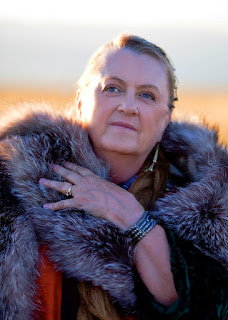
Audiobook Narrator and Actor Ruth Urquhart on Narrating ‘Queen Anna’, Book One of the Stuart Queen Trilogy
12 September 2026
New Audiobook: Queen Anna, Book One in the Stuart Queens Trilogy, Narrated by Ruth Urquhart
12 September 2025
New Audiobook in The Elizabethan Series: Bess - Tudor Gentlewoman
16 July 2025
Audiobook Blog Tour: : Dagger’s Destiny (Curse of Clansmen and Kings, Book 2), by Linnea Tanner, Narrated by Kristin James
“Tanner is a masterful wordsmith and storyteller. There were no plot holes, everything was believable, and her characters grew as did the plot.” ~ The Audiobook Reviewer" For those with an interest in epic fantasy, the characters and their interactions, each with their personal goals and motivations, and often in conflict with each other, Dagger’s Destiny is a book sure to keep your interest.” ~ Geoff Habiger for Readers' Favorite (GOLD MEDAL Fiction: Magic/Wizardry)
3 January 2025
New Audiobook in the Elizabethan Series: Raleigh - Tudor Adventurer
He didn’t dance or joust, didn’t come from a noble family, or marry into one. So how did an impoverished law student become a favourite of the queen, and Captain of the Guard?
The story which began with the Tudor trilogy follows Walter Raleigh from his first days at the Elizabethan Court to the end of the Tudor dynasty.
29 August 2024
New Audiobook in the Elizabethan Series: Frances - Tudor Countess
1 August 2024
Blog Tour: Fortune's Wheel: The Meonbridge Chronicles, Book 1 Audiobook by Carolyn Hughes
10 February 2024
New Audiobook Sample: The story of Robert Devereux, Earl of Essex, one of the most intriguing men of the Elizabethan Court, Narrated by Nigel Peever.
3 November 2023
New Audiobook in the Elizabethan Series: Penelope - Tudor Baroness, narrated by Ruth Redman
A Life of Love and Scandal
Lady Penelope Rich is one of the most beautiful and sought-after women in Elizabethan England. The daughter of the Earl of Essex, she is married to the wealthy Baron Robert Rich.
Penelope's life is full of love and scandal. The inspiration for Sir Philip Sidney’s sonnet "Astrophel and Stella", she is involved in the Essex Rebellion. A complex and fascinating woman, her life is a story of love, betrayal, and tragedy.
This is the story of a woman who lived life on her own terms, and it is a story that will stay with you long after you finish listening to it.
3 August 2023
Blog Tour: The Lady of the Tower Audiobook Excerpt by Elizabeth St.John
Barbara got up from Frances’s side and walked across the room to me. Under the pretense of an embrace, she whispered clearly.
“’Struth, Lucy, if you intend to pursue this road with Theo, judge your odds and be prepared to wager the stakes, for those who aim high can also fall far. Do not look to me for aid, for you choose your own path, and if ruin is the outcome, I shall publicly disown you.”
I stepped back involuntarily.
“What have I ever done to make you hate me so much?” I asked. “I don’t understand why you are this way to me.”
“Not hate. Indifference. I do not see what others see in you. And my plans will not be compromised by your foolishness. Straighten your gown — you reveal too much.” She pulled the soft muslin across my reddened skin, kissed my cheek as though she were Judas, and left.
“Theo . . .”
I turned to him for reassurance, but he was gone. Drawn into Carr’s circle, he was loudly joking and drinking steadily from a goblet of wine. As I stared at him, trying to reconcile this frivolous courtier with the man I loved, he shrugged, laughing at his situation, and turned back to his friends. The musicians, who sounded so glorious when I first arrived, now rang discordant. I sickened of the entire confusing visit to White Hall and wished myself back in the peace of Lydiard.
“But you know this is the way of the court.”
The night lay between us, and we met at the Stone Gallery again during the afternoon promenade. The pavement reflected a cold light; falling snow continued to swathe the palace in gauze, softening the angles of the roofs and chimneys, and settling on charcoal-etched branches. A woman in a crimson cloak hurried across the privy garden, a daub of color in a black-and-white landscape. I wondered whose arms she was seeking, so swiftly, in such inclement weather. All my thoughts turned first to lovers now.
I touched Theo’s arm to bridge the distance.
“I know, I am not stupid. Anne has told me of her years at court where she witnessed firsthand the deceptions and lies, the flattery and untruths. It just does not sit right with me to see you in that world.”
“Ah, Lucy, it’s just a game. Seize the opportunity to know us better, and you will find this amusing. As long as you do not take yourself seriously, there is no harm in playing these subtleties.”
“Is that what last night was?”
“No, that was no game, for you have captured my heart and enchanted my soul, Titania.” He pulled me to him, ignoring the glances of those around us. “Learn the ways of White Hall, and enjoy courtly love.”
Elizabeth St.John
8 March 2023
New Audiobook in the Elizabethan Series: Drake Tudor Corsair, narrated by Joff Manning
19 January 2023
Historical Fiction Spotlight: His Castilian Hawk (Audiobook Edition) by Anna Belfrage
For bastard-born Robert FitzStephan, being given Eleanor d’Outremer in marriage is an honour. For Eleanor, this forced wedding is anything but a fairy tale. Robert FitzStephan has served Edward Longshanks loyally since the age of twelve. Now he is riding with his king to once and for all bring Wales under English control.
Eleanor d’Outremer—Noor to family—lost her Castilian mother as a child and is left entirely alone when her father and brother are killed. When ordered to wed the unknown Robert FitzStephan, she has no choice but to comply.
More recently, Anna has published The Wanderer, a fast-paced contemporary romantic suspense trilogy with paranormal and time-slip ingredients. While she loved stepping out of her comfort zone (and will likely do so again ) For more information visit Anna's website http://www.annabelfrage.com. You can also visit her blog and follow Anna on Twitter @abelfrageauthor.
2 March 2022
Special Guest Post by Ruth Redman - Narrator in a Pandemic
Going though a pandemic over the past two years has raised the profile of audiobooks as we as society have investigated different ways to find entertainment, escape into stories and seek ways to explore and imagine other lives.
The search for such sources of ideas and ‘soul food’ has been even more important as we have grappled with the issues and challenges this period in history has brought us.. and ironically, at a time when we have been deprived of chances to socialise, our desire to find times alone is strong… sharing our homes with others we live with who may be there more than usual means that claiming time alone with a book or audiobook can be harder to manage.
I’m sure I’m not alone in having found the need for reflection and re-evaluation and snatched solitude even greater because of the extraordinary events brought about by the pandemic. Alongside that ‘existential’ change, of course, has been a great practical change as we have had to find work spaces at home in ways that allow us to create working conditions and keep our sense of home going as well, perhaps living more ‘cheek by jowl’ than we might want to.
Many audiobook narrators, myself included, work from home studios, at least some of the time. That means creating studio conditions, perhaps in a spare room or outbuilding. During lockdown I and my family built and moved into a garden cabin whilst building work at home meant we would have had to move out. Rather than pay rent during that time, the thinking went, we could create that space to live in then benefit from the amenity of a workspace in the back garden afterwards..
The plan was implemented, the downside being living in the garden for five months during a pandemic we hadn’t been expecting, when the planned trips to pubs or cafes for meals didn’t materialise as we were all locked down. I hadn’t quite bargained for the extended camping trip that ensued, but all that is history now, thank goodness, and these days I narrate from that room in the garden. My previous ‘studio’ was a converted wardrobe lined with eggshell foam which stood in the spare room… now I have the luxury of a 2m x 2m room. It has made it all worthwhile.
I’ve been pursuing this line of work for about five years now and have about a dozen audiobooks under my belt so far. The investment of time, learning, researching and acquiring the right equipment then learning how to use it has been considerably more than I ever imagined it would be.
I trained as an actress and have worked, and still do, in lots of different forums. But that hasn’t made this a simple side step.. The work of narrating is a completely different and separate job from other forms of performance, and I can honestly say that learning how to do it is something that I am still working on and expect to carry on doing so for years to come. I have learned how different this work is from other forms of storytelling, and realise more and more how much there is to learn about doing this work, and how rewarding it can be. It is a steep hill to climb for sure.
It sounds like stating the obvious of course, but the audience can’t see you. Your voice has to create the pictures. A wonderful mentor and teacher of mine and excellent narrator, Helen Lloyd, recently said something to me that really resonated for me. She said ‘Give the listener time to ‘see’ the image you have painted with your words.’ Adopting the right pace, keeping the story moving yet giving enough space for those images to form in the ‘eye’ of the listener is quite a skill.
There is no doubt that the vocal training I was lucky enough to receive at drama school supports me every day, and the work of reading, analysing and preparing a text for reading is in many ways similar to the way an actor would prepare a script. Homework, including research into the time in which the work is set, the world of the book in terms of the age, the customs and the environment of the characters all help the narrator to ‘know’ the material well enough to convey it through the author’s words.
The cast of characters, all created by the author, are to be played by you, the narrator. Freed from the constraints of physical appearance it is enjoyable and liberating to perform them, but of course technique is required to make them ‘live’, without visual help and to make sure they are distinct and repeatable.
There has been a great rush of interest in becoming audiobook narrators amongst actors who don’t usually work in that way, of course. With theatres closed and performers in need of alternative sources of paid work such investigation is sensible. Recording spaces have been improvised, invested in and adapted in many homes and the industry seems to have exploded with interest and popularity.
I know some actors have, as a result, discovered a new way of working that really suits them. Others will have been only too glad to head back to the rehearsal room now that it has become possible again. I know that I relish the combination allowing for both and work hard to keep both plates spinning.
As with other branches of acting work, (to keep the plate image going for a moment,) this kind of work doesn’t come ready-served. Alongside the narration itself comes the work of building a business… raising a profile, building not only skills and experience but a presence.
This of course is nothing new, but the approach to working so much from home is something that has been brought into the spotlight so much more over the past two years as so many more people have had to embrace it. It's a branch of the work I don’t mind admitting that I find a challenge, but one that seems to be recognised and supported by a whole raft of people offering support for that kind of ‘upskilling’. So another phase of the learning begins.
Adjoa Andoh, a wonderful audiobook narrator and actress (and school friend) said in an interview with Graham Norton I watched her in recently, that amongst the challenges the Narrator needs to take on are to do full justice to a well written book and, at other times, elevate the less well written book with your performance. Both scenarios demand skill and preparation and both bring their own rewards.
As I continue to explore and learn about this job I am enormously appreciative of the number of people I have met so far, through networking, taking courses, joining online forums and generally absorbing as much wisdom as I can access, who are generous, knowledgeable and encouraging to newer narrators.
There seems to be room for us all, and plenty of work to go around as audiobooks continue to grow in popularity throughout the world. The pleasant irony is that although the job requires you to be alone quite a bit in your recording space, there is a great sense of community in the audiobook world which is an unexpected and wholly welcome discovery!
Ruth Redman
# # #
About the Author
Ruth Redman is an Actress and Audiobook Narrator. She narrates from her Home Studio. Trained at Bristol Old Vic Theatre School, Ruth works in Theatre, Film and Television in addition to her Narration work. Visit her website www.RuthRedman.co.uk for more information, and find her on Twitter @ruthredman123 February 2022
How to produce an audiobook with Amazon ACX in seven steps
I’d always thought the costs of producing an audiobook would be a stretch, so was encouraged to learn that Amazon’s ACX (Audiobook Creation Exchange) offers a ‘profit sharing’ deal, where authors can sign up to a 50:50 royalty split with the narrator.
To enter into a royalty share deal, you need to select exclusive distribution of the audiobook through Audible, Amazon and iTunes. Royalties of 40% are paid for exclusive distribution projects, so the rights holder and producer each earn 20% from each sale.
24 February 2021
Special Guest Post by Paul Walker, Author of State of Treason
Inspiration seems so much more creative and worthy than the structured and methodical act of planning, and it’s tempting to emphasise the former in any success as a writer I might enjoy. But looking back, there is no doubt that writing the William Constable historical thrillers was more the result of planning over years than a sudden whoosh of inspiration.
My mother was an early influence on my reading. She was a member of the Richard III Society and devoured all fiction (and some non-fiction) that covered Medieval Britain, especially the Plantagenets. She later expanded this to include Tudor and Victorian periods. Following her encouragement, I started reading historical fiction as a teenager. Josephine Tey’s Daughter of Time and T H White’s Once and Future King were memorable early reads.
In common with many others, reading for pleasure took a back seat while I worked my way up the greasy pole of career advancement, made a home and raised a family. It was later in my working life, commuting into London, that I rediscovered the joy of reading fiction again. My taste was eclectic. I read widely, quickly and, during this period, discovered what remains my favourite series of books – Patrick O’Brian’s Aubrey/Maturin novels of the English Navy in the early nineteenth century.
In mid-2016, some 15 years after my first encounter with O’Brian, I retired from full-time work. Within a month I had enrolled on two creative writing workshops. I had done plenty of academic and business writing, but had never made a serious attempt to write fiction. I found support and momentum in the company of other aspiring writers in the workshops and within three months had started to write a novel. Very little research was involved, with the plot of a contemporary thriller unfolding as I wrote. It was finished in four or five months, I had enjoyed the writing and, although it wasn’t very good, I had the experience of storytelling spread over roughly 100,000 words.
One of the best decisions I made was to get a professional critique. No matter how hard they try to be objective and critical, friends and family just can’t do it. I learned a lot from the critique and there was enough encouragement in there to suggest if I reworked and edited thoroughly, it may be taken up by a publisher. But I didn’t want to go down that road. I put my first attempt at a novel to one side as an apprentice piece. Despite my inexperience, I had the audacity to imagine I was now ready to tackle what I really wanted to write – historical fiction.
I had already decided it was to be set in sixteenth century England, even though I was advised the Tudors had been overdone and interest in the period was waning. I’m not a historian, but the Tudor period was the one I was most familiar with, so the research would be easier. Also, I wasn’t convinced that the market was saturated. Surely, the fabulous books by Mantel, Sansom and others had strengthened interest in a period full of intrigue, peril and opportunities to fire an author’s imagination. My protagonist would be fictional with the plot woven around real events and characters. An interest in Doctor Dee led to the choice of my hero as a scholar, rather than a swashbuckling adventurer.
So far, so planned with little in the way of ‘light bulb’ inspiration. I also knew I had to research and structure this book in meticulous detail. I couldn’t write flying by the seat of my pants. Errors would be pounced on and reported, damaging reputation and branding. Of course, I underestimated the time it would take to do the research and with my first book, State of Treason, the research took twice as long as the writing. But, for the most part, I enjoyed the preparation, consoling myself that it would be worthwhile if book one turned out to be the first of a series.
The most difficult part of writing the book was finding a style of writing to suit the period, the main characters and the pace of the plot. State of Treason is a spy thriller, so maintaining a good pace was essential. But I also wanted the reader to feel immersed in the sights, sounds and smells of Elizabethan London. I had to experiment with the balance between readability and authenticity in language before I settled on what I thought might work. Writing historical fiction in the present tense has its critics and I dithered before taking the plunge and choosing to write that way. The book is also written in the first person, from William Constable’s viewpoint, as it felt the most natural way to write the story.
I’ve taken a long and winding route to describe how writing the William Constable historical thrillers series was the result of inspiration from reading Patrick O’Brian and the somewhat uneven process of planning in the 15 or so years that followed. I was fortunate to find a publisher and enough readers who liked the book to consider producing an audio version – something I never envisaged when I started writing. And how was it creating an audio version of State of Treason? That’s a whole different story.
8 June 2020
Special Guest Post by Ruth Redman, The Audiobook Narrator
I say ‘my studio’. Actually for me at the moment that is a somewhat grandiose term for the converted wardrobe which serves the purpose for now. In a spare room in my house, painstakingly soundproofed with eggshell foam and padded with fabric, this little booth is my place of work. Measuring no more than 1.5 metres in each direction and illuminated by a small angle poise lamp it is the hub, the control room and the office all at once from which I conduct my work.
To have become an Audiobook narrator I have embarked on a journey. The learning of new skills, the acquisition of the right equipment and the development of a working practice in which I am accustomed to working entirely on my own; self-reliant, self- sufficient and self-disciplined has taken time, effort and not inconsiderable expense.
Once I have accepted an invitation to narrate a work, the first thing I have to do is to read the whole book. More than once. It’s important to know the direction of travel of the plot, to meet and find out about the characters and to be familiar with the overall ‘arc’ of the story. It’s no use just being a few steps ahead of the reader… that’s too much like the blind leading the blind. They , the listeners will be taken by surprise at times… It is important that I am not.
Being prepared means looking in detail at the locations, the events surrounding the characters and in many cases driving their actions and responses, and of course the characters themselves. What clues has the author provided to describe them? What motivates them, how do they express themselves and how do they speak?
‘Katherine Tudor Duchess’ by Tony Riches is a book I narrated fairly recently. In it there were several scenes between Katherine and Catherine Parr, Henry VIII’s sixth wife. When speech is attributed to two women in a conversation, both called Katherine (or Catherine) it is important to find ways to make sure the listener can tell who is speaking… requiring me to find different ways to use my voice.. variations in pace, tone, pitch and the way they breathe for example.
Of course, being an Audiobook Narrator is often fun. You are cast in all the roles at once, you are the director and free to make your own artistic choices. It is a chance to play roles you would never be cast in were the decisions solely down to the way you look, as is the case in other areas of performance. In ‘Katherine Tudor Duchess’ I was a young princess, a tyrannical King, A scheming chancellor, numerous children, embittered and manipulative politicians, and so on and so forth…. The list is enormous. Actors love to find ways to create character and tell stories and the narration of a text provides an excellent platform for that.
As I said earlier, the Narrator needs to be happy working alone. Of course that isn’t completely true. The dialogue between Author and Narrator is important. He or she has chosen you for the qualities you bring to their work and trusted you to bring it to life. The characters and stories are filtered through you but remain theirs at some level, so for them to feel happy entrusting their creation to you means that they are likely and welcome to comment.
Listen to a short excerpt, narrated by Ruth Redman: