Mastodon The Writing Desk

20 March 2020

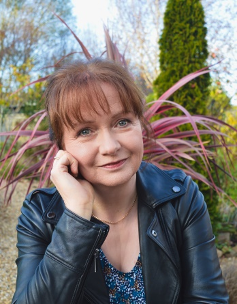
Guest Interview with Helen T. Doan, Author of Passage of Time


Available on Amazon UK, Amazon US

Set in the American west at the start of the Indian wars, Passage of Time is about finding one’s true self while facing impossible choices.

I'm pleased to welcome author Helen T. Doan to The Writing Desk:

Tell us about your latest book

My latest book is Passage of Time, featuring time traveler Kate Hunter and Cheyenne adoptee Nathan Walker. The book is set in 1857 in the American plains at the time of the start of the Indian wars, and focuses on the Cheyenne tribe. The plot revolves around tribal customs, the Battle of the Solomon, and math numbers known as the Fibonacci sequence.

What is your preferred writing routine?

I guess my preferred writing routine would be to research/write almost nonstop for several hours without interruptions, taking only micro rests to grab healthy snacks and meals. I swear snacks fuel my brain cells. I’ve been known to often start my writing day at 9 a.m. and finish it at midnight or later. But that was when there was only myself to think about. 

Now I have a red-rumped parakeet that shrilly whistles for my attention, a British bulldog that wants to go for walks, and a boyfriend who works the sunrise shift. All that, as well as trying to fit in eight hours of sleep, regular exercise, time to build a social media following…and writing. Although I can multi-task — it comes from my having been a newspaper editor/reporter — I dream of a solo three-month author residency in Pierre Burton’s Dawson City childhood home in the Yukon, where I could burn the midnight oil and write until I run out of snacks or ideas.

What advice do you have for new writers?

My first attempt at writing a book was in Grade 8, and I’m still writing all these years later because I can’t not write. After my husband died, I enrolled in a newspaper journalism program to hone my writing skills because I wanted to be a published author. I also took creative writing courses, attended romance writing conferences, and learned how to write realistic dialogue by reading dozens of Nora Roberts’ books. 

So here’s my advice to new writers: If you’re passionate about writing, do everything to learn your craft, and read, read, read. Let those inevitable rejection slips spur your determination. If you’re lucky, some editor might let you know how you can improve your writing so you don’t continue repeating your mistakes.

What have you found to be the best way to raise awareness of your books?

So far, I’ve had success with free book promotions and also when I’ve been asked to speak about my book to various audiences. I’m hoping this guest blog will be yet another way to raise awareness for Passage of Time. 

Tell us something unexpected you discovered during your research

Until I read Colorado Legends & Lore by Stephanie Waters, I was unaware of a natural phenomenon Denverites call stripper syndrome, whereby human perspiration acts like a conductor during lightning strikes, causing clothing to be blown off a victim’s body.

Seems it happens a lot at Denver’s Coors Field during baseball games. When someone is struck naked this way, the crowd quickly strips to do a naked wave on the JumboTron. I will certainly find a way to use the stripper syndrome in one of the sequels.

What was the hardest scene you remember writing?

I think love scenes are hard to write. It’s always a challenge to not repeat the same phrases you’ve used elsewhere in the book, or in another book. The first love scene between Kate and Nathan was challenging because they came from different time periods. Initially I used Kate’s POV, but soon rewrote the scene using Nathan’s, because it created humor and allowed the reader to better understand Nathan’s shock at seeing Kate’s flimsy undergarments, which were far removed from 19th century attire.

What are you planning to write next?

I’m currently writing the as-yet-untitled sequel to Passage of Time. The setting is the unruly early years of Denver at the time of the Pike’s Peak gold rush. Mountain men and bands of Cheyenne and Arapaho Indians seasonally came to the area. Among the daily influx of professional and amateur gold seekers who also arrived at the Cherry Creek settlements were gamblers and thieves and eventually worse criminal types. 

Imbibing too much vile liquor led to violence between men – murder or a duel was the common method for settling disputes. Eventually vigilante committees were formed to decide the fate of wrongdoers. A quick hanging at a gallows set up on the banks of the Platte river was the usual punishment for serious crimes. In this atmosphere, finding the one person who might know how to get Kate back to her time will not be easy for Kate and Nathan.

Helen T. Doan
# # #

About the Author

Helen T. Doan lives in Southern Ontario, where she was lifestyles editor/reporter for a daily newspaper. After later completing her sociology degree, she taught ESL at a private school on Geoje Island in South Korea. Writing has been her passion since Grade 8, and in 2018 she published Passage of Time, the initial book of a multi-book historical romance saga about time traveler Kate Hunter and Cheyenne war chief Nathan Walker. Find out more at Helen’s website: www.helentdoan.com. You can contact Helen on Facebook and Twitter @HelenTDoan

17 March 2020

First You Write a Sentence: The Elements of Reading, Writing ... and Life, by Joe Moran #AuthorToolboxBlogHop


Available on Amazon UK and Amazon US

“Do you want to write clearer, livelier prose? This witty primer will help.” —The New York Times Book Review

An exploration of how the most ordinary words can be turned into verbal constellations of extraordinary grace through the art of building sentences

The sentence is the common ground where every writer walks. A good sentence can be written (and read) by anyone if we simply give it the gift of our time, and it is as close as most of us will get to making something truly beautiful. 

Using minimal technical terms and sources ranging from the Bible and Shakespeare to George Orwell and Maggie Nelson, as well as scientific studies of what can best fire the reader's mind, author Joe Moran shows how we can all write in a way that is clear, compelling and alive.

Whether dealing with finding the ideal word, building a sentence, or constructing a paragraph, First You Write a Sentence informs by light example: much richer than a style guide, it can be read not only for instruction but for pleasure and delight. 

Along the way, it shows how good writing can help us notice the world, make ourselves known to others, and live more meaningful lives. It's an elegant gem in praise of the English sentence.

# # #

About the Author

Joe Moran is a writer, lecturer and professor of English and cultural history at Liverpool John Moores University. As well as publishing articles in obscure academic journals, he writes for the Guardian, the New Statesman, the Financial Times and other publications. Find out more at Joe's website https://joemoran.net/ and find him on Twitter @joemoransblog

Do you have suggestions for useful books for writers you would like to share? Please feel free to comment below


The #AuthorToolboxBlogHop is a monthly event on the topic of resources and learning for authors. Feel free to hop around to the various blogs and see what you learn! The rules and sign-up form are below the list of hop participants. All authors at all stages of their careers are welcome to join in.

9 March 2020

Guest Post by Diana Jackson, Author of Missing, Past and Present


New on Amazon UK and Amazon US

Following the mysterious disappearance of her husband, Dorothy Gibbons, affectionately known as Lady Pink Hat, trudged the lanes around Drumford, homeless and directionless. Alone she rolled a dice, reflecting on her life, times both painful and pleasant. She stumbled upon The Grange, which changed the course of her life. In her isolation Dot began to write ...Millie, an 18th Century aspirant nun, ran away from The Grange ...Jamal Hussain, a Syrian refugee and asylum seeker, was fostered under the careful wing of Dorothy until leaving school and finding work. He and his brother settled in a nearby flat until the misguided Ahmed Hussain also disappeared. With three missing people, who will discover the truth? Is Millie still haunting 
The Grange until her story is told?


Three Strands of Research and Planning ~ Past, Present and the roll of a Dice

My inspiration for MISSING Past and Present began from two angles; three if you count the dice!

1. The Past

When an old abandoned, but not dilapidated house was pointed out to me while walking with friends one day, I was moved to look it up on an old map and found that it was called ‘The Grange’. I noticed, though, that there were several other places labelled ‘the Grange’ and so I looked this up online:
Dictionary.com wrote:
grange 
noun 
Chiefly British. a country house or large farmhouse with its various farm buildings (usually in house names):Bulkeley Grange;the grange of a gentleman-farmer.
(in historical use) an isolated farm, with its farmhouse and nearby buildings, belonging to monks or nuns or to a feudal lord:the nunnery's grange at Tisbury.
the Grange, See under Granger Movement. 
Archaic. a barn or granary.
That led me to do some research in my local archives. Was there a monastery or nunnery in the area? I found several, surprisingly. Were there any notable mysterious happenings? Yes ...

I stumbled upon a story of a trainee nun’s ghost who is allegedly still swinging from the rafters in a place not far from the abandoned home. She caught my attention and I was hooked. The ghost is at Chicksands Priory, a place with a fascinating history of its own, but I decided against relocating my novel there.

I next wrote down a series of questions about monastic life, many of which I could discover online:

What are the stages to become a nun? 

Here’s a lovely succinct website: https://nunsforpriests.org/handmaid-vocations/steps-how-does-one-become-a-nun/

I chose an 'aspirant nun' for my story and called her Evie.

What kind of dress would she be wearing in the 18th century?

I Googled this and found some great pictures, but an aspirant nun’s costume would have been simpler. More of a tunic, especially when doing farm work.

What would the pattern of her day be like?

There are seven hours of prayer:
“any of certain periods of the day set apart for prayer and devotion: these are matins and lauds, prime, tierce, sext, nones, vespers, and compline. Prime - the second canonical hour; about 6 a.m. terce, tierce - the third canonical hour; about 9 a.m. nones - the fifth of the seven canonical hours; about 3 p.m.”
My imagination was working at its most virulent in thinking of ideas for a possible plot.

Why did she become an aspirant nun? You’ll have to read the story ...
Did she have any family?

Yes she did and I decided that her sister would be training to be a nun alongside her. It is Evie's sister Millie who disappears.

Why is she swinging from the rafters?
You’ll have to read the story to find out.

My research continued for Millie. Without giving the story away too much, this included questions and visits:

How long did it take people to travel on 18th Century tracks and roads?

What canal systems were in place? A visit to the canal museum in Stoke Bruerne.

What type of work did itinerant workers find in different areas of the country heading north?


There was a workhouse to research.

A visit to make to New Lanark Mills. (and guidebooks to buy)

Research is never quite finished but is ongoing until the first draft is complete.

2. The Present

In the present I was drawn to the uncomfortable truth about homelessness and the need for food-banks, but also the human aspect of refugees. (It is all too easy to think of numbers) As a friend once remarked ‘there but by the grace of God go I,’ which sums up my feelings that if it were not for chance, it could happen to any one of us in the ‘blink of an eye’, if you’ll excuse the cliché.

It is a worrying thought that we even have many ‘refugees’ escaping the flood waters in the UK at the moment. (I'm talking here of folks being temporarily re-housed in the crisis.)

I made notes on my experiences too~ of volunteering at a soup kitchen in Luton years ago and more recently at a food-bank locally in Fife. I also noted many of my memories teaching refugees and asylum seekers while teaching at a college in Luton.

I drew on personal experiences or on second hand accounts for much of Dot's life, my homeless character ,and I based her living in a make believe town called Drumford with the Grange at a village called Canbury. I chose made up locations this time to preserve the anonymity of the actual house on which the story was based.

3. The Dice

This was an unusual device I stumbled upon. I found a dice and was rolling it one day and found myself wondering about times in my own life which could be seen as a 'one' or a 'six'.

This was perfect for Dot as she remembered the back story of her life, which had brought her to the point of homelessness.

I must admit I loved this idea and enjoyed writing about it.

~ And so MISSING Past and Present was conceived, researched, planned and now it is born!

Diana Jackson
# # #

About the Author

Diana Jackson is a retired teacher and her first, historical romantic fiction, Riduna, set in the Victorian era, was re-launched by Eventispress in 2012 - a writer’s indie collaborative publisher, through which all her other works have been published. After moving to Fife from Bedfordshire in 2014 Diana has had a break from her life as an author to settle into her new life within the Kinghorn Community. To find out about Diana Jackson’s other writing projects, you can visit her blog http://dianamj.wordpress.com/ and find her on Twitter @Riduna

7 March 2020

Footprints in the Sand (The Lucy Lawrence Mysteries Book 2) by Pam Lecky


Available from Amazon UK and Amazon US

Cairo 1887: A melting pot of jealousy, lust and revenge. 
Who will pay the ultimate price?

Lucy Lawrence throws caution to the wind and embarks on a journey of self-discovery to the land of the pharaohs.

Travelling to Cairo as the patron of the charming French Egyptologist, Armand Moreau, Lucy discovers an archaeological community plagued by professional rivalries and intrigue. It is soon apparent that the thriving black market in antiquities threatens Egypt’s precious heritage.

When the Egyptian Museum is burgled, Lucy is determined to solve the case, much to the annoyance of the local inspector of police, and the alarm of Mary, her maid. 

But when an archaeologist is found murdered in the Great Pyramid, Lucy is catapulted into the resulting maelstrom. Can she keep her wits about her to avoid meeting a similar fate?

# # #

About the Author

Pam Lecky
 is an Irish historical fiction author with Avon Books UK/Harper Collins. She is a member of the Historical Novel Society, The Crime Writers' Association, and the Society of Authors. She is represented by Thérèse Coen, at the Hardman & Swainson Literary Agency, London. Pam has a particular love of the late Victorian era/early 20th Century. In November 2020, Pam signed with Avon Books UK/Harper Collins in a two-book deal. The first book in the historical thriller series, Her Secret War, was published in October 2021; the sequel, Her Last Betrayal, will be published in April 2022. Her debut novel, The Bowes Inheritance, was awarded the B.R.A.G Medallion; shortlisted for the Carousel Aware Prize 2016; and longlisted for the Historical Novel Society 2016 Indie Award. Her short stories are available in an anthology, entitled Past Imperfect, which was published in April 2018.  June 2019 saw the release of the first book in the Lucy Lawrence Mystery series, No Stone Unturned, a fast-paced Victorian mystery/crime, set in London and Yorkshire which was awarded the B.R.A.G. Medallion. The sequel, Footprints in the Sand, set in Egypt, was released in March 2020. The third book in the series, The Art of Deception, was published in December 2021.  Find out more at Pam's website https://pamlecky.com/ and find her on Twitter @pamlecky

6 March 2020

The Mirror and the Light (The Wolf Hall Trilogy) by Hilary Mantel


New on Amazon UK and Amazon US

The long-awaited sequel to Wolf Hall and Bring Up the Bodies, the stunning conclusion to Hilary Mantel’s Man Booker Prize-winning Wolf Hall trilogy.

England, May 1536. Anne Boleyn is dead, decapitated in the space of a heartbeat by a hired French executioner. As her remains are bundled into oblivion, Thomas Cromwell breakfasts with the victors. The blacksmith’s son from Putney emerges from the spring’s bloodbath to continue his climb to power and wealth, while his formidable master, Henry VIII, settles to short-lived happiness with his third queen, Jane Seymour.

Cromwell is a man with only his wits to rely on; he has no great family to back him, no private army. Despite rebellion at home, traitors plotting abroad and the threat of invasion testing Henry’s regime to breaking point, Cromwell’s robust imagination sees a new country in the mirror of the future. 

But can a nation, or a person, shed the past like a skin? Do the dead continually unbury themselves? What will you do, the Spanish ambassador asks Cromwell, when the king turns on you, as sooner or later he turns on everyone close to him?

With The Mirror and the Light, Hilary Mantel brings to a triumphant close the trilogy she began with Wolf Hall and Bring Up the Bodies. She traces the final years of Thomas Cromwell, the boy from nowhere who climbs to the heights of power, offering a defining portrait of predator and prey, of a ferocious contest between present and past, between royal will and a common man’s vision: of a modern nation making itself through conflict, passion and courage.
# # #

About the Author

Hilary Mantel is the two-time winner of the Man Booker Prize for her best-selling novels, Wolf Hall, and its sequel, Bring Up the Bodies. Wolf Hall has been translated into 36 languages, Bring Up the Bodies into 31 languages, and sales for both books have reached over 5 million copies worldwide. Find out more at Hilary's website https://hilary-mantel.com/ 

5 March 2020

Historical Fiction Spotlight: The Swan's Road: The Atheling Chronicles: #1 by Garth Pettersen


Available on Amazon UK, Amazon US
and Amazon CA

In the eleventh century, Cnute, the Viking king of Engla-lond and Scandinavia, sails with his son, Harald, and his shield brothers to Rome. Thrown off course by a storm, they follow the route up the Rhine.

When Harald hangs back to assist Selia, a beautiful Frisian woman, his path turns perilous. Newfound enemies, retainers of Robert the Devil, Duke of Normandy, pursue them. Harald, Selia, and their companions fail to rendezvous with King Cnute, and are forced to travel cross-country on horseback. If Duke Robert's plan to assassinate Cnute succeeds, an invasion of Engla-lond will follow.

Can Harald and Selia reach Rome in time to warn the King?

# # #

About the Author

Garth Pettersen is a Canadian writer living in the Fraser Valley near Vancouver, BC. When he's not writing, he is riding horses or working with young disabled riders. Garth's short stories have appeared in a number of anthologies and in journals such as Blank Spaces, The Spadina Literary Review, and The Opening Line Literary 'Zine. His story River's Rising was awarded an Honourable Mention for the Short Story America 2017 Prize, and his fantasy novella River Born, was one of two runners-up for the Windsor Editions (UK) Short Fiction Prize. Garth Pettersen's historical fiction series, The Atheling Chronicles is published by Tirgearr Publishing. Find out more at Gareth's website http://www.garthpettersen.com/ and find him on Facebook and Twitter @garpet011


4 March 2020

Book Launch - Missing, Past and Present, by Diana Jackson


New on Amazon UK and Amazon US

Following the mysterious disappearance of her husband, Dorothy Gibbons, affectionately known as Lady Pink Hat, trudged the lanes around Drumford, homeless and directionless. Alone, she rolled a dice, reflecting on her life, times both painful and pleasant. She stumbled upon The Grange, which changed the course of her life. In her isolation and surrounded by old books Dorothy began to write

An 18th Century aspirant nun, Millie, ran away from The Grange ...

Jamal Hussain, a Syrian refugee and asylum seeker, was fostered under the careful wing of Dorothy until leaving school and finding work. He and his brother settled in a nearby flat until the misguided Ahmed Hussain also disappeared.

With three missing people, who will discover the truth? Is it Millie who is still haunting The Grange until her story is told?

# # #

About the Author

Diana Jackson is a retired teacher and her first, historical romantic fiction, Riduna, set in the Victorian era, was re-launched by Eventispress in 2012 - a writer’s indie collaborative publisher, through which all her other works have been published. After moving to Fife from Bedfordshire in 2014 Diana has had a break from her life as an author to settle into her new life within the Kinghorn Community. To find out about Diana Jackson’s other writing projects, you can visit her blog http://dianamj.wordpress.com/ and find her on Twitter @Riduna