
Mastodon The Writing Desk

7 March 2022

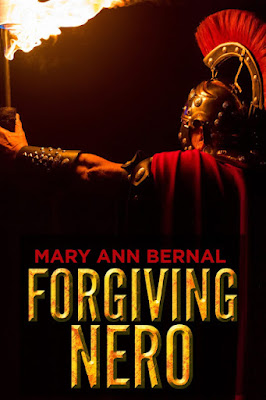
Special Guest Post by Mary Ann Bernal, Author of Forgiving Nero


Available from Amazon UK and Amazon US

Rome. The jewel of the civilized world is no longer what it was. Strength has failed the Senate. Her legions are in disarray, and the Empire has fallen into Lucius Domitius Ahenobarbus Nero’s hands. His reign begins under a cloud of scrutiny, for he is the depraved Emperor Caligula’s nephew. Nero is determined to overcome that stigma and carve a name of his own. One worthy of Rome’s illustrious history.Politics and treachery threaten to end Nero’s reign before it begins, forcing him to turn to unexpected sources for friendship and help. 


Emperor Nero - Monster or Victim?

The Biographers

The ancient historians Tacitus, Suetonius, and Cassius Dio, are responsible for the historical accounts of Nero’s reign that have survived to this day. It is important to note that none of the works were written during Nero’s lifetime. Emperor Nero died in AD 68. Suetonius was born in AD 70, Tacitus in AD 56, and Cassius Dio in AD 155. Their partiality to the facts is suspect, relying on hearsay. It is important to remember history is written by the victors and is not always accurate.
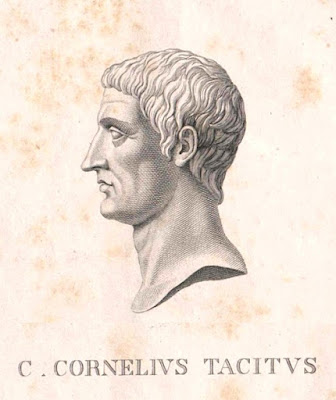

Tacitus

Family History

To understand Emperor Nero’s mindset or genetic predisposition, as some may claim, we must immerse ourselves into the political arena of the Roman Empire, where the wrong choice could result in ruin or death.

Emperor Tiberius’s heir, the future Emperor Caligula, spent most of his youth on the Isle of Capri. He witnessed first-hand continuous plotting, paranoia, assassination attempts, and sexual deviancy while trying to stay alive as his uncle silenced his opponents, including Caligula’s mother and brothers.

When Emperor Caligula came to the throne, he ordered his sisters to return to the Imperial Court, which included Agrippina, mother of Emperor Nero. After recovering from an illness that changed Caligula’s personality, Agrippina and her sister plotted against their brother, but the attempt failed. Agrippina was exiled to the Pontine Islands while her son was sent to Calabria to live with his paternal aunt.

Upon the death of Emperor Caligula, Claudius became Emperor. He recalled Agrippina and Nero to the Imperial Court. The mother and son reunion greatly impacted the young Nero. He observed the power struggle between his mother and Messalina, the wife of Claudius, as their ambitions clashed, each wanting the throne for their son.  

Agrippina’s obsession never faltered. She survived the assassin’s hand, manipulated powerful men, including her Uncle Claudius, whom she eventually married. Once Nero was named heir to Caesar’s throne, Claudius died unexpectedly after eating poisonous mushrooms. Shortly thereafter, Claudius’s son, Britannicus, died after suffering a seizure. Nero’s rule was now secure.
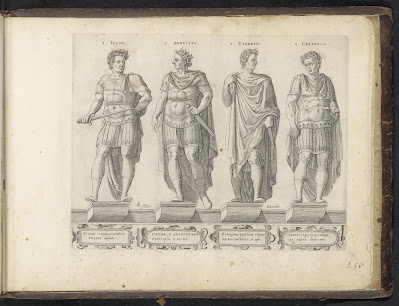

Julius Caesar, Augustus, Tiberius and Caligula

Childhood

Imagine a four-year-old child being torn from his mother and sent away to a holding 350 miles south of Rome. What thoughts must have run through young Nero’s mind when he found himself alone, surrounded by strangers who probably kept their distance, fearing reprisal from Caligula?

During that formative year, Nero lived among the slaves, playing with the children, helping in the fields, crying himself to sleep, lonely and afraid.

In all probability, the slaves pitied the child, ignored by his relatives, and treated him as one of their own. 

Nero’s adjustment to his new station in life unraveled with his return to the Imperial Court. For a second time, the child’s stability was uprooted. Instinctively, he clung to his mother, not knowing his part in a dangerous game being played. 

Did Agrippina instil fear into his impressible mind, telling her son only she could save him, causing his dependency?  


Nero and Agrippina

The Imperial Court

Nero’s education befitted his rank. He loved the arts and enjoyed writing poetry, playing instruments, and singing songs. Wearing costumes while acting in Grecian plays endeared him to his tutors, and the people admired his athletic prowess. 

However, during this time, Nero lost his innocence, learning the machinations of government, and the lengths to keep power, greed overshadowing equality, the privileged few ignoring the rule of law.

Did he suspect his mother’s part in the demise of Messalina? Who had alerted Claudius about his wife’s licentious affairs? Did Agrippina manage to lace the mushrooms with poison after the food had been tasted? What part did she play in Britannicus’s death, if any? 

Nero watched the events play out silently while absorbing the seeds of power. This aphrodisiac would evolve, becoming insatiable, following a familiar path as his uncles before him.
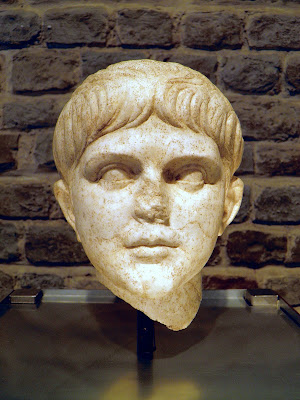

Nero before becoming Emperor

Emperor

The first five years of Emperor Nero’s reign showed a young man caring for his people. He lowered taxes and gave more authority to the Senate. He created programs for the Arts and made changes to the slave laws. Later in his reign, he provided Fire Relief when most of Rome lay in ruins.

Unfortunately for Agrippina, her son grew up, and with maturity came annoyance at her meddling. His mother was an adept politician with excellent ruling skills. When she refused to pass the torch, friction followed.

There were many arguments between mother and son as Nero spread his wings. But Agrippina met her match with Nero’s current wife, Poppaea. This power struggle could only have one outcome, and Agrippina would not be victorious.

Did Nero arrange for the execution of his mother? In all probability, Poppaea was involved from the beginning. Agrippina survived many assassination attempts, but her days were numbered. When she did not drown after her boat sank, soldiers were sent to finish the job. She either died by her own hand or by a guard’s sword. 

This unfortunate decision plagued Nero for the rest of his life. Rumors spread that Agrippina’s ghost haunted the emperor’s dreams. His sanity remained in question.

Poppaea felt threatened by Nero’s former wife, Octavia, who he divorced after charging her with adultery. But Poppaea would not rest until she had Octavia’s head on a platter. Once exiled, Nero ordered his guards to execute the daughter of Claudius and bring Poppaea her head. 

And gossipmongers repeated bone-chilling tales of Octavia’s ghost joining Agrippina’s apparition in Nero’s bed-chamber, causing him to cower beneath a pillow.

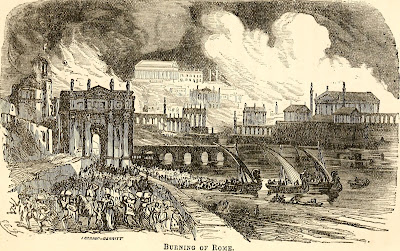
The people blamed their emperor for the Great Fire, accusing him of setting the flame freeing land to build his Golden House. Did Poppaea suggest that her husband accuse the Christian sect of starting the fire? A perfect ploy to keep the emperor in the people’s good graces. And the idea worked. Culpability shifted, condemning the followers of Christ to death.
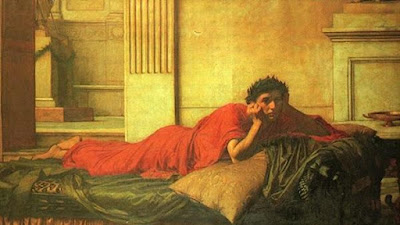

Remorse of Emperor Nero after the murder of his mother

Popular Misperceptions:

Kicking a pregnant wife to death

Although Nero had violent outbursts, there were no witnesses to the alleged attack on his pregnant wife, Poppaea. In all probability, she died in childbirth. 

Death of Britannicus

Modern historians have disputed the ancient text that Nero had poisoned his stepbrother, threatening his succession. Scientists have also challenged this claim. It has been argued that since Britannicus suffered from epilepsy, the condition caused his death by obstructing his airway.

Nero fiddled while Rome burned

Fiddles did not appear until the Middle Ages. Furthermore, Nero was away at his villa in Antium (modern-day Anzio) when the fire started at a merchant’s stall near the Circus Maximus. When word reached the emperor, he rushed back to Rome, fighting the blaze and providing temporary housing for the displaced citizens.

The Verdict

People are a product of their environment. The mores of the first century are very different from the twenty-first century. Although the brutality of the time cannot be condoned, the reality of the times explains why. 

Nero was not born a monster, yet the genetic predisposition argument says otherwise, especially since similar traits were evident with his uncles, Tiberius and Caligula.

Nero had been in love with a slave whom he wanted to marry, wishing to live out their days in Greece before Agrippina sent her away. Without his love’s wise counsel, Nero followed his mother’s advice, choosing power and wealth no matter the cost.

He had been sensitive to the plight of the poor and the treatment of slaves. Even at his death, the citizens of Rome loved their Emperor they had compared to Adonis. Perhaps, Nero was not completely lost?

Somewhere the good-natured boy turned into a suspicious man after realizing the dangers of wearing Caesar’s crown. Self-survival meant eradicating one’s enemies. That was the world Nero lived in. Should he have attempted to change the system? Would he have stayed in power if he had tried? 
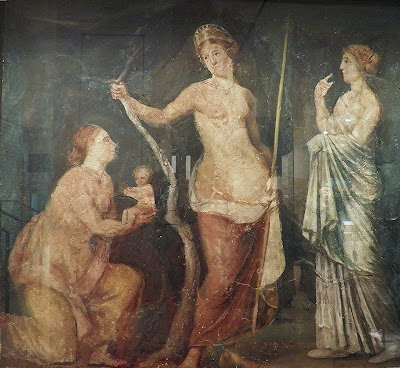

Fresco from Neros Golden House

I mourn for the ruler that might have been.

Traian Aelius Protacius

Forgiving Nero

Mary Ann Bernal

# # #


About the Author

Mary Ann Bernal attended Mercy College, Dobbs Ferry, NY, where she received a degree in Business Administration. Her literary aspirations were ultimately realized when the first book of The Briton and the Dane novels was published in 2009. In addition to writing historical fiction, Mary Ann has also authored a collection of contemporary short stories in the Scribbler Tales series and a science fiction/fantasy novel entitled Planetary Wars Rise of an Empire. Her recent work includes Crusader’s Path, a redemption story set against the backdrop of the First Crusade, and Forgiving Nero, a novel of Ancient Rome. Since Operation Desert Storm, Mary Ann has been a passionate supporter of the United States military, having been involved with letter-writing campaigns and other support programs. She appeared on The Morning Blend television show hosted by KMTV, the CBS television affiliate in Omaha, and was interviewed by the Omaha World-Herald for her volunteer work. She has been a featured author on various reader blogs and promotional sites. Mary Ann currently resides in Elkhorn, Nebraska. Find out more at her website http://www.maryannbernal.com/ and find her on Twitter @BritonandDane

6 March 2022

Special Guest Post by David Pilling, Author of The Champion (III): Blood and Faith


Available from Amazon UK and Amazon US


“I am En Pascal of Valencia, the Adalid, the Champion,
the Leader of Hosts,and this is my tale...”

1300 AD: the armies of Edward Longshanks and the Guardians of Scotland confront each other. The final battle for control of northern Britain looms. Meanwhile Robert de Bruce, the young lord of Carrick, waits in the background to seize his opportunity. Bruce dreams of taking the Scottish crown for himself, and will stop at nothing to seize it...

Two of my favourite historical figures are King Edward I, 'Longshanks' or the Hammer of the Scots, and Robert de Bruce, later King Robert I of Scotland. This may seem strange, since on the surface they were so different. In the popular imagination Edward is generally regarded as a ruthless, expansionist tyrant, hell-bent on conquering Scotland and Wales. Bruce, by contrast, is regarded as a benevolent national hero who eventually liberated his country from the English.

In reality the two men were more similar than Hollywood scriptwriters might care to admit. The real Bruce was every bit as tough and ruthless as Longshanks, and the two men were not always opposed. As Dr Fiona Watson has shown in her recent works, Bruce was fixated on gaining the vacant Scottish throne, and was prepared to do pretty much anything to achieve his ambition. This included murdering his chief rival, John Comyn, and switching sides when it suited him. Between 1302-1306, for instance, Bruce was firmly in the English camp, and actively helped Longshanks to impose what appeared to be a final conquest of Scotland.

It didn't turn out that way, of course. After four years in the English camp, Bruce finally revolted against his paymaster in 1306, and the rest is history. Edward came again, but died in a barren Cumbrian marsh, within sight of the Scottish border. The old king died in pursuit of Bruce, who could be described as a mirror image of himself. To quote one such comparison between the two:

“A crowned warrior, careless of men’s lives, who meant to have his way at any price.” 

Edward's demise was fitting, perhaps, since Scotland had always been just beyond his reach. Bruce went from strength to strength, and after many years of toil and bloodshed finally got his hands on the prize. Those hands, it must be said, were stained with the blood of a great many people, fellow Scots as well as English. 

The nuanced relationship  between these two hard-driving men was the partial inspiration for my book, The Champion (III): Blood and Faith. This series chronicles the adventures of En Pascal de Valencia, a Spanish knight in the service of Longshanks. Pascal is based on a real Spanish mercenary who did indeed fight for the English in Scotland and elsewhere. Apart from the bare accounts, not much is known of the real Pascal, except that he had the interesting nickname of 'Adalid'. This meant 'champion' – hence the title of the series – and implies he was a respected knight and military captain. 

The lack of information on Pascal enables me, as a storyteller, to fill in the gaps. In my novel, Pascal acts as a spy as well as fighting soldier in Scotland, and comes to reluctantly admire Bruce, while at the same time fearing him. However, Pascal's association with the famous Scottish warlord, has only just begun...

David Pilling

# # #

About the Author

David Pilling is a writer and researcher, addicted to history for as long as he can remember. The medieval era has always held a fascination for him, perhaps because he spent much of his childhood exploring the misted ruins of castles in Wales. David also has a keen interest in the Byzantine Empire, the post-Roman period in Britain and the British & Irish Civil Wars. Find out more at David's website https://davidpillingauthor.weebly.com/ and follow him on Facebook and Twitter @RobeH2

5 March 2022

Special Guest Post by Kat Sheridan, Author of Blurb Your Novel: How to Write Book Descriptions For Fiction


Available from Amazon UK and Amazon US

The Blurb: Your Second Most Powerful Marketing Tool!

You’ve written a great story and have the perfect cover for your novel, so why aren’t you getting the sales you deserve? Why are readers looking but not buying?

Tony, thank you for having me on your blog today. I’m excited to be able to show your readers how to convert book browsers into book buyers!

Wondering why your sales may be lagging? Maybe it’s not your book. Maybe it’s your blurb.

Most folks use the terms cover copy, jacket copy, product description, and blurb interchangeably. For this article, I’m using the word “blurb.” So often, I’ve heard of folks who easily write an 80,000 novel who run away screaming when asked to squeeze the exciting bits into 150-200 words.

But you can do it and I’m going to show you how!

What makes a good blurb?

A good blurb is like an advertisement for a striptease joint: enough is revealed that the customer is enticed, but enough remains hidden that the customer has to pay the admission fee to see more. A good blurb creates an emotional response in the reader that makes them want to read your book!

Your blurb is your first, best, and strongest piece of marketing material. Along with your tagline and logline—offshoots of the blurb—you’ll use it everywhere: book retailers, your website, guest blog posts, social media, etc. It goes in your marketing budget, whether that budget is paid with your time or with your dollars. You can hire a professional, like me, or you can learn to do it yourself.

Let me tell you a secret: there’s a formula for writing enticing fiction blurbs, and you can learn it! Ready?

Step 1: Create a character description of no more than two main characters in the format of adjective-noun-character name. Done right, you can pack a lot of info into these few words. The adjectives and nouns you choose generally describe the character’s role, job, rank, status, relationship, or notable characteristic that is important to the story. For science fiction/fantasy/paranormal it may be a creature type, tribe, planetary affiliation, etc.

Example:

Spinster Jane Eyre (relationship, plus the word “spinster” gives a sense of time period)

Home-loving hobbit Bilbo Baggins (notable characteristic, creature type, genre)

Down-on-his-luck private eye Dirk Dangerous (status, job, genre)

Paraplegic war veteran Jane Braveheart (physical characteristic that is integral to the story, status/role)

In general, the first character named in your blurb will be the character with the most at stake or who will transform the most by the end of the story.

Step 2: Define the G.M.C. for your protagonist(s).

G.M.C. stands for Goal, Motivation, Conflict (Conflict is also called Risks, Obstacle, Stakes). Here’s a tip to concisely define the GMC for a character: try filling in this sentence: character wants (goal) because (motivation) but can’t have/get it because (conflict)

Step 3: Mention or imply your setting and/or time period.

You don’t have to jut baldly state the setting. Use other elements, such as character description to get it out there. “For Manhattan socialite Gennifer Gemsly, opening a bed and breakfast in Spittoon, Montana was more a leap of insanity than a leap of faith.”

Step 4: Identify the inciting incident.

The inciting incident—the catalyst—is what sets the story in motion. It’s the one plot point that’s crucial to include in your blurb. You can give a bird’s-eye view of other plot points, but the inciting incident is essential. A blurb isn’t a road map to the entire story; it’s an invitation to begin the journey and discover the path for themselves. You always want the reader to ask, “And then what happens?” Your blurb should never tell a reader how the story ends, but should always tell them how it begins. The only way to find out what happens next will be to buy your book.

Step 5: Create a killer last line or call to action for your characters.

There are two schools of thought on whether it’s better to end a blurb with a question or with a statement. Either one can work. Direct statements tend to work better than questions because the question asked is too often just rhetorical—something that’s asked to make a point rather than to actually elicit an answer. If you want to end with a question, asking “how” in your last line is a better option than “will” or “can.” Ending your blurb by asking “how” sets up a question that can only be resolved if the reader purchases the book:

• How can two such opposite lovebirds resolve their differences?

• How can Dirk Dangerous stop such a fiendish criminal?

• How can these brave fighters win against unstoppable alien forces?

Another powerful option for a killer last line is to directly state the consequences of failing to resolve the book’s primary conflict:

• If these lovebirds can’t compromise, they may lose their chance at love forever.

• The killer has a list of targets. And Dirk Dangerous’s name is at the top.

• If these warriors fail, all of Earth will be destroyed.

Another fun option for a killer last line is to try to work in the title of the book, or at least some reference to it. This doesn’t work for every book title, and you shouldn’t twist your words into pretzels to try to make it work, but when it does, it can have a great effect. For instance, for a book titled “Loving Mr. Wrong,” a possible last line might be “How can it feel so right to be loving Mr. Wrong?” If a book is titled, “The Last Days of Earth,” a killer last line might be, “If the warriors fail, the last day of Earth will be today.”

Extra bonus for creating a killer last line? It often makes a great tagline to use in other marketing materials!

General notes to make your blurb stand out:

Use vivid words: In a blurb, hyperbole is your friend! Use emotional, juicy words to connect to your reader on a visceral level. Create tension and get colorful!

Use keywords: You know your genre, you know your target audience, and you know the words that hit the sweet spot for them. Readers are looking for keywords to help them decide to buy your book.

Use the right tone: Match the tone and voice of the blurb to the tone and voice of the book. Don’t write a funny blurb for a serious book and vice versa. If your book is lighthearted, funny, and sassy, the blurb should be as well. A dark, angsty, dystopian novel should have a blurb in that same style.

PROOFREAD! Readers, right or wrong, will assume sloppy cover copy also means a sloppy book.

A note about Non-Fiction: There’s a formula for writing non-fiction blurbs, just like fiction. Briefly, your table of contents is your best friend: List three or four of the most compelling chapter titles and a line describing what they’re about. State the problem your book aims to solve. List specific ways buying your book will benefit or educate the reader, again using those juicy words, and numbers if applicable (“will help you boost sales by 40%, “will shave six weeks off your job search”). The author bio is also critical to selling non-fiction. Your personal bona fides will help sell your book.

Interested in learning more about how to do it yourself?

My book, Blurb Your Novel: How to Write Book Descriptions For Fiction, goes into more detail, with specifics for different genres. You’ll learn how to write powerful product descriptions and blurbs that will convert book browsers into book buyers!

Prefer to get help from a pro?

I’ve been writing blurbs for over a decade, helping hundreds of authors just like you. Click here to see what BlurbWriter can do for you! https://blurbwriter.com/


Kat Sheridan

# # #

About the Author

Kat Sheridan provides book cover copy, product descriptions, and author bios for writers. She splits her time between the Midwest in the summer and the South in the winter, sharing her home with the love of her life and an exceedingly dignified Shih Tzu. Find out more at BlurbWriter.com, and find her on Twitter @KatSheridan

4 March 2022

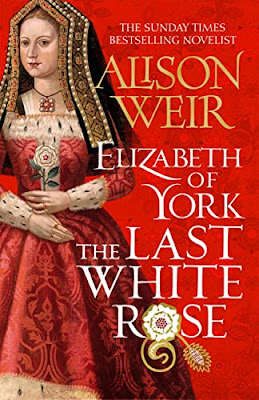
Historical Fiction Spotlight: Elizabeth of York, the Last White Rose: Tudor Rose Book 1, by Alison Weir

New from Amazon UK and Amazon US

Mother. Survivor. Queen. The spellbinding story of Elizabeth of York, the first Tudor queen.


Eldest daughter of the royal House of York, Elizabeth dreams of a crown to call her own. But when her beloved father, King Edward, dies suddenly, her destiny is rewritten.

Her family's enemies close in. Two young princes are murdered in the Tower. Then her uncle seizes power - and vows to make Elizabeth his queen.

But another claimant seeks the throne, the upstart son of the rival royal House of Lancaster. Marriage to this Henry Tudor would unite the white rose of York and the red of Lancaster - and change everything.

A great new age awaits. Now Elizabeth must choose her allies - and husband - wisely, and fight for her right to rule.

# # #

About the Author

Alison Weir is the New York Times bestselling author of the novels Innocent Traitor and The Lady Elizabeth and several historical biographies, including Mistress of the Monarchy, Queen Isabella, Henry VIII, Eleanor of Aquitaine, The Life of Elizabeth I, and The Six Wives of Henry VIII. She lives in Surrey, England with her husband. Find our more at Alison's website http://www.alisonweir.org.uk/ and fin her on Facebook and Twitter  @AlisonWeirBooks

3 March 2022

Special Guest Post by Alistair Tosh, Author of Siege: Edge of Empire: Book One


Available from Amazon UK and Amazon US

AD 139: Lucius Faenius Felix arrives in Britannia to command the First Nervana, a renowned cohort drawn from the homelands of the fierce Nervii tribe. The soldier has been recently cheated out of his ancestral estates - and is still grieving from the mysterious murder of his father.


Researching ‘Siege’ and how it changed the shape of the story

The Roman army on campaign in Britannia was brutal, adaptable and ingenious. This may seem like stating the bleeding obvious, especially if you have any interest in the history of the Roman empire. But delving into the details in the research phase for ‘Siege’ I uncovered some realities that made me fundamentally rethink the direction of the story.

The first shift came about when I found one of my two protagonists, Tribune, Lucius Faenius Felix. An altar stone raised by Lucius, nearly 2000 years ago, was spotted embedded in the wall of Hoddom church in 1815 near to the fort of Birrens. This piece of ancient recorded history provided some real insight into the man. 

He was almost certainly of the patrician class and commanded the I Nervana Germanorum, a double strength mixed infantry and cavalry cohort (around 1000 men) that had been raised in the tribal lands of the Nervii in what is now modern day central Belgium. The Nervii are mentioned specifically by Caesar in his conquest of Gaul as ‘the most warlike of the tribes.’ They were Germanic in descent. It therefore must have been a daunting task for a Roman citizen to have to lead such renowned warriors.

The kernel of my story, which takes place between 139 AD and 150 AD, had grown out of my fascination, as a youngster, for the Iron Age hillfort at Burnswark. The site, near Lockerbie in the southwest of Scotland, is unique in the UK and Europe. Its isolated location and suitability only as pastureland, has meant the archaeology below its turf has remained largely undisturbed. It is a beautiful and mysterious place, overlooking the silver waters of the Solway Firth and the fells of the English Lake District beyond with the heather-covered mountain of Criffel dominating the estuary’s Scottish shore.

It is a changeable location. When standing on its distinct flat-top summit, one moment you can be in brilliant sunshine with a cooling breeze, enjoying the 360 degree views. The next instant a hard wind blows in off the Irish Sea, cloudcover lowers, shrouding all before you. It is then that the hill takes on a more forbidding character.

I visited it many times, often cycling there with friends during the long summer holidays. I saw the mounds of the ‘Three Brethren’, that my school history teacher later told me had been platforms for Roman ballistas. And this is where the second major shift comes in.
 
My original plan for the story had an extended, set piece, battle between the legions and the local tribe, the Novantae, taking place at Burnswark in the final act. But my review of the most recent archaeological explorations at the site indicated that the battle was likely to have been so one-sided that it would be to stretch credulity to make it the endgame for the story.

Today the hill is held in a vice-like grip by two siege forts. The one to the north is unusually elongated, clearly designed to prevent the escape of the defenders as final defeat beckoned. To the south the true siege fort, or more accurately assault fort, lies hard against the hill's base. Three huge gateways, ten men wide, cut through its deep north facing ditches to enable rapid deployment of troops.

The three ballista platforms sit to the fore of each of the gateways. Fist sized, carved stone balls, fired by the ancient catapults, have been found on the hillforts summit. This ammunition was not designed to shatter walls, but rather to shatter bodies. Along with multiple arrowheads and scorpion bolts, metal detectors identified and aided recovery of hundreds of lead sling ‘bullets’ along the length of the hillfort’s ramparts. They were lemon shaped and heavy. Under test conditions it was established that they had roughly the same kinetic energy as a modern handgun.

A second and unique type of sling ball was uncovered. This one was smaller and capable of being slung in groups of 3 or 4, like an early form of grapeshot. But what was most startling was the 5mm holes drilled in its side. When ‘fired’ it emitted a sound like an angry wasp. You can imagine the racket that a barrage of these, shot by experts, would make. Certainly an early form of psychological warfare akin to the terrifying effect inspired by the screaming of diving Ju-87 Stukas during the Blitzkrieg in early World War II.
So what could only have been a catastrophic and crushing defeat for the Novantae showed me I had to change tack. The battle is still an important juncture for the story (no spoilers) but is now completed in act 1.

The final significant change of direction was the realisation of how important cavalry was in commanding a conquered region. Units of mounted auxiliaries could move at lightning speed, and were highly mobile, making them effective on patrols and as scouts north of the Wall. They made speedy messengers, giving warning of sudden threats and incursions. They also ensured food security, protecting local farmland and guarding supply trains. But probably most significant, they projected the image of power and renown of Rome and its imperial might. If you have ever seen the Household Cavalry in London you will get an idea of what a Roman turma must have looked like to an Iron Age population.

Outlying forts, north of the Wall, such as at Birrens (4 miles south of Burnswark) housed the double strength, mixed regiments that I mentioned above. My original thinking had imagined the need for most of the action to be undertaken by infantry, but it soon became obvious that this was completely impractical for commanding what were still wild and largely unexplored areas for the Roman army and it was almost certainly the cavalry that did much of the heavy lifting. 

The Nervana, garrisoned at Birrens would have had a specialist role focussed on controlling the southwest of modern day Dumfries and Galloway that included much difficult hilly and forested terrain. They would have suppressed any uprising of the local tribes, collecting taxes and keeping supply lines to watchtowers and smaller fortifications open.
 
Whilst my research took me down many a rabbit hole, it has ultimately, in my view, enabled me to deliver a much more thrilling story.

Alistair Tosh

# # #

About the Author

Alistair lived in the Dumfriesshire countryside for most of his childhood. A region of Scotland filled with ancient place names such as Torthorwald and Caerlaverock. But it was his history teacher’s telling of the tale of Burnswark and the Roman siege of the Iron Age hillfort that fired his love of Roman and Dark Ages history. From there the kernel of the stories for the Edge of Empire series took root.
On leaving school he began a 35-year communications career, firstly with the Royal Navy, that included covert riverine and seaborne operations during the height of ‘The Troubles’ in Northern Ireland, before moving into the corporate world. Military life is unique, and Alistair aims to reflect an authentic view of that experience and its language in his stories. When not writing or spending time with family, Alistair, his wife Jenny and Hurley the cockerpoo love to walk in the hills of both the UK and Andalucia. Follow Alistair on Twitter @alistair_tosh

2 March 2022

Special Guest Post by Ruth Redman - Narrator in a Pandemic

Going though a pandemic over the past two years has raised the profile of audiobooks as we as society have investigated different ways to find entertainment, escape into stories and seek ways to explore and imagine other lives. 

The search for such sources of ideas and ‘soul food’ has been even more important as we have grappled with the issues and challenges this period in history has brought us.. and ironically, at a time when we have been deprived of chances to socialise, our desire to find times alone is strong… sharing our homes with others we live with who may be there more than usual means that claiming time alone with a book or audiobook can be harder to manage. 

I’m sure I’m not alone in having found the need for reflection and re-evaluation and snatched solitude even greater because of the extraordinary events brought about by the pandemic. Alongside that ‘existential’ change, of course,  has been a great practical change as we have had to find work spaces at home in ways that allow us to create working conditions and keep our sense of home going as well, perhaps living more ‘cheek by jowl’ than we might want to.

Many audiobook narrators, myself included, work from home studios, at least some of the time. That means creating studio conditions, perhaps in a spare room or outbuilding. During lockdown I and my family built and moved into a garden cabin whilst building work at home meant we would have had to move out. Rather than pay rent during that time, the thinking went, we could create that space to live in then benefit from the amenity of a workspace in the back garden afterwards.. 

The plan was implemented, the downside being living in the garden for five months during a pandemic we hadn’t been expecting, when the planned trips to pubs or cafes for meals didn’t materialise as we were all locked down. I hadn’t quite bargained for the extended camping trip that ensued, but all that is history now, thank goodness, and these days I narrate from that room in the garden. My previous ‘studio’ was a converted wardrobe lined with eggshell foam which stood in the spare room… now I have the luxury of a 2m x 2m room. It has  made it all worthwhile. 

I’ve been pursuing this line of work for about five years now and have about a dozen audiobooks under my belt so far. The investment of time, learning, researching and acquiring the right equipment then learning how to use it has been considerably more than I ever imagined it would be. 

I trained as an actress  and have worked, and still do, in lots of different forums. But that hasn’t made this a simple side step.. The work of narrating is a completely different and separate job from other forms of performance, and I can honestly say that learning how to do it is something that I am still working on and expect to carry on doing so for years to come. I have learned how different this work is from other forms of storytelling, and realise more and more how much there is to learn about doing this work, and how rewarding it can be. It is a steep hill to climb for sure. 

It sounds like stating the obvious of course, but the audience can’t see you. Your voice has to create the pictures. A wonderful mentor and teacher of mine and excellent narrator, Helen Lloyd, recently said something to me that really resonated for me. She said ‘Give the listener time to ‘see’ the image you have painted with your words.’ Adopting the right pace, keeping the story moving yet giving enough space for those images to form in the ‘eye’ of the listener is quite a skill. 

There is no doubt that the vocal training I was lucky enough to receive at drama school supports me every day, and the work of reading, analysing and preparing a text for reading is in many ways similar to the way an actor would prepare a script. Homework, including research into the time in which the work is set, the world of the book in terms of the age, the customs and the environment of the characters all help the narrator to ‘know’ the material well enough to convey it through the author’s words. 

The cast of characters, all created by the author, are to be played by you, the narrator. Freed from the constraints of physical appearance it is enjoyable and liberating to perform them, but of course technique is required to make them ‘live’, without visual help and to make sure they are distinct and repeatable.

There has been a great rush of interest in becoming audiobook narrators amongst actors who don’t usually work in that way, of course. With theatres closed and performers in need of alternative sources of paid work such investigation is sensible. Recording spaces have been improvised, invested in and adapted in many homes and the industry seems to have exploded with interest and popularity. 

I know some actors have, as a result, discovered a new way of working that really suits them. Others will have been only too glad to head back to the rehearsal room now that it has become possible again. I know that I relish the combination allowing for both and work hard to keep both plates spinning. 

As with other branches of acting work, (to keep the plate image going for a moment,) this kind of work doesn’t come ready-served. Alongside the narration itself comes the work of building a business… raising a profile, building not only skills and experience but a presence. 

This of course is nothing new, but the approach to working so much from home is something that has been brought into the spotlight so much more over the past two years as so many more people have had to embrace it. It's a branch of the work I don’t mind admitting that I find a challenge, but one that seems to be recognised and supported by a whole raft of people offering support for that kind of ‘upskilling’. So another phase of the learning begins. 

Adjoa Andoh, a wonderful audiobook narrator and actress (and school friend) said  in an interview with Graham Norton I watched her in recently, that amongst the challenges the Narrator needs to take on are to do full  justice to a well written book and, at other times, elevate the less well written book with your performance. Both scenarios demand skill and preparation and both bring their own rewards.

As I continue to explore and learn about this job I am enormously appreciative of the number of people I have met so far, through networking, taking courses, joining online forums and generally absorbing as much wisdom as I can access, who are generous, knowledgeable and encouraging to newer narrators. 

There seems to be room for us all, and plenty of work to go around as audiobooks continue to grow in popularity throughout the world. The pleasant irony is that although the job requires you to be alone quite a bit in your recording space, there is a great sense of community in the audiobook world which is an unexpected and wholly welcome discovery! 

Ruth Redman

# # #

About the Author

Ruth Redman is an Actress and Audiobook Narrator. She narrates from her Home Studio. Trained at Bristol Old Vic Theatre School, Ruth works in Theatre, Film and Television in addition to her Narration work. Visit her website www.RuthRedman.co.uk for more information, and find her on Twitter @ruthredman12

1 March 2022

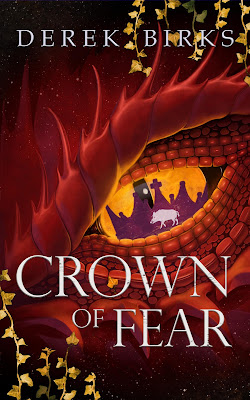
Special Guest Post by Derek Birks, Author of Crown of Fear (The Wars of the Roses Book 9)


Available from Amazon UK and Amazon US

England, August 1485: For almost thirty years, the Elder family has been ravaged by the feud between York and Lancaster. Now exiled John Elder, yearning for an end to the Elders’ troubles, throws his support behind a young, untried pretender, Henry Tudor, Earl of Richmond.

Crown of Fear brings to an end a journey which began more than ten years ago when I wrote my debut novel, Feud. That first book was the start of my Wars of the Roses series which follows the fortunes of the fictional Elder family as they negotiate the troublesome period from 1459 through to 1485. Feud is a story of youthful inexperience, rash behaviour and young love; but in Crown of Fear, set 25 years later, we are nearing the end of the family’s long struggle. We find that some familiar characters are weary and drained of resolve so that all they crave is an end to the conflict as soon as possible.

Some characters attempt to keep out of trouble completely but, as in every novel of the series, the war pursues the Elders wherever they go and their actions – wise or otherwise – are woven into the events of the time. So, in this final book I bring the Elder family, kicking and screaming to the eve of the pivotal battle of Bosworth – and there I hit something of a problem in devising my story.
 
Usually, I try to offer the reader a different take on well-known events, but so much has been written about Bosworth, that I had to work hard to achieve some originality this time. I have focussed not so much upon Richard III and Henry Tudor - though I could hardly ignore them - but upon two other prominent leaders at Bosworth whose armies did not fight at all: Lord Thomas Stanley and Henry Percy, Earl of Northumberland. 

By inserting my characters into the plotting and planning of those two wily nobles, I have managed – I hope – to approach Bosworth from a different perspective. Throughout the series, I have endeavoured not to make a battle the climax of the story but merely its backcloth. Here then, the threat to the Elders is resolved not at Bosworth itself but elsewhere after the battle is over.

The characters of the Elder family have been a part of my life for over a decade and one in particular has survived everything I have thrown at her. Eleanor Elder has charmed and bludgeoned her way into the hearts of many readers and quite a number of them asked me a little nervously about her fate in this final book. I hope that readers will find her story in Crown of Fear faithful to the character we all first met as a rash and vivacious fifteen-year-old.
 
While Crown of Fear inevitably ties up some Elder family ‘loose ends’, it is a story which centres upon one of the most interesting events of English history: the demise of Richard III. People never seem to tire of this king and, though the main focus is not upon him, I have given him a walk-on part which I hope will entertain readers.
 
Derek Birks

# # #

About the Author

Derek was born in Hampshire in England but spent his teenage years in Auckland, New Zealand, where he still has strong family ties.  For many years he taught history in a secondary school in Berkshire but ten years ago he took early retirement to concentrate on his writing. Apart from writing, he spends his time gardening, walking and taking part in archaeological digs. Derek is interested in a wide range of historical themes but began his writing career with the late medieval period. He writes action-packed fiction which is rooted in accurate history.  His debut historical novel, Feud, is the first of a series of eight books and one novella now entitled The Wars of the Roses which follows the fortunes of the fictional Elder family. The series ends with Crown of Fear which is out now. Derek has also written a bestselling trilogy set largely in post-Roman Britain. The Last of The Romans focuses on the real Romano-British character of Ambrosius Aurelianus during the fifth century AD. Find The Last of the Romans here:
You can follow Derek on Twitter as @Feud_writer and his author page on Facebook is: www.facebook.com/feudwriter. To find out more about his books, or to contact him you can go to his website: www.derekbirks.com and he also has an occasional blog:  www.dodgingarrows.wordpress.com.