Mastodon The Writing Desk

18 November 2022

Special Guest Post by Dr Nicola Tallis, Author of All the Queen’s Jewels, 1445–1548: Power, Majesty and Display


Available from Amazon UK and Amazon US

From Margaret of Anjou to Katherine Parr, All the Queen’s Jewels examines the jewellery collections of the ten queen consorts of England between 1445–1548 and investigates the collections of jewels a queen had access to, as well as the varying contexts in which 
queens used and wore jewels.

A Peek Inside … the Queen’s Jewel Coffers

The jewels worn by royalty throughout history are endlessly fascinating, and continue to inspire both admiration and awe. When we consider the jewels that belonged to the queens who form the subject of my new book, All the Queen’s Jewels, 1445-1548: Power, Majesty and Display, though we have a great deal of information about the way in which these women wore and used jewels, as well as – sometimes – what they owned – what we sadly lack is the majority of the jewels themselves. 

Most of these were broken up or melted down and recycled, for what was fashionable to one era was not so to the next. There are, however, enough surviving contemporary jewels to allow us to ascertain what those owned by the queens of England in this period would have looked like. Here are a few examples:


Fifteenth Century Reliquary: Royal Collection Trust, RCIN 69738.

This beautiful cross was found in 1866 on the site of Clare Castle, Suffolk, and it has been suggested that it may have belonged to Cecily Neville, Duchess of York. Made of gold and decorated with four pearls, the cross is certainly typical of the kinds of pieces that would have been owned by the English queens in this period, all of whom are known to have had items of religious jewellery in their possession. It contains a cavity at the back in which tiny fragments of wood were found, indicating that the cross served as a reliquary.


Miniature Whistle Pendant, 1525-30: V & A, 
LOAN:MET ANON.1-1984

This tiny object, shaped like a pistol, was, according to family tradition, the first gift given to Anne Boleyn by Henry VIII. Though the King certainly made regular gifts of jewels to the woman who would become his second wife, it is highly improbable that this was one of them. It is nevertheless a beautiful example of the kinds of pieces that would have been seen at Henry’s court, and would have been worn attached to a masquing costume. It was more than purely decorative though, for not only did it feature a whistle, but also an ear-spoon and a toothpick!


Horse Pendant, c. 1590: Burghley House.

Although this elaborately decorated piece dates from the Elizabethan period, it is nevertheless a superb example of the kinds of pendants that the Tudor queens would have been familiar with. Similarly beautiful pendants are to be found in the jewel inventories of Katherine Howard and Katherine Parr, fashioned to include initials, clocks, and other designs that had either been given to them or were personal to the queens. 

This pendant contains an enamelled horse (enamelled pieces are often to be found amongst the jewels of Henry VIII’s wives), and is decorated with rubies, emeralds, and diamonds. The voyages of discovery ensured that precious stones were more readily available – at a price – and this in turn is reflected in the jewel inventories of Henry VIII’s queens.

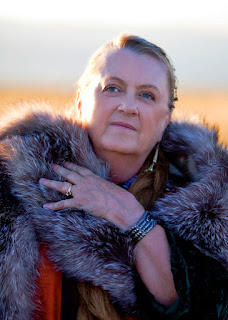
Dr Nicola Tallis

# # #

About the Author


British Historian Nicola Tallis graduated from Bath Spa University with a first class BA Hons. degree in History in 2011, and from Royal Holloway College, University of London in 2013 with an MA in Public History and her PhD from the University of Winchester. Nicola also worked as a historical researcher, most notably for Sir Ranulph Fiennes whilst he was working on his 2014 book, Agincourt: My Family, the Battle and the Fight for France. Find out more at Nicola's website http://nicolatallis.com/ and find her on Twitter @NicolaTallis

16 November 2022

Following in the footsteps of the Tudors to Mill Bay in Pembrokeshire


After following the long exile of Jasper and Henry Tudor in Brittany I followed them back to Pembrokeshire in West Wales.  The Tudors had made an unsuccessful attempt to invade England in 1483 but learned from this near disaster. On Monday the 1st of August, 1485 they sailed again from the mouth of the Seine with their mercenary army of some four thousand men to challenge King Richard III for the crown.

It seems the sea voyage led by the Poulian De Dieppe, flagship of their capable captain, Guillaume de Casenove, was uneventful and had the benefit of favourable winds. They made landfall at Mill Bay, a secluded, pebble-strewn beach in the far west of Wales just before sunset on Sunday 7th August. 

Mill Bay, Pembrokeshire
On going ashore, Henry Tudor kissed the ground and recited a Psalm in Latin. Some accounts suggest it was Psalm 23 but the consensus was Psalm 46: ‘Judge me, O God, and plead my cause against an ungodly nation: O deliver me from the deceitful and unjust man.’

I also read that Henry’s French mercenaries were reluctant to come ashore – and had to be tempted with offers of ale and fresh bread. The ships were unloaded in the fading light and Henry’s army made the short trek to the nearest town of Dale, where they camped for the night and made preparations for the long march through Wales to confront the army of King Richard.


I visited Mill Bay and was pleased to find the bronze plaque commemorating Henry’s landing there. I also found a post placed there by the HistoryPoints Website which celebrates Welsh History. The bay is far enough from Dale for them to have landed undetected, although the path up the hill is steep. The Tudors brought artillery and ammunition from France, so it must have been quite a haul, despite the number of men.


The final stop on this journey in the footsteps of the Tudors is to Bosworth Field, where there is an Anniversary Battle Re-enactment Event on 20th & 21st August.  See http://www.bosworthbattlefield.org.uk/ for more details.

Tony Riches
  

 See Also:


About the Author: 

I am an author of historical fiction and non-fiction books. I live in Pembrokeshire and specialise in the fifteenth century, with a particular interest in the lives of the early Tudors. For more information please visit my website and find me on Facebook and Twitter @tonyriches. 


15 November 2022

Special Guest Post by Eric Schumacher, Author of Wolves of Wagria: A Viking Age Novel (Olaf's Saga Book 3)


New from Amazon UK and Amazon US

It is AD 972. Olaf Tryggvason and his oath-sworn protector, Torgil, are once again on the move. They have left the Rus kingdom and now travel the Baltic Sea in search of plunder and fame. But a fateful storm lands them on the Vendish coastline in a kingdom called Wagria. There, they find themselves caught between the aggression of the Danes, the political aspirations of the Wagrian lords, and the shifting politics in Saxland. Can they survive or will they become just one more casualty of kingly ambitions? Find out in this harrowing sequel to the best-selling Forged by Iron and Sigurd's Swords.

Inspiration for Wolves of Wagria

Since Wolves of Wagria is the third book in a series, I will start at the beginning and provide the impetus for the series as a whole before getting into this book specifically. 

To this point, my stories have taken place in the Viking Age. I was not yet done telling tales from this fascinating, turbulent time, despite having spent years researching and writing Hakon’s Saga. I knew I had at least one more saga in me, and so I began to search for a suitable character and story that stood out to me.

I landed on Olaf for a number of reasons, the least of which were his raiding years. His raiding was not so unlike many other Vikings that came before and after him, nor are the stories of his violence. No. What made him truly stand out to me was his arc as a character. He begins his life as a noble, becomes a slave, and rises again to the throne of Norway. 

It's a life that began as a pagan and ended as a Christian, though a Christian known for his violence rather than his goodwill. And, it was a life filled with adventure and exploits. There was much there to work with and I wanted to explore it more. I wanted to unearth the man, not the myth, and put meat on his bones. Who was this handsome, gifted, violent character? 

In addition, Olaf’s life spanned the known world of the Vikings: Scandinavia, the Baltic kingdoms, the land of the Rus, Constantinople, Germany, France, Ireland, Scotland, England, etc. In him was also a chance to explore each of those places in the 10th century. That, too, really piqued my desire to write about him.

However, I knew two things from the beginning. First, I knew I wanted to write a book from the first-person perspective, since I had just spent years writing from the third-person POV. And, I knew I could not tell this story through Olaf’s eyes. As I read more about him and his life, I felt I would have a difficult time building the audience’s sympathies for him. 

He is indeed fascinating, but he is also a head-case. For that reason, I decided to tell his tale through someone else’s eyes. Someone close to him. In the pages of the old sagas, I found a reference to his childhood friend, Torgil. That, I decided, would be the narrator. 

The first book in Olaf’s Saga tells of Olaf’s childhood and his frightening life on the run from his kin-killing cousins. The second novel, Sigurd’s Swords, explores Olaf’s adventures in the land of the Rus. This novel dives into his tumultuous time in what the Vikings called Vendland.

Only, my research uncovered an area that I had never heard of before and a kingdom and people who have long since vanished. A place called Wagria ruled by a prince named Burislaf.

Finding Burislaf and Wagria

Vendland is a general term used to describe the southern shoreline of the Baltic Sea. At that time, the population of that shoreline were Western Slavs, whom the Scandinavians called Vends (or Wends). The sagas tell us that Olaf is brought to the court of a king named "Boreslaw" (Burislaf), who had three daughters. Some have thought this Burislaf to be the son of the Polish king, Meiszko I, who existed at that time. But there were problems with that. 

First, the timing was off. Meiszko I’s Burislaf wasn’t born until roughly AD 967, which would make him only five years old when this story unfolds. There was no way he could have had a daughter (let alone three) at the time that Olaf was in Vendland.

Then, there was an issue of alliances. The sagas tell us that Olaf goes to fight with Burislaf when Otto II calls upon him. Not only did Otto II not become sole king until AD 973, but even if Burislaf, son of Meiszko I, were of fighting age, his father owned no allegiance to the Holy Roman Empire. Not to mention at the time of this particular fight, Meiszko I was actually fighting the Germans, not allied with them. So, it had to be another Burislaf. 

It was then that I ran across Omeljan Pritsak’s study on Olaf called "On the Chronology of Olaf Tryggvason and Volodimer the Great: The Saga's Relative Chronology as a Historical Source." In it, Pritsak suggests that the Burislaf in question may have been a Slavic king ruling the realm of Wagria.

At that time in history, Wagria was a West Slavic kingdom located to the southeast of Danish Hedeby in what is today Holstein. Then, the Wagrians were a constituent tribe of the Obodrite confederacy that stretched along the south Baltic coast, though they owed allegiance to the Christian kings of Germany, namely Otto I and later, Otto II. While not much is written about Wagria or its leaders, the case Pritsak makes in his study is compelling and plausible, both from the standpoint of timing and alliances. 

HIstorical fiction writers attempt to stick closely to known history. The problem with writing about Vikings is that many of the sagas were written decades and even centuries after the historical figures lived. There are very few contemporary resources, and many of those mention historical figures by names that could apply to many different people. 

Still, I do my best to match historical references to saga tales, while still telling a page-turning story. My research was telling me something didn’t add up. Pritsak’s study had similar questions and offered a plausible suggestion. And so I chose Wagria as the center of the story’s action. 

Much happens in Wagria during Olaf’s time in the kingdom, but I will not divulge any secrets here. You will have to read the book to learn all about his time and his adventures in that almost-forgotten place. 

The book releases on November 15, but you can pre-order it today for 50% off the normal price. I hope you enjoy it!

Eric Schumacher

Praise for Olaf's Saga

"The ability to bring history alive and the capability to put the reader convincingly in a past time and place is the hallmark of a master historical fiction novelist, qualities Eric Schumacher demonstrates in this novel and others he's written." - Preston Holtry, author of the Arrius Trilogy

"Eric Schumacher writes so well that you're there, while thanking the gods that you're not. I can't wait for the next book to see what the Norns have planned for Torgil, Turid, and Olaf." - Amazon customer

# # #

About the Author

Eric Schumacheris the author of six novels and one novella, all set in the Viking Age. By day, Schumacher is a brand storyteller and PR consultant for early-stage companies. By night, he ventures into the past, using known history and ancient tales to create stories about real people living in turbulent times. From the earliest age, Schumacher devoured books about castles and warrior kings and Tolkien’s Middle Earth. Those stories, coupled with a love of writing, led him to the completion of Hakon’s Saga (published by Legionary Books), which tells the story of the young Norwegian king, Hakon Haraldsson, and his struggles to win, unify, and protect what was not yet Norway. Find out more at Eric's website: www.ericschumacher.net and find him on Facebook and Twitter @DarkAgeScribe 

10 November 2022

Book Launch Interview with Gemma Hollman, Author of The Queen and the Mistress: The Women of Edward III


New from Amazon UK and Amazon US

The riveting story of two women whose divergent personalities and positions impacted the court of Edward III, one of medieval England's greatest kings. There were two women in Edward III's life: Philippa of Hainault, his wife of forty years and bearer of twelve children, and his mistress, Alice Perrers, the twenty-year-old who took the king's fancy as his ageing wife grew sick. After Philippa's death Alice began to dominate court, amassing a fortune and persuading the elderly Edward to promote her friends and punish her enemies. 

I'm pleased to welcome author Gemma Hollman to The Writing Desk:

Tell us about your latest book

My book is called The Queen and the Mistress: The Women of Edward III and it is a detailed look at the lives of the two women who had the heart of King Edward III: his wife, Queen Philippa of Hainault, and his mistress, Alice Perrers. Edward III was one of medieval England’s longest-reigning kings, and many important things happened under his rule, such as the creation of the Order of the Garter and the start of the Hundred Years War against France. 

But whilst there have been plenty of books and articles about Edward himself, the women in his life are often written out. His mother, Queen Isabella, gets a lot of attention because of her role in leading a coup against his father, Edward II, but despite being married to Philippa for over 40 years, I found so many books barely mentioned her!

Although medieval England is seen as a man’s world, women played a central role in the royal court, and I wanted to share the lives of these two fascinating women who had relationships with the king. Philippa was a European noblewoman with links to various royal families, and her marriage to Edward was undertaken as a political contract between Edward’s mother and Philippa’s father. But the couple quickly fell in love and had a very successful marriage. 

Philippa followed Edward throughout his many military campaigns and worked very hard to help him in his goals. From visually aiding his propaganda as a rich and powerful king, to drawing upon her European connections to bring him allies for his wars, to being a very popular queen with her subjects for her generosity, Queen Philippa was seen as a model medieval queen.

By contrast, Alice Perrers was a lower-class enigma who was lucky to have ever found herself at the royal court. She joined Philippa’s household as Philippa started to grow sick, and though she was probably over half his age, the king’s eyes soon wandered over to her. Edward had been loyal to Philippa throughout their marriage, but now this goldsmith’s daughter took his affections. Alice and Edward had three children together whilst Philippa was still alive, and once the queen died their relationship became public, despite the moral implications. 

Because of Alice’s low status, she could never marry the king, but Edward lavished her with attention, bought her beautiful gowns and expensive jewellery, and made it clear that she was now the only woman in his life. Alice used her heightened position as the king’s lover to build up a landed empire, gathering manors, castles and land across the kingdom to enrich herself. But as Edward’s own health began to fade, Alice became a target at court, hated for her influence and her power as a single woman. She was eventually put on trial and had everything taken from her.

These two women came from completely different stations in life, with completely different upbringings and expectations. But in the end, both of them won the heart of the same man, and both of them used their femininity to exert power at court. Philippa followed traditional roles of women by being a good mother and a loyal wife, whilst Alice used her sexuality. 

Both women were wildly interesting, and in The Queen and the Mistress I give each woman her time in the spotlight, exploring their lives and, by placing them side by side, show their similarities and differences and what it meant to be a woman at court in fourteenth-century England.

What is your preferred writing routine?

It can be quite difficult to have a full routine, as I write alongside a full-time job. But generally I try to get all of my research out of the way first, making comments and questions in my notes that I want to come back to explore later. Once I am happy with my amount of research, I use weekends to just sit and write all day! In the mornings I will sit and read over what I wrote in my last session to familiarise myself with where I left off, and also to do any minor edits that need doing. 

I then write throughout late morning and into the afternoon, generally finishing by dinner (but when deadlines are close it can be into the evening!). I use weekday evenings to do smaller tasks that I can dip in and out of, such as formatting and checking sources, but again when deadlines near I often try and write a paragraph or two instead!

What advice do you have for new writers?

I would say do your research and be confident in your ideas, and then just sit down and do it! If you think something is interesting or a solid idea, it probably is, and if you want to be the one to share that idea then just think about what it is you want to say with your work. With me, I want to focus on women in medieval England who might not be known to the general public, despite their status and importance at the time. 

This means that I am then inspired to focus the story on the women and so it narrows down what I want to say – I try to keep the narrative on the women as far as possibly, trying not to let it wander from them for too long. And don’t be afraid to put pen to paper! Lots of research is good, but we can often use it as an excuse to delay writing – “I’ll just read one more article”. But all that research means nothing if it’s not written down eventually! So just get writing. They always say you can’t edit a blank page. Try not to worry about making everything perfect the first time around, just focus on getting your ideas onto paper and then you can shape it afterwards.

What have you found to be the best way to raise awareness of your books?

I think the most important thing is to be open to trying anything! I have my own blog and so have a following there that I can advertise my books to, but I also have a network of other bloggers and podcasters that I know that I can draw upon to share my research with and raise awareness of my books. I have also written articles for magazines and give talks in person. For me, the online community is very important for raising awareness. 

People will always find your book in bookshops if they are looking for something to read, so you want to reach out to people who may not know they need your book! And consistency is key – algorithms and the vastness of content online means that people won’t always see your social media posts or will miss you uploading a new blog post. Keep sharing and posting and you’ll find someone new every time. Even now, 3 years after the release of my first book, I still find new people who didn’t know about my book whenever I post about it on Twitter! 

Tell us something unexpected you discovered during your research

I think for me, it was finding small little interesting tidbits that were most unexpected for me. For example, I found that Queen Philippa is credited with introducing the cultivation of rosemary in England, and that a dress she wore that was decorated with images of squirrels, recorded in the household accounts, is the first known instance of the word squirrel being written in English. It was fascinating that things like this could be pinpointed to a certain point in time, to one particular person. I use rosemary all the time, and would never have thought it would have any connection with an English queen! So definitely an unexpected surprise there that has stuck with me.

What was the hardest scene you remember writing?

The hardest was definitely the opening of my section on Alice Perrers where I attempt to explain her origins. That section was rewritten more than any other in my manuscript, and I asked more people to look at it and make suggestions than any other part of the book. Alice has been an unknown figure for centuries, but within the last two decades the work of two historians, Mark Ormrod and Laura Tompkins, has shed ground-breaking light on our understanding of her.

 I wanted to be able to explain our changing knowledge of who Alice actually was over time, whilst not being too academic or longwinded. I initially wrote pages and pages which just didn’t work – it was too complicated, with too much back and forth, and a lot of detail that ultimately wasn’t needed for what I was trying to put across. After lots and lots of cutting, which I think probably reduced the section by about two thirds, I was finally happy with it!

What are you planning to write next?

I have a few ideas in the works, so the problem is narrowing down exactly what I want to focus on next! But I have definitely been taken by the 14th century whilst writing this book, and I think my next book is going to take a slightly different twist on my previous work which has focused on medieval women. I want to try something a bit bigger and ambitious, which is equal parts exciting and scary! So keep a look out…

Gemma Hollman

# # #

About the Author

Gemma Hollman is a historian and author who specialises in late medieval English history. A Fellow of the Royal Historical Society, her first book 'Royal Witches' was published in 2019 and her second book 'The Queen and the Mistress' was released in November 2022. She has a particular interest in the plethora of strong, intriguing and complicated women from the medieval period, a time she had always been taught was dominated by men. Gemma also works full-time in the heritage industry whilst running her historical blog, Just History Posts, which explores all periods of history in more depth. Find out more at Gemma's website https://justhistoryposts.com/ and find her on Facebook and Twitter @GemmaHAuthor and @JustHistoryPost

Special Guest Post by Linnea Tanner, Author Skull’s Vengeance (Book 4 Curse of Clansmen and Kings series)


New from Amazon UK and Amazon US

A Celtic warrior queen must do the impossible—defeat her sorcerer half-brother and claim the throne. But to do so, she must learn how to strike vengeance from her father’s skull.

Research behind the Novel, Skull’s Vengeance

Skull’s Vengeance (Book 4 Curse of Clansmen and Kings series) is a historical fantasy based on a blend of history and mythology of southeast Celtic tribes in Britain before the invasion of the Roman Emperor Claudius in 43 AD. The biggest challenge in researching this project is the Celts left almost no written records. Historical events had to be supplanted by Greek and Roman historians and medieval writers who spun Celtic mythology into their Christian beliefs. Archaeological findings from this time period also help fill in some of the gaps.

The political backdrop to Skull’s Vengeance is based on the Celtic tribal kingdoms in southeast Britain known as Britannia by the Romans. These kingdoms evolved differently than those in Wales, Scotland, and Ireland. After Julius Caesar’s military expeditions to this area in 55–54 BC, Rome maintained strong influence over the politics and trade in southeast Britain.  Rome demanded hostages from this region to ensure treaty agreements were met. Hostages were frequently young males, although taking females was not unheard of, and they came from royal families. 

They were allowed to move freely in public places with minimal security measures to prevent their escape. The Roman patrician watching over them could serve as patron, father, and teacher. Many of the first century British rulers were educated in Rome and adopted the Roman taste for luxury goods. To support their extravagant lifestyles, pro-Roman kings warred with other tribal territories to supply the Roman Empire with slaves. Powerful Celtic kings expanded their territories and minted coins.

Although there is no written account of any Roman expeditionary forces sent to Britain before Claudius’s invasion in 43 A.D., there are recorded incidents of pro-Roman rulers pleading for Rome’s help to intervene on their behalf. Client kings, paying tribute to Rome, could rule their kingdoms independently, similar to Cleopatra’s reign in Egypt. 

Although the Celtic society was becoming more paternalistic, women were still held in high regard and could rule. There is historical evidence that Celtic women fought in battles and took on military leadership. The Roman historian, Ammianus Marcellinus, described Celtic wom¬en in Gaul (modern day France) as “…usually strong and with blue eyes; especially when, swelling her neck, gnashing her teeth, and brandishing her sallow arms of enormous size, she begins to strike blows mingled with kicks, as if they were so many missiles sent from the string of the catapult.”

The Roman historian, Tacticus, writes the British were accustomed to women commanders in war. Boudicca was a warrior queen who united the Celtic tribes in Britain and almost expelled their Roman conquerors in 61 AD. She was also known as a powerful druidess who Romans claimed sacrificed some of her victims to the war goddess Andaste.


Statue of Boudicca (Wikimedia Commons)

Archaeological evidence supports that Claudius’s invasion was nothing more than a peace-keeping mission to halt the expansion of the anti-Roman factions led by Cunobelin’s sons, Caratacus and Togodumnus. There may have already been a Roman military presence that protected the areas of Britain vital to trading with the empire. The tribal names used in the novel are based on Ptolemy’s map of Celtic kingdoms generated in 150 AD.

Most of the Celtic characters in this novel are fictional except for Cunobelin, King of the Catuvellauni (referred to as the King of Britannia by the Romans), and his sons, Adminius and Caratacus. Based on coin distribution, Adminius ruled over the Cantiaci but was deposed in 39 or 40 AD. His fall may have been the result of a revolt of the Cantiaci people against the Catuvellauni rule. He fled to continental Europe and surrendered to Emperor Caligula, who falsely heralded this as a great victory over Britannia. Epaticcus, the brother of Cunobelin and the ruler of the Atrebates Tribe at Calleva (modern-day Silchester), is another historical figure introduced in this book.

The characterization of Catrin is based on historical figures such as Boudicca and on the complex archetypes of ancient Celtic goddesses whose functions embrace the entire religious spectrum from healing to warfare, from creation to destruction, and from birth to death. In Irish mythology, war goddesses were associated with fertility and sovereignty. Many of the Irish goddesses were destructive and promiscuous, and personified warlike strength to defend their land so it could flourish.

Though many of the Roman characters are fictional in Skull’s Vengeance, some are some based on historical figures during the tumultuous rein of Emperor Tiberius Caesar Augustus. Tiberius was the second emperor of Rome. Though he’d been an able general and diplomat, his final years as emperor were tyrannical. Rumors abound of his sexual perversity and child molestation. According to the Roman historian Tacitus, Tiberius loathed his mother and sent Caligula to deliver her funeral oration in 29 A.D. while he remained isolated on Capri. 

Statue of Tiberius (Wikimedia Commons)

During the period that Skull’s Vengeance takes place (27-28 AD), the infamous Praetorian Prefect, Lucius Aelius Sejanus, over-reached to gain power from Tiberius through murder, conspiracy, and betrayal. At the pinnacle of Sejanus’s power as consul in 31 A.D., Tiberius unexpectedly had him arrested and mercilessly executed. It came to light that Sejanus may have been involved in the conspiracy to poison Tiberius’s son in 23 AD.

Antonia Minor is another character introduced in the novel. She was the daughter of Marcus Antonius (Mark Antony) and Octavia, the sister-in-law of Tiberius, and the half-sister of Iullus Antonius. As a confidant to Tiberius, Antonia Minor may have had a role in the downfall of Sejanus due to her fears that her grandson, Caligula, could meet the tragic fate of his older brothers who Sejanus arrested and imprisoned. 

Bust of Antonia Minor (Wikimedia Commons)

Lucius Antonius was the son of Iullus Antonius and the grandson of Marcus Antonius (Mark Antony). Little is known about Lucius Antonius except that he lived in Gaul after his father, Iullus Antonius, was accused of treason and forced to fall on his sword. It is unclear whether Lucius had any children, but it is speculated he may have been the father or grandfather of the famous Roman general Marcus Antonius Primus, who was born around 30 AD. One of the burning questions I had during my research is how would Lucius react if his son (Marcellus) went down the same pathway as his forefathers who were brought down because of their liaisons with powerful women?

Linnea Tanner

# # #

About the Author

Award-winning Author Linnea Tanner weaves Celtic tales of love, magic, adventure, betrayal, and intrigue into historical fiction set in Ancient Rome and Britannia. Since childhood, she has passionately read about ancient civilizations and mythology which held women in higher esteem. Of particular interest are the enigmatic Celts who were reputed as fierce warriors and mystical Druids. Linnea has extensively researched ancient and medieval history, mythology, and archaeology and has traveled to sites described within each of her books in the Curse of Clansmen and Kings series. Books released in her series include Apollo’s Raven (Book 1), Dagger’s Destiny (Book 2), and Amulet’s Rapture (Book 3). Skull’s Vengeance (Book 4 Curse of Clansmen and Kings) is anticipated to be released in late October 2022. A Colorado native, Linnea attended the University of Colorado and earned both her bachelor’s and master’s degrees in chemistry. She lives in Fort Collins with her husband and has two children and six grandchildren. To learn more about the author and her books, you can visit her website https://www.linneatanner.com/ and find her on Twitter @linneatanner

7 November 2022

Special Guest Post by Maggie Phillips and Sarah Clement, Authors of Heart of Pompeii


Available from Amazon UK and Amazon US

The year is 70CE in Pompeii, Italy, and highborn Quintus Vistorius is about to break his family's heart when he runs away from home to escape society's obligations that he marry and have children. At the same time, Valens, a sheep farmer from the country, brings his new wife to start a life in the city. Already, his life is inexorably wound to Quintus' whose disappearance has sent shockwaves through the city. When they do meet three years later, it's in the Lupanar, Pompeii's most notorious brothel where Quintus is now a sex worker going by the name of Ignis. For Val, it's love at first sight. For Ignis, it takes a little longer as loving Val threatens the modicum of freedom he has found 
within the brothel's walls.

Heart of Pompeii is a historical fiction novel featuring LGBTQ+ characters set in, as the title suggests; Pompeii. The story follows the lives of two men; a minor government worker called Valens, newly come to Pompeii with his just as new bride, and Ignis, a native of the city who lives and works in the most popular of Pompeii’s brothels. Even before they meet, their lives are bound together in ways they can’t imagine but meeting transforms them in ways neither of them are prepared for. It’s a story about their lives and about the city they both love. Through their eyes, readers are able to see what life could have been like in one of Ancient Rome’s most famous cities. 

When Maggie and I met, neither of us were expecting to become best friends let alone embark on a publishing adventure that has led us to launch our debut novel; Heart of Pompeii, but here we are. When we announced that we were collaborating on a novel, the number one question was ‘how?’. Maggie lives in Portland, Oregon, and I live in Swansea, Wales which puts us in vastly different time zones where I live my life eight hours ahead of Maggie. Fortunately, Maggie is an early riser. Thus our days began at 7am/2pm and from the very start of the collaboration, we were both aware of the importance of committing hours to writing that we would have to any other job. 

Initially, we hadn’t intended to write the book we did. We hadn’t even planned to work together the way we would go on to. We were both playing with the idea of writing a novel. Both of us had very clear ideas about what we wanted the purposes of our book to be which was how it ultimately became so easy to collaborate. We both wanted to tell queer stories that have been traditionally erased from history and we wanted to root those stories in the human experience. History progresses, times change, but the human experience largely remains the same. This is exemplified in the earliest examples of graffiti which even thousands of years ago relate to the sexual prowess of the writer or the writer’s mother. Some things never change. 

While working on another project, Maggie decided that she wanted to write historical fiction and given that I spend my free time blogging about the history in historical fiction, it seemed natural for me to take on the role of researcher. The setting, Pompeii, had been established before either of us even knew we were going to write anything at all, separately or together.

It’s an interest we both share and it provided a great opportunity for the characters to meet with tragedy which is one of Maggie’s favourite things to write and something she does exceptionally well. One time, she rewrote a scene because she didn’t feel I was crying hard enough. That was a good day. Our main source of inspiration were the casts of ‘two maidens’ found in a garden in Pompeii. Initially thought to be two young women, it was revealed through various tests that the ‘two maidens’ were actually two unrelated men found to be embracing in their final moments. 

As we researched, the scope of the project became bigger and along the way we became co-writers. At the time, I was working on a project that Maggie was heavily involved in. Ultimately, I asked her to write it alongside me and we decided to take a character each and write chapters from alternate points of view. It worked great and that project became the practice run for our main event; the Heart of Pompeii. 

We had our story and characters were starting to take shape within it. We had dual protagonists and alternating points of view which meant we could easily divide the main characters. We chose one each to write from which ensured a consistent voice for each of them throughout the novel. We filled notebooks with planning and character ideas, ensuring that we were agreed on motivation, traits, relationships, and anything else we could think of so that the story remained coherent despite having two authors. 

Writing the story was actually the easy part. Making two styles of writing work as one was much harder. Maggie prefers to write through dialogue whereas I will avoid dialogue at all costs, choosing instead to write in long, meandering, flowery language with mostly unnecessary words. The two of us would spend entire editing sessions trying to make the pacing match which would see me telling Maggie that she really did have to add some environmental detail, while she would delete entire sections where I’d described the air temperature for two paragraphs. One of the most common exchanges would be me completely freezing on how to write a conversation while Maggie pointed out that as a human being, I had, on occasion, been known to have a conversation. 

Communication was vital and not just for the sake of the novel. If there were days when one of us was feeling particularly vulnerable or fragile about a section or a scene then the other would have to be gentler in their criticism. Throughout it all, we never lost sight of the fact that we were trying to help each other be the best writers we could be and nothing was being criticised out of spite. We were also quick to reassure each other that just because our styles are different, it didn’t mean that one was worse than the other. It was conversations like these that hammered home to me how I couldn’t have collaborated with just anyone else. 

The distance offered up another issue that neither of us had considered; the language barrier. When we first started writing anything together, we decided whether to write in British English or American English but neither of us appreciated just how different the language we speak is. We both speak English but we would frequently be using words or phrases that simply did not translate into the other’s cultures.

Words that mean something in Britain might mean something entirely different in America and vice versa. The issue of spelling consistently seemed to be the most minor of considerations when we would frequently stop and question each other just what the hell we were talking about, while the other shouted back that it was a perfectly normal phrase. Arguments would inevitably ensue and for the most part, they were hilarious. 

For me, the hardest scene to write were the closing chapters set during the eruption of Vesuvius. I wept. And Maggie decided that we needed a particularly emotional soundtrack to those scenes which only made me weep harder. It’s hard to type when you can’t see through your own tears. Maggie, on the other hand, was in her element. Far harder for her was when we came to write one of the birthday events, a scene which marked a turning point in the story for character motivations and development. It struck a little close to home given that we were writing during the covid years and largely isolated from anyone who wasn’t on the end of our laptops. 

With the book written, edited, edited again, and edited some more, we decided to attempt the traditional route of publishing via an agent. A benefit of collaboration was that whenever we received the inevitable rejection letters, we could face it together. Some hurt more than others and we never did discover whether it was better to market ourselves as a single writer under a penname than a collaboration. After almost a year of trying, we decided to go the self-publishing route and here we are! 

Having gone through the many, many, many highs and lows of self-publishing we feel pretty well prepared for our next project. Our ethos remains the same; to tell queer stories throughout history. The stories don’t have to be grandiose or groundbreaking, they’re just showing that queer people existed. They lived. Regardless of the time period, we’ve always been here. 

We’ve entertained a few ideas for our next work but we’re leaning towards something set during the Roman Conquest of Britain, focusing on the Demetae tribe of South-West Wales. Despite overwhelming odds, they resisted Roman occupation and maintained their identity. They would go on to found Ceredigion and Dyfed, from which generations upon generations of my family have sprung from, including myself. We’ve also considered solo works but have enjoyed collaborating so much, we’re in no hurry to leave it. 

Maggie Phillips and Sarah Clement 

# # #

About the Authors


Maggie Phillips is debuting as an author, mixing her love of history and writing for the first time professionally as a full-time writer. She lives for writing and bringing queer stories out to the front of history where they belong. She lives in Oregon, United States with her husband. 
Sarah Clement loves writing about history and is finally taking the leap from her historical blog of many years to the world of printed historical fiction. She lives with her daughter in Swansea, Wales.  You can also find Maggie and Sarah on Instragram @wenglishwrites

3 November 2022

Historical Fiction Spotlight: Squire's Hazard, by Carolyn Hughes


Available from Amazon UK and Amazon US

How do you overcome the loathing, lust and bitterness threatening you and your family’s honour?

It’s 1363, and in Steyning Castle, Sussex, Dickon de Bohun is enjoying life as a squire in the household of Earl Raoul de Fougère. Or he would be, if it weren’t for Edwin de Courtenay, who’s making his life a misery with his bullying, threatening to expose the truth about Dickon’s birth.

At home in Meonbridge for Christmas, Dickon notices how grown-up his childhood playmate, Libby Fletcher, has become since he last saw her and feels the stirrings of desire. Libby, seeing how different he is too, falls instantly in love. But as a servant to Dickon’s grandmother, Lady Margaret de Bohun, she could never be his wife.

Margery Tyler, Libby’s aunt, meeting her niece by chance, learns of her passion for young Dickon. Their conversation rekindles Margery’s long-held rancour against the de Bohuns, whom she blames for all the ills that befell her family, including her own servitude. For years she’s hidden her hunger for retribution, but she can no longer keep her hostility in check.

As the future Lord of Meonbridge, Dickon knows he must rise above de Courtenay’s loathing and intimidation, and get the better of him. And, surely, he must master his lust for Libby, so his own mother’s shocking history is not repeated? Of Margery’s bitterness, however, he has yet to learn…

Beset by the hazards these powerful and dangerous emotions bring, can young Dickon summon up the courage and resolve to overcome them?

Secrets, hatred and betrayal, but also love and courage 
Squire’s Hazard, the fifth 
MEONBRIDGE CHRONICLE.

# # #

About the Author

Carolyn Hughes has lived most of her life in Hampshire. With a first degree in Classics and English, she started working life as a computer programmer, then a very new profession. But it was technical authoring that later proved her vocation, as she wrote and edited material, some fascinating, some dull, for an array of different clients, including banks, an international hotel group and medical instruments manufacturers.Having written creatively for most of her adult life, it was not until her children flew the nest several years ago that writing historical fiction took centre stage, alongside gaining a Master’s degree in Creative Writing from Portsmouth University and a PhD from the University of Southampton.
Find out more at Carolyns website www.carolynhughesauthor.com and find her on Facebook: CarolynHughesAuthor and Twitter: @writingcalliope