Mastodon The Writing Desk

16 July 2025

Audiobook Blog Tour: : Dagger’s Destiny (Curse of Clansmen and Kings, Book 2), by Linnea Tanner, Narrated by Kristin James


A Celtic warrior princess accused of treason for aiding her enemy lover must win back her father’s love and trust

In the rich and vibrant tale, author Linnea Tanner continues the story of Catrin and Marcellus that began with the award-winning novel APOLLO’S RAVEN in the Curse of Clansmen and Kings Series. Book 2: DAGGER’S DESTINY sweeps you into an epic tale of forbidden love, mythological adventure, and political intrigue in Ancient Rome and Britannia.

War looms over 24 AD Britannia where rival tribal rulers fight each other for power and the Romans threaten to invade to settle their political differences. King Amren accuses his daughter, Catrin, of treason for aiding the Roman enemy and her lover, Marcellus. The ultimate punishment is death unless she can redeem herself. She must prove loyalty to her father by forsaking Marcellus and defending their kingdom—even to the death. Forged into a warrior, she must overcome tribulations and make the right decisions on her quest to break the curse that foretells her banished half-brother and the Roman Empire will destroy their kingdom.

Yet, when Catrin again reunites with Marcellus, she is torn between her love for him and duty to King Amren. She must ultimately face her greatest challenger who could destroy her life, freedom, and humanity.

Will Catrin finally break the ancient prophecy that looms over her kingdom? Will she abandon her forbidden love for Marcellus to win back her father’s trust and love? Can King Amren balance his brutality to maintain power with the love he feels for Catrin?

Praise: 

“Tanner is a masterful wordsmith and storyteller. There were no plot holes, everything was believable, and her characters grew as did the plot.” ~ The Audiobook Reviewer

" For those with an interest in epic fantasy, the characters and their interactions, each with their personal goals and motivations, and often in conflict with each other, Dagger’s Destiny is a book sure to keep your interest.” ~ Geoff Habiger for Readers' Favorite (GOLD MEDAL Fiction: Magic/Wizardry)


# # #

About the Author
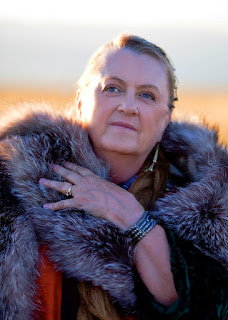
Award-winning Author Linnea Tanner weaves Celtic tales of love, magic, adventure, betrayal, and intrigue into historical fiction set in Ancient Rome and Britannia. Since childhood, she has passionately read about ancient civilizations and mythology which held women in higher esteem. Of particular interest are the enigmatic Celts who were reputed as fierce warriors and mystical Druids. Linnea has extensively researched ancient and medieval history, mythology, and archaeology and has traveled to sites described within each of her books in the Curse of Clansmen and Kings series. Books released in her series include Apollo’s Raven (Book 1), Dagger’s Destiny (Book 2), and Amulet’s Rapture (Book 3). Skull’s Vengeance (Book 4 Curse of Clansmen and Kings) is anticipated to be released in late October 2022. A Colorado native, Linnea attended the University of Colorado and earned both her bachelor’s and master’s degrees in chemistry. She lives in Fort Collins with her husband and has two children and six grandchildren. To learn more about the author and her books, you can visit her website https://www.linneatanner.com/ and find her on Twitter @linneatanner

 *AUDIOBOOK GIVEAWAY*

Linnea Tanner is giving away an audiobook copy of Dagger’s Destiny: Visit the blog tour page and leave a comment to enter the giveaway:  A winner will be chosen at random and announced after the tour has finished.

14 July 2025

The Italian Vineyard ~ a dual timeline romance by Anita Chapman


Avaiable from Amazon UK and Amazon US

Gazing out over the lush, rolling vineyards of Verona, Kate thinks of the gift that brought her to Italy. The dusty bottle of wine from her great-grandmother’s cellar, which holds the key to a family mystery that will change everything…

England, 1939. After her husband’s unexpected death, Lady Charlotte throws herself into reviving the vineyard at his beloved home, Copeley Park – desperate to focus on anything other than the dangerous secret she now carries. Along with her head gardener, Albert, she travels to Verona for research, where she is quickly distracted by Italy’s beautiful golden light and vibrant mimosa flowers. But just as her heart starts to open up, the threat of war spreads across Europe, tearing apart Charlotte’s plans for her future and leaving her with a heart-wrenching decision to make…

Now. Devastated by the loss of her mother and newly single, Kate asks to work at Copeley Park – her family’s failing estate – to take her mind off her heartbreak. But when she learns that the park’s stunning vineyard might have to be sold, she’s determined not to let this beautiful piece of her family’s history go. And when she’s given a dusty old bottle of wine that belonged to her great-grandmother with a note attached from a mysterious ‘B’, she convinces handsome head winemaker Ben to accompany her to Verona to unravel its secrets…

But as Kate and Ben grow closer against the stunning sunsets of Italy, will Kate discover that some secrets are better left buried in the past? Or will unravelling the romantic mystery at the heart of the vineyard lead to a future Kate could only ever have dreamed of…?

# # #

About the Author

Anita Chapman won a local writing competition when she was nine years old. Encouraged by this, she typed up a series of stories about a mouse on her mum’s typewriter and sent them to Ladybird. She received a polite rejection letter, her first. Many of Anita’s summers growing up were spent with her family driving to Italy, and she went on to study French and Italian at university. As part of her degree, Anita lived in Siena for several months where she studied and au paired, and she spent a lot of time travelling around Italy in her twenties. Since 2015, Anita has worked as a social media manager, training authors on social media, and helping to promote their books. She’s run several courses in London and York, and has worked as a tutor at Richmond and Hillcroft Adult Community College. Find out more from Anita's website https://anitachapman.com/ and find her on Facebook, Twitter @neetschapman and Bluesky @neetschapman.bsky.social‬

12 July 2025

The Key Elements of Successful Historical Fiction


The best historical fiction provides readers with compelling emotional connections to the story, and enables them to experience life in a different time and place. Every author brings their own approach to achieving this, but after a lifetime of reading and writing historical fiction, there are certain common principles which can help.

The characters

Readers want to understand who matters in the story, the conflict the protagonist has to overcome, and why they should care about the consequences. The key to this is to make characters relatable, with human flaws readers can identify with. For example, my book HENRY, about the first Tudor King of England, opens with:

Henry had a secret, a chilling truth only he would ever know. He’d never wanted to be king. He once tried to tell his Uncle Jasper. Dismissing him with a laugh, Jasper risked their lives to make it happen, so Henry learnt to live with his secret, which troubled his waking thoughts and haunted his dreams.


I can imagine how such responsibility could be overwhelming, and found it useful to think back to how I felt when I was about to begin a new job in a senior role. Readers will also have experienced self-doubt at some point in their lives, and the challenge is to draw on such feelings and memories to help readers feel sympathy for characters.

The Conflict

The classic story structure has our protagonist struggling against seemingly impossible odds, thwarted at every turn, and finding ways to deal with injustice and treachery. Screenwriter Robert McKee, in his book STORY, says, ‘Use the past as a clear glass through which you show us the present.’ This is where historical fiction can add to the bare facts of the historical record to engage readers in new experiences through exploring the human aspects of past conflicts. 

The simplest source of conflict is when there is an obvious ‘villain’, but some of the most powerful emotional triggers can come from more nuanced relationships. Readers appreciate fine-point distinctions, and notice the small details that reveal potential conflict. 

In my book KATHERINE, about the life of protestant reformer Katherine Willoughby, she finds herself in opposition to the Catholic faith. I found it useful to make the conflict personal, largely manifested through the real character of Bishop Stephen Gardiner.  


Bishop Stephen Gardiner (Wikimedia Commons)

This conflict provides a narrative thread through which Katherine’s feelings and emotions about her faith are explored. Her feelings, such as contempt for Bishop Gardiner, develop into less controllable emotions, such as anger at his actions, which breathe life into the historical facts.

The set up

We need to set the scene with as little exposition as possible. I like to visit the actual locations, to have a sense of the buildings and how they are placed in the landscape. Even five hundred years later, it’s possible to understand the sights and sounds our characters would have experienced. The season of the story setting can help evoke sensations of warmth or cold, and research into food and clothing adds a sense of place and time.


Visiting Henry Tudor's Forteresse de Largoët, Brittany

Next it’s important to have clarity about what the character needs to do and why it matters. The task of the author is to find the barriers and obstacles to achievement. Invariably there will be people with vested interests in different outcomes, which emerge throughout the story, although ambiguous motives will help keep readers guessing.

Once the context and desired aims are established the reader begins to guess the likely outcome.  This is where the storytelling reveals character flaws, and characters think and talk about how they are feeling. Often such introspection includes trying to justify their behaviour and reactions to actual events. The ideal is for your character to amaze the reader with an unexpectedly brilliant response, and the true events of history offer a rich vein of possibilities.

The surprise

The stories you remember are those with a twist, the unexpected surprise. Throughout history people have died in battle, through illness and disease, inept medical treatment, and more relatable life events such as childbirth and old age. People have fallen in and out of love, lied and cheated, yet this is not always apparent from the historical records.

One of the many ways to elicit emotion is through rising action, and surprise can be triggered by having your character show an emotion not immediately obvious in the scene. The skill for the writer is to add clues to dialogue, foreshadowing a response which leads readers to believe they know the likely outcome. Something which comes as a surprise to your character will be more likely to surprise your readers.

In my  initial research for a new book I’m always vigilant for opportunities to surprise readers.  Often these are little more than footnotes to history, which most readers are unaware of. In some cases the historical record is silent about what actually happened, creating the opportunity to propose an original and surprising solution to the mystery.  

The moment of truth 

The often misunderstood principle of ‘show don’t tell’ is the key to delivering the emotional moment. Enough has been written about the principle, and there is always a place for some ‘telling’, but the acid test is in Robert Frost’s quote. As a writer, you will recognise that special, emotional  moment when the ‘magic happens’. 

Hilary Mantel, writing in The Guardian, spoke of ‘some pinprick contact with the past - one of those moments when history dabs out a pointed fingertip and the nail sinks straight through your skin.’  An example of self-awareness can be a powerful way to show how your character is being changed by their experiences, and your readers will share in that moment of truth.

Tony Riches


References:

Robert McKee, Story: Substance, Structure, Style and the Principles of Screenwriting,  Methuen Publishing Ltd, July 1999 ISBN-13: 978-0413715609

Hilary Mantel, Unfreezing antique feeling, The Guardian, 15 August 2009

11 July 2025

The Lydiard Chronicles (A Trilogy) by Elizabeth St.John


Available from Amazon UK and Amazon US

Duty, passion, and power collide in The Lydiard Chronicles, a gripping trilogy inspired by 
true events. Follow three courageous women—survivors, strategists, and storytellers—who defy the constraints of society to shape their family’s fate and England’s future. Their voices echo through time. Their legacy changed a nation.

The Tumultuous Seventeenth Century – Backdrop to The Lydiard Chronicles

The 17th century was one of the most dramatic and transformative periods in English history—an age of revolution and restoration, war and regicide, shifting loyalties and secret alliances. Against this backdrop of chaos and change, the women and men of The Lydiard Chronicles lived extraordinary lives, navigating the treacherous currents of court politics, civil war, and personal survival.

What drew me to this era wasn’t just the sweeping historical events—it was the intimate, often untold stories of those who lived through them. My ancestors, the St.Johns of Lydiard Park, were not merely bystanders to history; they were deeply entangled in it. Their relationships—with kings and queens, generals and rebels, courtiers and courtesans—placed them at the heart of the storm. They didn’t just witness the great moments of the 17th century. They helped shape them.

As I began to write The Lady of the Tower, I was struck by how Lucy St.John’s life touched so many powerful figures of the day. Her marriage to the Lieutenant of the Tower of London gave her insight into the inner workings of the Stuart court, while her own family’s connections ran deep through the political, religious, and social veins of the time. Lucy’s story revealed how a woman, quietly positioned in a male-dominated world, could wield subtle influence, protect secrets, and endure betrayals that would break most.

But her story was only the beginning. As England descended into civil war, Lucy’s children took radically different paths—Allen Apsley becoming a Royalist courtier at the heart of King Charles’s household, and his beloved sister Luce embracing puritan beliefs and marrying a charismatic Parliamentarian soldier. Their divided loyalties, fierce convictions, and enduring love for one another became the heart of By Love Divided. Through their eyes, I explored a nation tearing itself apart, and the personal cost of loyalty to crown, cause, and conscience.

By the time I came to write Written in Their Stars, I had fully surrendered to their world. Luce Hutchinson—scholar, mother, and wife of the regicide John Hutchinson—offered a new lens through which to view the aftermath of war, England’s experiment as a Republic, and the uneasy peace that eventually restored the monarchy. Her memoirs, filled with intellect and sorrow, showed me the cost of idealism, the loneliness of conviction, and the strength of women who refused to be silenced.

What captivated me most was how close my characters lived to the pulse of history. They dined with kings, suffered under traitor’s laws, kept company with spies and courtesans, and made decisions that rippled far beyond their own lives. Through them, I was able to explore the great themes of the century—faith, power, identity, resilience—not in abstract terms, but through the deeply human experience of individuals caught between duty and desire.

The Lydiard Chronicles is not just a family saga. It’s a portrait of a century in turmoil, seen through the eyes of those who stood on the threshold between influence and invisibility. Their courage, flaws, and choices still speak to us today, in a world just as complex and divided.

In writing their stories, I came to understand that history is never just about kings and battles. It’s about the people who stood in the rooms where decisions were made—and those who suffered their consequences. And in that quiet space between fact and fiction, I found a voice that I hope brings the 17th century vividly, powerfully, and intimately to life.

Elizabeth St.John

# # #

About the Author

Elizabeth St.John’s critically acclaimed historical fiction novels tell the stories of her ancestors: extraordinary women whose intriguing kinship with England's kings and queens brings an intimately unique perspective to Medieval, Tudor, and Stuart times. Inspired by family archives and residences from Lydiard Park to the Tower of London, Elizabeth spends much of her time exploring ancestral portraits, diaries, and lost gardens. And encountering the occasional ghost. But that’s another story. Living between California, England, and the past, Elizabeth is the International Ambassador for The Friends of Lydiard Park, an English charity dedicated to conserving and enhancing this beautiful centuries-old country house and park. As a curator for The Lydiard Archives, she is constantly looking for an undiscovered treasure to inspire her next novel. Find out more at Elizabeth's website http://www.elizabethjstjohn.com/ and follow her on Facebook, Twitter @ElizStJohn and Bluesky @elizabethstjohn.bsky.social‬

10 July 2025

Book Launch Spotlight: The Art of a Lie: A Gripping Historical Thriller of Murder and Deceit in 18th-Century London, by Laura Shepherd-Robinson


Available from Amazon UK and Amazon US

London, 1749. Following the murder of her husband in a violent street robbery, Hannah Cole is struggling to keep her head above water. The Punchbowl and Pineapple, her confectionary shop on Piccadilly, is barely turning a profit, and her suppliers are conspiring to put her out of business. 

So when she learns that her husband had a large sum of money in his bank account that she knew nothing about, the surprise is extremely welcome. And when William Devereux, a friend of her late husband, tells her about a new Italian delicacy called “iced cream”, Hannah believes it might transform the fortunes of her shop.

But her husband’s unexpected windfall attracts the attention of author-turned-magistrate Henry Fielding, who suspects the money was illicitly acquired. Unless Hannah can prove otherwise, her inheritance will be confiscated. As she and Devereux work to uncover the secrets of her husband’s double life, their friendship opens Hannah to speculation and gossip, locking her into a battle of wits more devastating than anything, even her husband’s murder.

'Fiendishly clever and completely gripping . . . I loved it' – Jennie Godfrey, bestselling author of The List of Suspicious Things

# # #

About the Author

Laura Shepherd-Robinson is the award-winning, Sunday Times and USA Today bestselling author of three historical novels. Her books have been featured on BBC 2’s Between the Covers and Radio 4’s Front Row and Open Book. Her fourth novel, The Art of a Lie, will be published in Summer 2025. She lives in London with her husband, Adrian.  Find out more at Laura's website  https://www.laurashepherdrobinson.com/ and follow her on Facebook, Twitter @LauraSRobinson and Bluesky ‪@laurasrobinson.bsky.social‬

8 July 2025

Guest Post by Jackie Lapin: A History-Lovers Paradise

From cottages to castles to Kings’ Landing (Dubrovnik)


And from bridges to bastions to belltowers…


History is writ large all around the world. For historic travel lovers and people who adore history books or historic novels, there is nothing more thrilling than seeing where it all happened. Whether it is how the average peasant or nobleman lived, or where kings and queens made their fateful decisions. 

History is revealed in everyday utensils, just as much as it is in the original Magna Carta or the stake where they burned Joan of Arc. In the tiny-waisted dress worn by Empress Sisi, or the gilded thrones in the Forbidden City.

That’s why The Historic Traveler was created—to assuage the yearning of history lovers to discover and explore new historic places consistently, with copy that informs and entertains, curated photos that illuminate what to see and selected books that make you feel as if you lived it.

That’s why I fashioned The Historic Traveler to be a unique online destination for history lovers with an 80-page quarterly eMagazine, article features, travel resources, and stunning photo galleries, alongside recommendations for historical novels, history books, biographies, films, museums, and more that illuminate history’s most treasured stories.

I have traversed 50 countries and 500 locations seeking the historic essence of cities, villages, landmarks, castles, palaces, churches, Roman ruins and more—mostly on foot to capture their character with my cameras. And having been an avid historic novel and history booklover who finds reading before I go vital to understanding context, 

I felt I had to share the literature as well. It’s just so delicious to read a book –or a series of books—and walk in the footsteps of the real life or imagined heroes and villains.

That’s why we at The Historic Traveler now have a Directory of Historic Novels and History Books with nearly 8000 titles that can be sorted by country, state or city—easy to plan your reading for any trip, or just curl up in an armchair with a great yarn. 

It’s all accessible through the complimentary membership in Historic Traveler International, developed to assemble exclusive resources for members paired with a dynamic network of like-minded historic travelers and readers--found nowhere else. 

Not only will you find the Book Directory, but Directories for Historic TV Dramas; the top 200 History-centric Films by era; Historic Hotels, B&Bs and Inns globally, and soon we’ll be adding Historic Museums worldwide.  

The free membership confers the right to listen in on interviews with historic travel experts and authors (yes, including Tony Riches!), join online gatherings and book clubs and chat with the community. 

There is a bi-weekly newsletter with updates, news, tips and more—and even a complimentary concierge service for travel booking. In the near future, members will also have the opportunity to join me — your Historic-Traveler-in-Chief -- on curated historic travel excursions. Today, you can also discover a photo gallery with 50+ individual collections of photos from around the world based on historic locations, beautiful scenery and fabulous animals.

All that’s to say, if you already enjoy or yearn to do more historic travel, you’ll find a beautiful sense of home. If you’re curious, then please come and explore www.TheHistoricTraveler.com


Here’s a selection of some of my favorite places:


Bruges, Belgium…a mini-Amsterdam with pristine swan-filled canals lined by tall Dutch merchant houses with their winches at the top. Once a dominant lace and textile hub, Bruges lay dormant for years as time passed by, only to be rediscovered in the modern era—nearly untouched in its loveliness. 
   

Breckenridge, Colorado. Brilliantly colored western storefronts brim with humor and quirkiness without losing their wild west character. Tucked in the shadow of the Rocky Mountains,  Breckenridge never takes itself too seriously. 


The hidden mysteries of Prague, laid out by Emperor Rudolph II along energetic “ley-lines”, while he collected astrologers and alchemists.  You can still see the small cell-like rooms where they lived behind the castle on the hill. One of the most picturesque bridges in the world, the Charles Bridge with its distinctive statuary, connects the Lower town Malá Strana (Lower Town) from Staré Město (Old Town).


How can you NOT love Hampton Court Palace, which Henry VIII snatched from Cardinal Thomas Woolsey, where Henry made many of his fateful decisions that echoed down through history. While at the same time admiring the place as an architectural marvel -- with its indoor tennis court and 241 individually designed brick chimneys.


The Piazza della Signoria in Florence in the shadow of the Brunelleschi’s domed masterpiece—where the Medici’s ruled and fled, where Savonarola burned, where Michaelangelo’s David reigned and where the artist and DaVinci fought over the frescos in the Signoria Hall of the Five Hundred (the ruling council assembly room.)


The fairytale whimsey of Český Kromlov in the Czech Republic, with pink and green towers dangling over a horseshoe bend in the Vltava river with two castles up high and a red-roofed village below. Not to mention, a couple of real live bears play-fighting in a moat! 


The Alpine town of Annecy in France, captivating with charm, sits bestride a lake -- but bisected by an offshoot river snaking through its city center. Right as you enter town is the picture-perfect tiny Palais de l'Isle, a 12th-century castle in the shape of a ship located on an island in the river  -- that at one time has been a defensive stronghold, a prison, an administrative headquarters, a courthouse and a mint!


The remarkable citadel of the Mayan culture, Chitzen Itza, with its 91-step Temple of Kukulcán, on which equinox days, the setting sun casts a serpent-shaped shadow slithering down the staircase. Plus, Chitzen Itza’s nearly intact ball court, astonishing observatory where Mayan astronomers tracked the heavens, and the deep well cenotes where human sacrifices were made.

Come discover full features and photo galleries for each of these and more at www.TheHistoricTraveler.com

Jackie Lapin

# # #

About the Author

Jackie Lapin is the Historic-Traveler-in-Chief at The Historic Traveler, a media outlet and membership community for history lovers offering article features, travel resources, and stunning photo galleries, alongside carefully curated recommendations for historical novels, history books, biographies, films, museums, and more that illuminate some of history’s most treasured stories. An avid historical reader herself, Jackie shares highlights from more than 500 destinations she has visited and photographed, presented through a quarterly e-magazine, website, newsletter, and the Historic Traveler International membership community. Jackie is a former journalist, and serial pioneer in multiple businesses. Find out more at www.TheHistoricTraveler.com

7 July 2025

Thomas More: A Life and Death in Tudor England, by Dr Joanne Paul


Available from Amazon UK and Amazon US

The definitive biography of the man who dominated political and intellectual circles in England during the sixteenth century: 
Thomas More.

Born into the era of the Wars of the Roses, educated during the European Renaissance, rising to become Chancellor of England, and ultimately destroyed by Henry VIII, Thomas More was one of the most famous—and notorious—figures in English history.

Was he a saintly scholar, the visionary author of Utopia, and an inspiration for statesmen and intellectuals even today? Or was he the cruel zealot famously portrayed in Hilary Mantel's Wolf Hall? 

Thomas More: A Life is a monumental biography of this hypnotic, flawed figure. Overturning prior interpretations of this titan of the sixteenth century, Joanne Paul shows Thomas More to have been intellectually and politically central to the making of modern Europe.

Based on new archival discoveries and drawing on more than a decade of research into More’s life and work, this is a richly told story of faith and politics that illuminates a man who, more than four hundred years after his execution, remains one of the most brilliant minds of the Renaissance.

# # #

About the author

Dr Joanne Paul is Honorary Associate Professor in Intellectual History at the University of Sussex. Her research focuses on the history of the Renaissance and Early Modern Periods and she has shared her work widely, including with academic presses, popular magazines and blogs and on TV and radio. Find out more at her website: www.JoannePaul.com and find her on Twitter: @Joanne_Paul and Bluesky @drjoannepaul.bsky.social‬