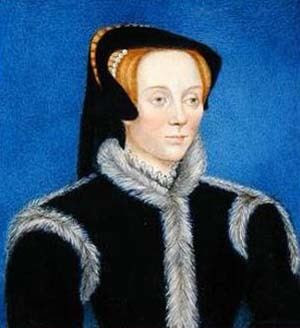
Mastodon The Writing Desk

7 February 2022

How Katherine Willoughby knew all the wives of King Henry VIII, his son, Edward, and his daughters, Mary and Elizabeth.


I began exploring the life of Katherine Willoughby when writing about her first husband, Charles Brandon for my book, Brandon – Tudor Knight. With typical panache, Brandon borrowed the money to buy the wardship of nine-year-old Katherine, who’d become Baroness Willoughby de Eresby on the death of her father – and one of the wealthiest heiresses in England.

During my research I realised what a unique and extraordinary insight Katherine had to all six wives of King Henry VIII, as well as his children. Part of the reason was her position as Duchess of Suffolk, after her marriage, at the age of fourteen, to Charles Brandon, Duke of Suffolk and lifelong friend and companion of the king, but as always, the details are more complicated.

Here is a summary of how she knew each of them:

Catherine of Aragon

Katherine Willoughby was named after Henry’s first queen, as her mother was Maria de Salinas, the queen’s closest friend and companion, who accompanied her when she arrived from Spain. Interestingly, Maria was of course a devout Catholic, yet her daughter became a champion of the Protestant cause. 

Anne Boleyn

Anne married Henry in January 1533 and was crowned Queen in Westminster Hall on 1 June that summer. At the time, Katherine was living in the household of Charles Brandon and his wife, Mary Tudor, (Queen of France, youngest sister of Henry VIII, and subject of my book Mary – Tudor Princess.) Mary Tudor was a best friend of Catherine of Aragon and one of the few who dared speak out against Anne Boleyn. When Mary died on the 25 June, 1533, Charles Brandon married the fourteen-year-old wealthy heiress, Katherine. She therefore regularly attended the Tudor Court when Anne was queen, and Charles Brandon was a participant in Anne’s trial on May 15, 1536.

Jane Seymour

Jane was a maid of honour to Queen Catherine and a friend of Katherine’s mother, Maria de Salinas. They would know each other since Katherine was a girl, and Katherine carried the infant Prince Edward at his christening on the 15th of October, 1537, as well as attending Jane’s funeral as chief mourner soon afterwards.
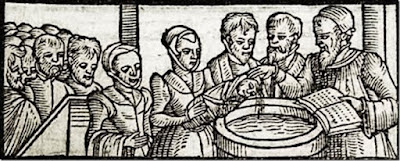

Baptism of Prince Edward Tudor

Anna of Cleeves

Katherine and her husband Charles Brandon were chosen to welcome Anna of Cleeves at her arrival in England on January 1, 1540, and escorted her to Deal Castle. Duchess Katherine was the first noble to meet Anna, and a Mistress Gilmyn acted as translator to overcome their language difficulties. They seemed to get on well and kept in touch by letter long after Anna’s downfall.

Catherine Howard

Katherine’s home at Grimsthorpe Castle was one of the stops on the ill-fated royal progress to the north of June 1541 where Thomas Culpeper met the young queen in secret. Katherine first met her when she was on of Anne Boleyn’s ladies-in-waiting, but Catherine was a Catholic and they were not close.

Catherine Parr

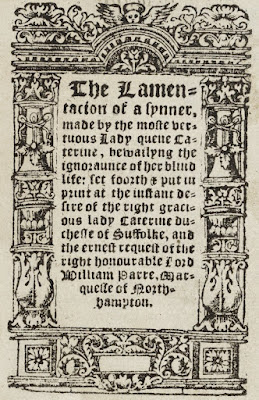
Katherine knew Catherine Parr when she was Lady Latimer, wife of Sir John Neville, Baron Latimer, and they became close friends through their shared interest in religious reform, Katherine often visited her house in Chelsea, and remained a close friend after she became queen. Katherine is thanked in the dedication page of Catherine Parr's Lamentation of a sinner:
King Edward VI

Prince Edward was tutored with Katherine’s sons, Henry and Charles, so she would have seen him often before he was crowned on the 20th February 1547 at the age of nine.

Lady Jane Grey

Lady Jane was the eldest daughter of Charles Brandon’s daughter Frances, and Henry Grey, 3rd Marquess of Dorset, a friend of Katherine’s husband. As well as visiting Grimsthorpe, Lady Jane also lived for a while at Catherine Parr’s house in Chelsea, where she would have met Katherine.

Queen Mary I

Katherine knew Mary since they were both girls, as their mothers were close friends and companions. Their religious differences meant that Katherine and her family had to flee into exile abroad when Mary became queen.

Queen Elizabeth I

Katherine met the young Elizabeth when she was the ward of Catherine Parr, at her house in Chelsea where the incident with Thomas Seymour occurred.  Although Katherine could have become a lady-in-waiting when Elizabeth became queen on the 15th January 1559, she chose to remain at Grimsthorpe Castle.

By any comparison, this is quite a list.  Katherine Willoughby was a woman far ahead of her time, prepared to stand up for her beliefs. The story of her life helps us see the complex world of the Tudors through a new perspective, and I believe she would have been pleased to know that is her legacy.

Tony Riches 

Katherine - Tudor Duchess, the true story of Lady Katherine Willoughby, an amazing Tudor woman, is available in paperback, eBook and audiobook editions:

πŸ‡ΊπŸ‡Έ https://www.amazon.com/dp/B07YCV3RJV

πŸ‡¬πŸ‡§ https://www.amazon.co.uk/dp/B07YCV3RJV

πŸ‡¦πŸ‡Ί https://www.amazon.com.au/dp/B07YCV3RJV

6 February 2022

Using the Buffer App to Increase the value of your time on Twitter


As a full time author I have to limit the time I spend on Twitter, but enjoy the interaction with readers - and with the thriving writing community.

My solution is to use the free Buffer App to help increase the value of my time spent on Twitter. Buffer can also be used with  Facebook Pages and Groups, LinkedIn Profiles and Pages, and Pinterest (with a Premium subscription).

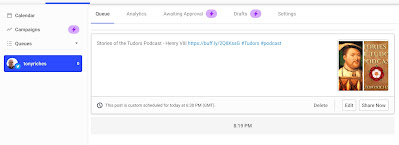
I have Buffer added to my browser toolbar, so if I see an interesting web article I can generate a 'Tweet' with a shortened link with one click, the choose the most appropriate graphic.to add interest:


As well as 'retweeting' posts with interest me, I also have the option to add them to the Buffer scheduler, to be sent automatically at the best times, while I'm busy with writing or research.

It's also useful to switch to the Posts tab to see engagement statistics such as clicks, likes, replies, comments and shares. (The Premium features include more detailed analytics features for delving into your engagement stats.)

After using Buffer my follower numbers have tripled, while the amount of time spent has reduced to less than half an hour a day.  Find out more at https://buffer.com/ 

Tony

5 February 2022

The Kings and Queens of England - John Player & Sons 1066-1935


I discovered this yellowing relic of our past, from the days when royalty seems to have been a useful incentive to encourage smoking. (I'm sure Sir Walter Raleigh, who helped popularise smoking tobacco at the Elizabethan Court, would have approved!)

Most of the portraits are engravings by George Vertue FSA (1684 – 24 July 1756) an English engraver and antiquary, who produced over five hundred portraits in his lifetime, and is buried in Westminster Abbey.

i was interested to see Jane Seymour, Anna of Cleves and Catherine Parr are left out because they were never crowned as Queen of England, which is a shame. 


4 February 2022

Special Guest Interview with Mary Anne Yarde - Founder of The Coffee Pot Book Club


I've used most of the best known providers of blog tours and book promotion over years, which varying results. By far the best has been 'The Coffee Pot Book Club', which has a special focus on readers of historical fiction, and consistently increased sales of my books, particularly as part of book launch events.

I have already booked their blog tour for the launch of my new book, the third in my Elizabethan series, in June, and invited Mary Anne Yarde to tell us more about The Coffee Pot Book Club:

What inspired you to start the Coffee Pot Book Club?

I founded The Coffee Pot Book Club (formally Myths, Legends, Books, and Coffee Pots) in 2015. My goal was to create a platform that would help Historical Fiction, Historical Romance and Historical Fantasy authors promote their books and find that sometimes elusive audience. The Coffee Pot Book Club soon became the place for readers to meet new authors (both traditionally and independently published) and discover their fabulous books.

What are the different packages for authors?

The Coffee Pot Book Club offers promotional opportunities for everyone’s budget and we work closely with authors to help them decide which promotion would work best for them and their books, including:

Blog Tours 

With the age of the internet and modern technology, the way books are marketed is changing. Unlike conventional book tours, a blog tour is a virtual tour on a number of relevant blogs. Virtual blog tours are a fabulous way to get your book in front of the audience you want to target. 

https://maryanneyarde.blogspot.com/p/blog-tours_11.html

The Coffee Pot Book Club Book Of The Year Award 2022

Become an Award-Winning Author! The Coffee Pot Book Club Book Of The Year Awards is an international contest exclusively for those who write in the Historical Fiction, Historical Romance and Historical Fantasy genres (and their sub-categories). 

https://maryanneyarde.blogspot.com/p/the-coffee-pot-book-club-book-of-year_5.html

Instagram Package

The #bookstagram community is huge on Instagram. We offer an Instagram promotional package that can get your book in front of this community.

https://maryanneyarde.blogspot.com/p/instagram-package.html

Guest Post Package:

Creating a guest post is both an exciting and rewarding experience, especially when you are writing for an award-winning blog! For those who are new to blogging, we are on-hand to guide you through the process.

https://maryanneyarde.blogspot.com/p/guest-post-submissions.html

Sidebar Advertisement Package

We also offer sidebar advertisement packages starting from as little as £7.00 ($10)

https://maryanneyarde.blogspot.com/p/sidebar-advertisement-package.html

What do you find to be the particular joys and challenges of promoting or marketing historical fiction?

I really enjoy working with authors to help market their novels. The satisfaction one feels when I have helped a novel move up the Amazon ranking and get that exciting orange Bestselling Amazon Badge is addictive. I think my most memorable marketing achievement was helping an author fulfil her dream of becoming a USA Today Bestselling author.

You are a talented author and I enjoyed reading your Du Lc series – do you have any plans to return to writing?

Thank you so much for your kind words. I have taken a writing hiatus from those Du Lac boys to concentrate my efforts between The Coffee Pot Book Club and my tutoring commitments (I tutor GCSE History). I will, when time allows, finish the final book in The Du Lac Chronicles series, but it will not be for a while yet. Watch this space…!

Mary Anne Yarde

# # #

Mary Anne Yarde is a multi-award winning and bestselling author of Historical Fiction, as well as being an award-winning blogger. She studied History at Cardiff University and went on to study Equine Science at Warwickshire Collage. Mary Anne is a passionate advocate for quality Historical Fiction and became a professional Editorial Reviewer in 2016. She has worked closely with publishing houses, and authors (both traditionally and independently published) to successfully market their books. When Mary Anne is not promoting books, she tutors History from Year 5 to Year 10. She is also a member of The Historical Novel Society. Find out more at her website www.coffeepotbookclub.com/ and follow her on Facebook and Twitter @maryanneyarde

3 February 2022

How to produce an audiobook with Amazon ACX in seven steps


Available from Amazon UK and Amazon US
Audible and iTunes

I’d always thought the costs of producing an audiobook would be a stretch, so was encouraged to learn that Amazon’s ACX (Audiobook Creation Exchange) offers a ‘profit sharing’ deal, where authors can sign up to a 50:50 royalty split with the narrator.

I considered making a one off payment but liked the idea of entering into a partnership with the narrator, who has an equal stake in the success of the finished work. ACX is part of Audible.Com and a subsidiary of Amazon. As the author, you decide how your audiobook is produced, who narrates it, and select your distribution channels.

To enter into a royalty share deal, you need to select exclusive distribution of the audiobook through Audible, Amazon and iTunes. Royalties of 40% are paid for exclusive distribution projects, so the rights holder and producer each earn 20% from each sale.

Here are the seven steps to take you from your edited manuscript to a completed audiobook:

Step One: Preparing your ‘pitch’

Once you’ve registered with ACX at https://www.acx.com you can set up your first ‘project’. You need to confirm you have audio rights for your book, then you will be guided through preparing your ‘pitch’. You want to attract the best possible choice of professional narrators, so it’s important to spend some time on this. For example, I emphasised the international sales and reviews and included a link to the YouTube trailer. I also adapted the synopsis, highlighting the elements I thought would be important to any potential narrators. You'll also need to upload a two-page excerpt from your book as an Audition Script for potential narrators.

Step Two: Selecting your narrator

Wait to see who expresses an interest or listen to sample narrations (which you can filter by genre, gender, accent etc.,) and invite producers to audition for your book.  As well as listening to auditions, you can look at the bio of potential narrators and discuss their approach. I had an encouraging response for Katherine - Tudor Duchess and chose British actress Ruth Redman, who has the perfect narration style, and was a pleasure to work with. 

Step Three: Agreeing the deal

You can make an offer to a producer on the special Production Offer Page – and if they accept you can create a deal on ACX. It is recommended that negotiations take place within the ACX messaging system to document what has been agreed.

Step Four: Listen to fifteen minute sample

It is important to make sure you are happy with the tone and pace of the narration, as this is where you agree what might eventually become eight or nine hours of recording. 

Listen to a short excerpt, narrated by Ruth Redman:


Step Five: Listen to each chapter

I’d underestimated how much of a challenge this is, as you need to be vigilant for any pronunciation issues or changes of pace or style. You can ask the narrator to make up to two rounds of corrections to your finished audiobook and when you're content with the final version you pay your producer directly, unless you agreed a royalty share.

Step Six: Prepare audiobook artwork

I adapted the printed book cover to create the square format,  although you could opt for a complete redesign if this isn't practical. Once you are happy with the artwork you simply upload it and ACX do the rest once it has passed their quality check.  

Step Seven: Promote the new audiobook

As with any book, there is a close correlation between time spent raising awareness and royalties earned through sales. I'm please to say I now have eight of my books produced as audio editions, and they have become a useful source of income. I've also had very positive feedback from people with vision impairment and others who like to listen to audiobooks on long journeys.  

Tony Riches


2 February 2022

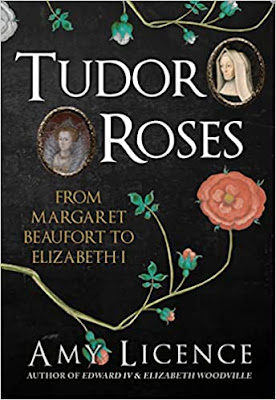
New Book review ~ Tudor Roses: From Margaret Beaufort to Elizabeth I, By Amy Licence


Available from Amazon UK and Amazon US

At last, the story of the Tudors is told from a perspective that acknowledges the role of the mothers, daughters, sisters and wives. The compelling picture which emerges is one of resilience in adversity.

Without exception, these women experienced often traumatic and harrowing treatment by the men in their lives. Arranged marriages, childbirth, and heart-breaking personal loss through high infant mortality would be enough, but they also battled against cultural, legal and religious barriers.

Queen Catherine of Aragon is one of the most extreme examples, yet even the treatment of Henry VIII’s sisters, Margaret and Mary, is too often overlooked. (I was appalled to see them ‘merged’ into one role in a TV ‘drama’, presumably to save money?) 

Amy Licence notes that, ‘The extent of our understanding is determined largely by the limited survival of records, which is itself an indicator of women’s roles.’ Worse still, past historians and biographers delighted in repeating myths consistent with the attitudes of their time.

This book goes some way towards redressing the balance, and one of the things I like about Amy’s writing is how she sprinkles every page with intriguing details, raising questions and making thought-provoking connections. Highly recommended.

Tony Riches 

# # #

About the Author

Amy Licence is an historian of women's lives in the medieval and early modern period, from Queens to commoners. Her particular interest lies in the late fifteenth and early sixteenth century, in gender relations, Queenship and identity, rites of passage, pilgrimage, female orthodoxy and rebellion, superstition, magic, fertility and childbirth. She is also a fan of Modernism and Post-Impressionism, particularly Woolf and the Bloomsbury Group, Picasso and Cubism. Amy has written for The Guardian, the BBC Website, The English Review, The London Magazine, The Times Literary Supplement and is a regular contributor to the New Statesman and The Huffington Post. She is frequently interviewed for BBC radio and in a BBC documentary on The White Queen. You can follow Amy on twitter @PrufrocksPeach or like her facebook page In Bed With the Tudors. Her website is www.amylicence.weebly.com

1 February 2022

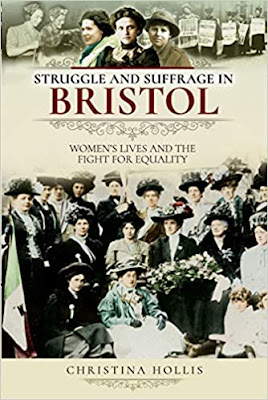
Special Guest Interview with Christina Hollis, Author of Struggle and Suffrage in Bristol


Available from Amazon UK and Amazon US

Welcome to the life of a Victorian woman living in one of Bristol’s riverside tenements.Women lurked in the footnotes of history until they gained an element of control, first over their own money, later their vote and finally, their lives. Much of that progress was driven by women themselves. It took a hundred years of hard work, lobbying and violence before their lives improved to anything like today’s standards. The only way was up—and Bristol women led the way.

I'm pleased to welcome author Christina Hollis to The Writing Desk:

Tell us about your latest book

Struggle and Suffrage in Bristol is the book that launched me on a whole new career! I’d been writing romance and short stories for quite a while. Then one of my friends in the Romantic Novelists’ Association mentioned that Pen and Sword Books were looking for writers to contribute to a non-fiction series. It was to be about women’s lives between 1850 and 1950. In the past I’d written novels based in the late nineteenth and early twentieth centuries, so I already had an interest in that era. When I contacted Pen and Sword, they asked if I’d like to write the Bristol edition. 

 I was born and raised in a village only a few miles outside the city, so I jumped at the chance. I investigated the lives of women who had battled against the odds to make successful careers in education, medicine, the arts, and politics at a time when they were seen as “the weaker sex”. I enjoyed working in the Bristol archive so much I enrolled at the University of Gloucestershire, and I’ve just graduated with an MA (with distinction) in Critical and Creative Writing.

What is your preferred writing routine?

I’m an early morning person. To play to that strength, I do all my creative work first thing. Everything else is relegated to the afternoon, which means I start each day with what the writer Antony Johnston calls “a clean mind”. I wake at around 5:30am and once the pets are fed and the dog’s had his walk, I settle down to writing. I prefer to use pencil and paper but for the sake of convenience I usually type straight onto my desktop computer. I have a target of 2,000 words per day and write until I’ve reached it (or lunchtime, whichever comes first!). In the afternoon I tackle correspondence, research, marketing, background reading, and make notes for future projects.

What advice do you have for new writers?

Understand that you’re in this for the long haul, and never give up. If you’ve got a good story and you can tell it well, you will eventually find an audience. For the best chance of success, give your reader—whether that’s going to be an agent, a publisher, or someone who discovers your work while browsing online—what they want. That means researching the market.

What have you found to be the best way of raising awareness of your books?

There’s no substitute for getting the word out through interviews like this, word of mouth endorsements, and reviews. The Society of Authors and the Romantic Novelists’ Association are very supportive, and I’m sure other specialist organizations are the same. We promote our work and that of other members online with retweets, reviews, and guest blogs. Social media is like fire: a great servant, but a terrible master. It’s invaluable in getting the word out about books, but it’s far too easy to pop in to do a few minutes of promotion, only to discover that half an hour has disappeared.

Tell us something unexpected you discovered during your research.

One of the world’s first true superstars was raised in Bristol. Dame Clara Butt (1872-1936) had a story steeped in romance. Her parents had eloped: Clara’s talent as a singer was spotted early and she was catapulted to international fame. She fell in love with fellow singer Kennerley Rumford. One night when they were performing a duet Clara turned over her sheet music to find Kennerley had written his proposal of marriage on the next page. When Queen Alexandra spotted Clara in a London store, she asked her to sing on the spot! The great English composer Sir Edward Elgar composed his song cycle Sea Pictures with Clara in mind. For the premiere, she dressed as a mermaid. As Clara was six feet two inches tall, that must have been quite a sight.

What was the hardest scene you remember writing?

Without a doubt, it was the section in Struggle and Suffrage in Bristol about the baby-farmer Amelia Dyer (1837-1896). In those days having a child outside of marriage meant ruin for a woman. Dyer posed as a respectable, caring person offering to take in unwanted babies—for a fee. Once the mother had left, Dyer would kill the child and sell its clothes. She was operating at a time when infant mortality was high, so her crimes went unnoticed for a long time. It was only after one woman, Evelina Marmon, returned unexpectedly to visit her baby daughter Doris that Dyer’s murderous career came to light. Evelina was shown a baby she didn’t recognise because Doris was already dead. When the baby’s tiny body was found, writing on paper used to conceal it traced the crime back to Dyer. It’s calculated Amelia Dyer may have killed more than 400 children. If true, that would make her the worst serial killer in British history.

What are you planning to write next?

It’s another non-fiction book, based on a year in the English countryside. It draws on my experiences of growing up in a village at the end of the twentieth century. The younger students on my university course gave me the idea. They listened open-mouthed to my short stories about growing up in the pre-internet age. The idea of living without central heating, fridge, freezer, or microwave, queueing to use a telephone kiosk, and the bus being our only form of transport amazed them. They thought my generation must have felt miserable and deprived, but of course we didn’t know any better. I, and the older students and lecturers, couldn’t believe the reactions of the younger ones. It was exactly as L.P. Hartley wrote in The Go-Between; the past really is a foreign country!

Christina Hollis

# # #

About the Author

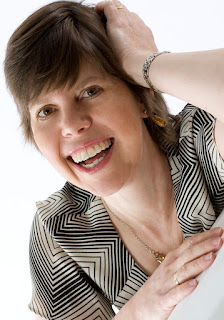
Christina Hollis is an author from the south-west of England who lives in Gloucestershire’s Forest of Dean. She left school at sixteen with few qualifications, and after working in various low-grade jobs in finance and marketing took a year out to see if she could become a writer. Six historical novels, seventeen contemporary romances, and dozens of non-fiction articles later, she was commissioned by Pen and Sword Books to write Struggle and Suffrage in Bristol. This gave her a taste for research, so she enrolled at the University of Gloucestershire as a mature student. She emerged from the archives two years later with an MA in Critical and Creative Writing—and is now planning her PhD. Christina is a member of both the Society of Authors, and the Romantic Novelists’ Association. She acts as a Reader for the RNA’s New Writers’ Scheme, which helps unpublished novelists learn their craft. Find out more at Christina's website http://www.christinahollis.com/ and follow her on Twitter @ChristinaBooks