Mastodon The Writing Desk

15 February 2022

Historical Fiction Spotlight: The Champion (III): Blood and Faith, by David Pilling


Available from Amazon UK and Amazon US


“I am En Pascal of Valencia, the Adalid, the Champion, 
the Leader of Hosts,and this is my tale...”

1300 AD: the armies of Edward Longshanks and the Guardians of Scotland confront each other. The final battle for control of northern Britain looms.

Meanwhile Robert de Bruce, the young lord of Carrick, waits in the background to seize his opportunity. Bruce dreams of taking the Scottish crown for himself, and will stop at nothing to seize it.

En Pascal of Valencia, the poor knight of Aragon, tells the tale of these bloody wars. After surviving the carnage of Göllheim and Falkirk, he now serves the English as warrior, spy and assassin. Pascal stands high in the king's favour, but knows all too well how quickly the wheel can turn...

# # #

About the Author

David Pilling is a writer and researcher, addicted to history for as long as he can remember. The medieval era has always held a fascination for him, perhaps because he spent much of his childhood exploring the misted ruins of castles in Wales. David also has a keen interest in the Byzantine Empire, the post-Roman period in Britain and the British & Irish Civil Wars. Find out more at David's website https://davidpillingauthor.weebly.com/ and follow him on Facebook and Twitter @RobeH2

14 February 2022

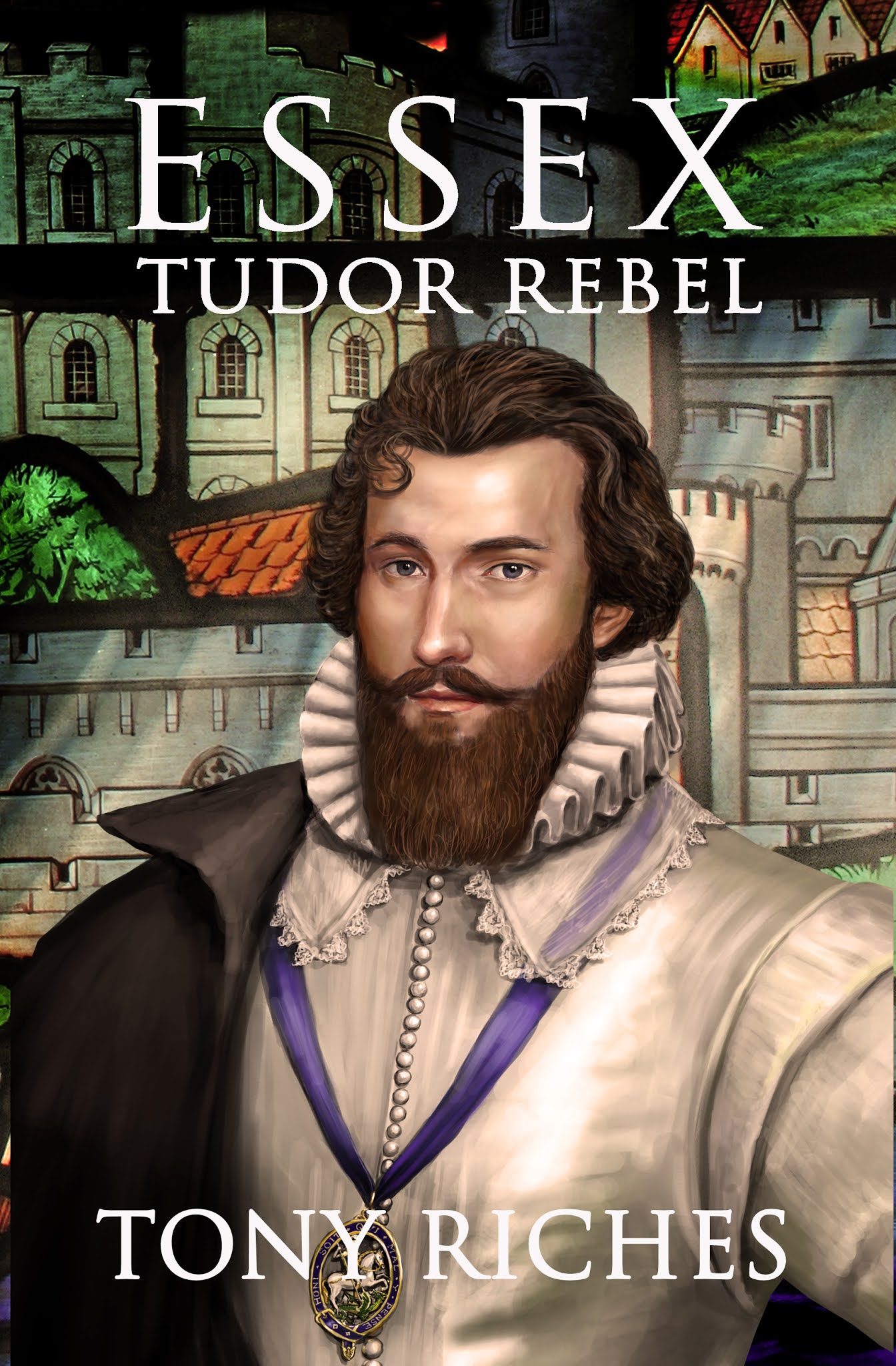
Inspiration to Write Essex – Tudor Rebel


Available from Amazon US and Amazon UK

Robert Devereux, Earl of Essex, is one of the most intriguing men of the Elizabethan period. Tall and handsome, he soon becomes a ‘favourite’ at court, so close to the queen many wonder if they are lovers.

The truth is, of course, far more complex, as each has what the other yearns for. Robert Devereux longs for recognition, wealth and influence. His flamboyant naïveté amuses the ageing Queen Elizabeth, like the son she never had, and his vitality makes her feel young.

I decided to explore his story when writing the first book of my Elizabethan series, Drake – Tudor Corsair. Drake is appalled when the Earl of Essex steals one of his ships to sail in the ‘English Armada’ to Portugal and Spain.

Drake resented young nobles, having earned his place the hard way, yet despite his bluster, was secretly impressed by the earl’s daring in defying the queen – who’d specifically forbidden him to sail.     

I wanted to understand why Robert Devereux was driven to take such risks, when he knew his vengeful queen would be furious. I had access to all his surviving letters, which reveal an intriguing, deeply flawed character, always at the heart of events, the perfect subject for an historical novel.

I was lucky to have access to Robert Devereux’s personal letters, which offer a real insight into his character and state of mind throughout his life.


Letter from Robert Devereux to Queen Elizabeth

Transcript:

Hast [hasten], paper, to thatt happy presence whence only unhappy I am banished. Kiss thatt fayre correcting hand which layes new plasters to my lighter hurtes, butt to my greatest woond applyeth nothing. Say thou cummest from shaming, languishing, despayring, S.X.

Signed with the unimaginative Essex cipher, he should have known the queen well enough to realise this approach was unlikely to change her mind.

I also visited the Devereux Tower and Chapel of St Peter ad Vincula at the Tower of London, (where he lies close to Lady jane Grey and Anne Boleyn).


I particularly wanted to keep Robert’s story as factually accurate and authentic as possible, so immersed myself in the dangerous world of Elizabethan London. 

During my research I was amazed to find Robert Devereux lived at Lamphey Palace, twenty minutes from my home in Pembrokeshire. I also visited the Devereux Tower and Chapel of St Peter ad Vincula at the Tower of London, (where he lies close to Lady Jane Grey and Anne Boleyn).

I hope readers will be able to tell that this book is one I’ve really enjoyed researching and writing, and that I’ve been able to find some of Robert Devereux’s redeeming qualities.

Tony Riches

13 February 2022

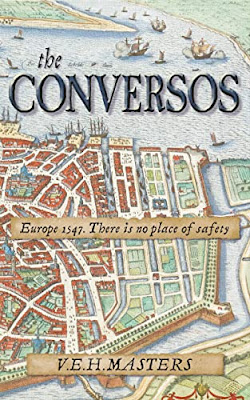
Special Guest Interview with V E H Masters, Author of The Conversos (The Seton Chronicles Book 2)


Available from Amazon UK and Amazon US

Europe 1547. The rising tide of the Reformation threatens bloody revolution. And the terror of the Inquisition grows, even for those who have converted. Bethia, newly married tries to find her way in Antwerp, both the city and family she now belongs to a constant source of confusion – and sometimes fear. While her brother Will, enslaved on a French galley, doubts there will ever be an end to his torment.

I'm pleased to welcome author V E H Masters back to The Writing Desk:

Did you plan to write a series?

From when I was twelve years old and our history teacher took us on a visit to St Andrews Castle I was enchanted by the story of the siege. When I finally came to write The Castilians, which is what those who took the castle and held it for 14 months called themselves, 

I had no idea of writing more than one book. But as I neared the end I began to feel there was a story there about what happened next. And so The Conversos emerged and it turns out that Antwerp and a galley were both fairly dramatic places to be in 1547-9. I’m now writing book 3 and there’s two further planned – so what started out as one book has become a five book series!

Where did the title The Conversos come from?

In 1492 Spain expelled all Jews and many fled to Portugal where they were ‘persuaded’ to convert to Christianity. Some may have been willing to do so but they were never considered ‘true’ Christians and were treated with suspicion and spied upon to make sure they didn’t relapse. 

By the 1540s the Portuguese Inquisition made that country increasingly perilous and an escape corridor was created by sea to Antwerp. A very wealthy converso called Gracia Mendes helped many flee. Much of my novel is set in Antwerp within a family of Conversos which Bethia, a young Catholic Scots girl, has married into without fully understanding how perilous life will be.

The Castilians is set in Scotland of 1546 during the siege of St Andrews Castle. Does Scotland feature in The Conversos?

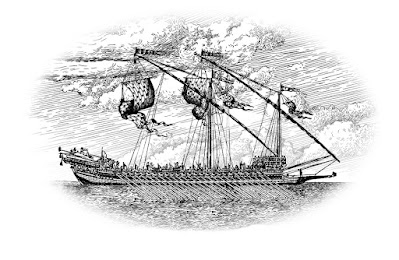
St Andrews Castle was re-captured with the help of the French at the end of the first book, and the prisoners were taken away as galley slaves including John Knox. These French galleys were out during the summer fighting season patrolling up and down the Scottish coast helping to ward off attacks from England. 

16th Century Galley

Will and Knox have the agony of seeing their country from the galley but are unable to step foot on it. Mary Queen of Scots even pops up transported in the summer of 1548 to France and safety by galley. So yes, some of the book is set in the coastal waters surrounding Scotland, then called the German Ocean but renamed the North Sea during WW1.

Religious conflict is a theme within your first book, how is this explored within the sequel?

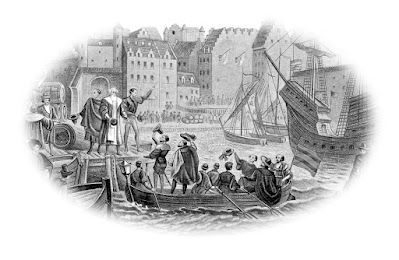
Whatever faith you followed if you found yourself in the wrong place at the wrong time you were at risk. And yet where trade was concerned cities like Antwerp, then the most powerful city in Europe, had special ordinances allowing merchants from different faiths and different countries to live and trade there unhindered.

Merchants arriving

So there’s a melting pot of Lutheran Germans, Portuguese Conversos, English Protestants and Catholic local merchants. Money was the determiner, for at the same time Anabaptists, who tended to be poor people, were burned at the stake.

Then there’s Will on the galley with Knox who will not kiss the Madonna nor take Mass and the French sailors are baffled rather than brutal with them (all of which will change when Huguenots become an issue many years later). Religion is a central theme in all five books of the series, as it was in the lives of everyone living through those times.

And whatever religion is being followed has a huge impact on sense of place. I’ve found it absolutely fascinating to write about and hope my readers will too!

V E H Masters 

# # #

About the Author

VEH Masters was born and brought up on a farm a few miles outside St Andrews and still lives nearby. Her first novel The Castilians tells the story of the siege of St Andrews Castle in 1546 and The Conversos continues the story. She writes about events in history with which she feels a strong connection, working to understand how and why people acted as they did.  Many of these significant moments have led to who we are today, which she finds endlessly fascinating and hopes her readers will too. Find out more at Vicki’s website https://vehmasters.com/ and find her on Facebook and Twitter at @VickiMasters9

12 February 2022

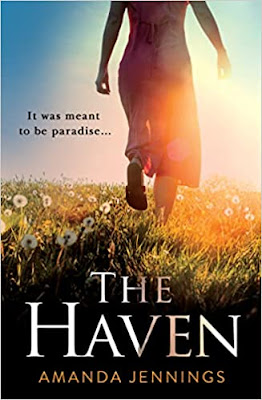
Book Review: The Haven, by Amanda Jennings


Available for pre-order from

It was meant to be paradise.... Winterfall Farm, spectacular and remote, stands over Bodmin Moor. Wanting an escape from the constraints of conventional life, Kit and Tara move to the isolated smallholding with their daughter, Skye, and a group of friends. Living off-grid and working the land, they soon begin to enjoy the fruits of their labour amid the breathtaking beauty and freedom of the moor.

I spent part of my childhood in Cornwall and remember visiting a remote farm for sale on Bodmin Moor. The appeal of the landscape was compelling, but the practicalities meant it was out of the question.

These same issues slowly become important to the small community who escape their bleak lives in the city and escape to the country in their ‘haven’ at Winterfall Farm on Bodmin Moor. 

I like the way Amanda Jennings switches point of view, with subtle shifts in writing style, to weave the experiences of different characters into the story.

After an idyllic start, one of the characters observes, ‘The trouble with Utopia is it looks ideal on paper, but when you add people it can never work. Each individual brings their own set of past experiences, their own hopes and expectations.’

This is the essence of The Haven, and I soon found I couldn’t put the book down as the pace increases from a leisurely amble to an unexpectedly harrowing ending.

In her author’s note Amanda Jennings mentions that she wrote this book during the pandemic, and there were many times when she yearned to be living in an off-grid farm on Bodmin Moor. Those feelings shine through in her storytelling, to create a book I will remember for a long time.

Tony Riches

# # #

About the Author

Amanda Jennings was born in London in 1973, and her family moved to a village in rural Berkshire when she was young. She accepted a place to read architecture at Cambridge University, but it soon became clear it wasn’t for her and after a year she changed course to History of Art. After she finished university she set up a company with a friend writing copy for a variety of small businesses and then a year or so later was offered a job as a researcher at the BBC. But when she had her first child she found it hard to juggle home life with working, and could no longer ignore her yearning to write. When she became pregnant with her second child, and encouraged by the success of a shortlisted sitcom script in a BBC writing competition, she took the opportunity to be at home with her children, and grabbed every spare moment she could find to write.  Find out more at Amanda's website www.amandajennings.co.uk and find her on Twitter @MandaJJennings

11 February 2022

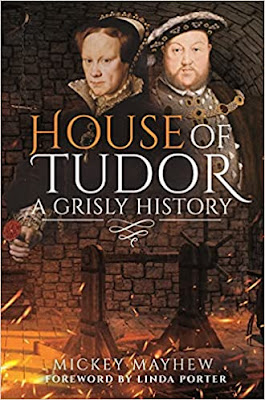
Special Guest Post by Dr Mickey Mayhew, Author of House of Tudor - A grisly history


Available from Amazon UK and Amazon US

Gruesome but not gratuitous, this decidedly darker take on the Tudors, from 1485 to 1603, covers some forty-five ‘events’ from the Tudor reign, taking in everything from the death of Richard III to the botched execution of Mary Queen of Scots, and a whole host of horrors in between.

I'm pleased to welcome author Mickey Mayhew to The Writing Desk:

Tell us about your latest book

My latest book explores the dark underbelly of the Tudor era; a strange, contradictory time when people paid taxes and went to university, whilst at the same time believing in witches and spirits and the like - civilisation, with a savagery simmering just beneath the surface; a bit like Twitter, really! 

The Tudors are so alien to us in some respects that they might as well be from another planet; the things we take for granted would quite probably horrify them. Also, people tend to kid themselves when they think that some of these people were ‘foward-thinking’ and the like; I find it very hard to believe that a sixteenth-century woman would embrace gay or trans rights or show even a smidgeon of religious tolerance. No, it would horrify them; our world would horrify them. And their world was, quite frankly, rather horrific as well. 

The way they treated animals would make more 21st century citizens recoil in horror; Elizabeth I was a prime example; she really enjoyed bear-baiting, hunting and bloodsports in general; I mean, she really enjoyed them. Historians spend so much time showering these people with adulation that they seem almost afraid to confront the reality of what they were really like. Elizabeth I may have ruled England for nearly 45 years but by all accounts, she was not a particularly nice person. Beyond animals, you only need examine the way she treated the women who bore claims to her throne to underline the fact, not to mention her near-pathological vanity/jealousies...

What is your preferred writing routine?

I write from 9am until 2.30pm every day, at home; can’t work in a library because even the dull background noise grates on me!

What advice do you have for new writers?

I can only offer the same tired old cliché, simply because it happens to have more than just a kernel of truth in it - perseverance, as Anne Boleyn found out, really can elevate you in life!

What have you found to be the best way to raise awareness of your books? 

Twitter can be wonderful, but it isn’t for the fainthearted!

Tell us something unexpected you discovered during your research

That decapitated people often remain alive for up to forty seconds after losing their head; so, the last thing Anne Boleyn, Thomas More etc saw was probably the inside of a wicker basket, splattered with their own blood...

What was the hardest scene you remember writing? 

See above!!

What are you planning to write next?

I’m working on something concerning Anne Boleyn which, believe it or not, has never been done before; then I’m turning my attention to Russia’s royals, the Romanovs, for three books which I’ve just signed the contracts for.

Mickey Mayhew

# # #

About the Author

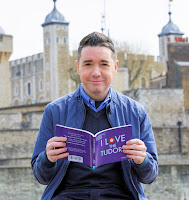
Mickey Mayhew is an author from London, working mainly on Mary Queen of Scots and the Tudor reign; he has a PhD focusing on the online 'cult' surrounding the 'tragic queens' Anne Boleyn and Mary Queen of Scots. He wrote The Little Book of Mary Queen of Scots (published by The History Press) in 2014 and then I love the Tudors (published by Pitkin Publishing) in 2016. House of Tudor - A grisly history is due to be released by Pen & Sword Books in 2022, to be followed by a new book concerning Mary Queen of Scots; these form part of a six-book deal, with four more titles to follow. Previously to this, he was co-author on three books relating to Jack the Ripper, whilst fictional work includes the urban fantasy trilogy The Barrow Boys of Barking, beginning with Jack and the Lad and concluding, for now, with Jamie's Big Bang. His tongue-in-cheek memoir Mickeypedia is also now available, with all proceeds going to the Anna Kennedy Online charity. Find our more at Mickey's website http://www.mickeymayhew.com and follow him on Twitter @Mickey_Mayhew

10 February 2022

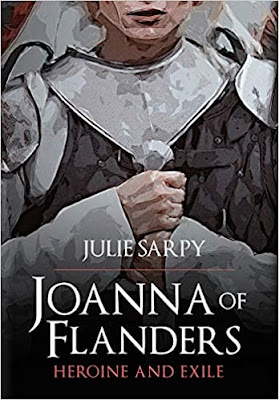
Book Spotlight: Joanna of Flanders: Heroine and Exile, by Julie Sarpy


Available from Amazon UK and Amazon US

Joanna of Flanders, Countess de Montfort and Duchess of Brittany, abruptly vanished from public life after 1343 amid the Breton Wars of Succession during the Hundred Years War. 

As wife of the late Duke John de Montfort, Joanna’s rightful place was in Brittany as regent of the duchy for their five-year-old son and heir John of Brittany. 

Despite her fame for the defense of Hennebont in 1342 during her husband’s imprisonment, she along with her children had accompanied Edward III of England to Britain in February 1343 and seemingly never departed. 

She resided in England in Tickell Castle, Yorkshire, in comfortable obscurity until her death around 1374. What happened to her and why? The answers to those questions belie the core complexities of medieval social structures, the care of the vulnerable, and the custody of women.

"Julie Sarpy has done an incredible job of researching the story of Joanna of Flanders. Her investigation has uncovered some remarkable facts about Joanna’s life, the times she lived through and the treatment she received at the hands of her supposed ally, Edward III. Joann of Flanders is, in short, an amazing woman, whose story deserves to be known by a much wider audience." Sharon Connolly, (Amazon Review)

# # #

About the Author

Dr. Julie Sarpy is the Library Liaison and Adjunct Assistant Professor to the Kiran C. Patel Colleges of Allopathic and Osteopathic at the Martin and Gail Press Health Professions Division Library at Nova Southeastern University. A specialist in Medieval history, her book Joanna of Flanders: Heroine and Exile was published by Amberley Press in 2019. Follow Julia on Twitter @Julieandalice

9 February 2022

My publishing history - a nostalgic look back following news of Smashwords and Draft2Digital Merger


The announcement that Draft2Digital is acquiring Smashwords took me back to 2008, when I first considered the idea of making a living from writing,. The emergence of Smashwords fourteen years ago was a turning point in my own publishing history.

It seems hard to believe now, but there were no reliable e-readers, Amazon KDP would not emerge for another year, and the only way to produce an eBook was to code the whole thing in HTML. Fortunately (or not) I had a programming background, so I used to spend days making the table of contents work. 

I'm particularly grateful to Smashwords founder Mark Coker for the invaluable advice and guidance he provided when I was starting out on my publishing journey. Smashwords can take a Word document to produce perfect eBooks for every platform. I was encouraged to have a few hundred pounds paid into PayPal, but it wasn't enough to write full time.

CreateSpace (now absorbed into KDP) became my 'print on  demand' provider for paperback editoins, but they were very different times.  When Amazon KDP emerged, the first book of my Tudor trilogy sold over 8000 copies in one month. There were hardly any direct competitors in my historical fiction niche (and I bought a yacht).

I was delighted to be picked up by a commercial publisher, only to find I shared more than half my royalties, sacrificed control over cover design, book description and updates, for very little in return. I still had to do all the marketing and promotion, but with only a quarterly sales report as feedback on success.

I then discovered ACX and produced audiobook editions of eight of my books, which continues to generate a welcome additional income each month, as well as helping partially sighted readers, and those who like to listen to books on long journeys.

I've finally managed to extricate the rights to all but one of my books, and set up my own publishing company, based on Vellum, which generates perfectly formatted books with a single click. I now work as a full time author, writing a book a year, with 70% royalties, complete control and immediate feedback on results. 

My latest ventures have been to produce hardback copies of my books, and translated editions. I also established my popular podcast series, Stories of the Tudors. It will be interesting to see what the future of publishing holds.

Tony Riches